Addressing humanitarian crises becoming increasingly difficult: EU explains reasons

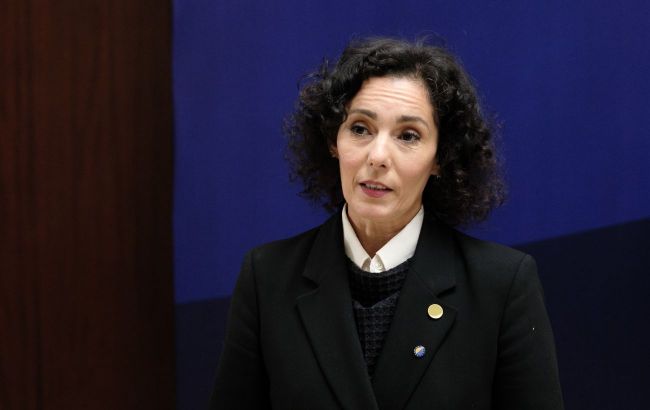 Photo: European Commissioner Hadja Lahbib (Vitalii Nosach/RBC-Ukraine)
A real challenge in addressing global humanitarian crises has become the lack of funding, as resources are dwindling and the US has withdrawn from many organizations, states European Commissioner Hadja Lahbib in an interview with RBC-Ukraine.
Read also: European Commissioner: Ukraine will get new EU aid tranches in near future
"The fact that there is less and less money, the withdrawal from the United States, the backlash when it comes to human rights, and specifically when it comes to gender, persons with disabilities, and minorities, LGBTIQ+ communities. The number of wars in the world," she explained.
In addition, according to Hadja Lahbib, there are numerous violations of international law and international human rights law. A direct consequence of these violations is the death of humanitarian workers, "who are killed while trying to save lives."
There is also the problem of humanitarian aid simply being inaccessible. For example, Russia violates international humanitarian law by obstructing its delivery. This is not only a problem in the war in Ukraine: it is increasingly difficult to reach those in need, despite the existence of international norms and rules.
"So we are preparing humanitarian advocacy to find strategic answers to this loss of rules and humanitarian principles, and moreover, to these principles. Because at the end it's about our humanity and about preserving the lives of innocent civilians — children, women, elderly people — in times of war," the European Commissioner concluded.
According to Lahbib, the European Union is fully satisfied with the mechanisms for monitoring the distribution of humanitarian aid in Ukraine. Moreover, the EU positively assessed Ukraine’s experience in digitalization and coordination of aid, noting it as a good example for other countries facing crises.
She also assessed the risks of reduced humanitarian aid for Ukraine. The total volume of EU humanitarian assistance since the beginning of the full-scale invasion has already reached €4.7 billion. The EU does not plan to cut aid, even though the number of global conflicts is increasing.
Beyond the humanitarian sphere, the European Union is preparing a large-scale energy plan to support Ukraine’s energy system. This plan includes multiple levels of action, both in supplying equipment and increasing electricity exports.