Humanitarian aid for Ukraine: EU Commission assesses transparency of distribution


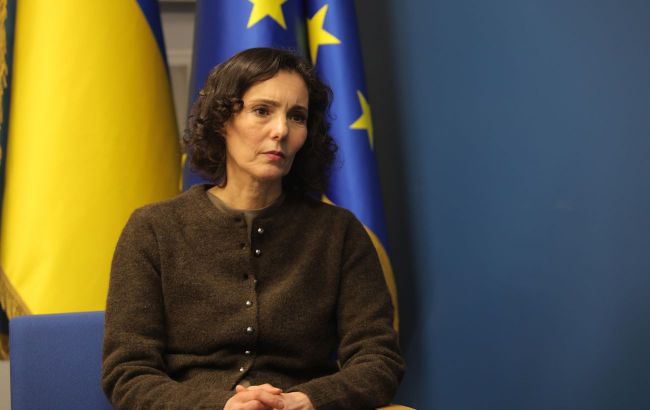 Photo: European Commissioner Hadja Lahbib (Dmytro Semeniuk/RBC-Ukraine)
The European Union is fully satisfied with the mechanisms for monitoring the distribution of humanitarian aid in Ukraine, according to European Commissioner Hadja Lahbib in an interview with RBC-Ukraine.
Read also: 'Good example to follow': EU praises Ukraine's experience in humanitarian crisis response
Monitoring taxpayers’ money
Lahbib emphasized that, since the funding comes from EU residents, adherence to strict reporting standards is a matter of principle.
Currently, aid is being delivered through international non-governmental organizations, allowing every eurocent to be tracked.
"We have the same rules for everybody, in every country. And we are quite satisfied, of course, because we follow the same rules everywhere in the world," the European Commissioner assured, responding to a question about the level of transparency in Ukraine.
Strengthening local communities
At the same time, Brussels’ priority is not only direct aid but also developing the capacity of Ukrainians themselves to cope with the challenges of war.
In this context, the EU is actively cooperating with the Ukrainian authorities, including with Iryna Vereshchuk, the Deputy Head of the Presidential Office responsible for the sector.
"This is not about the EU simply providing humanitarian aid to Ukraine. It is about working hand in hand with Ukrainians, strengthening their own capacity, so they can be more resilient and resist this difficult period of time," explained Hadja Lahbib.
EU increases support for Ukraine
European Commissioner Hadja Lahbib also noted that Ukraine’s experience in digitalization and aid coordination is a good example for other countries facing crises. According to her, Ukraine’s achievements can be useful for global humanitarian missions.
She also assessed the risks of reducing humanitarian aid for Ukraine. Despite global attention sometimes shifting to other conflicts, support for Kyiv remains a priority for Brussels. In particular, the total volume of EU humanitarian aid since the start of the full-scale invasion has already reached €4.7 billion.
In addition to humanitarian efforts, the European Union is preparing a large-scale energy plan to support Ukraine’s power system. This plan includes both the supply of equipment and an increase in electricity exports to help Ukraine navigate difficult periods.