EU aided 9 million Ukrainians, but won't fill US role: Interview with Commissioner Hadja Lahbib


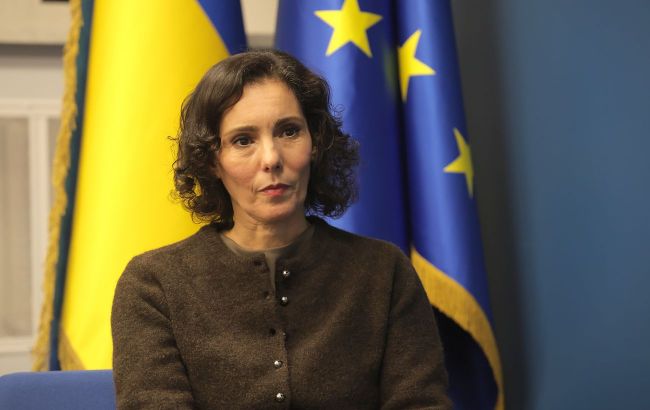 Hadja Lahbib, EU Commissioner for Equality, Preparedness and Crisis Management (photo: Dmytro Semeniuk, RBC-Ukraine)
European aid has helped provide electricity to 9 million Ukrainians. While the US is cutting humanitarian aid around the world, Brussels is opening strategic reserves for Ukraine. Hadja Lahbib, EU Commissioner for Equality, Preparedness and Crisis Management, tells what these funds will be used for and how European aid is being adapted for those who need it most in an interview with RBC-Ukraine.
Read also: EU preparing energy plan for Ukraine: How it will work and how much funding envisaged
Key takeaways
- Winter support: A recently allocated package of €153 million is already working to provide Ukrainians with heat, water, and food.
- Energy security: Thanks to EU assistance, 9 million people have been provided with energy.
- Funding guarantees: Despite cuts in humanitarian aid from the US, the European Union does not plan to reduce its support for Ukraine.
- MedEvac program: 5,000 severely wounded Ukrainians have been evacuated for treatment in 22 European countries.
 The EU provides humanitarian aid to Ukraine from its own reserves (infographic: RBC-Ukraine)
Against the backdrop of reduced humanitarian aid from the US and a growing number of crises around the world, the European Union will not reduce its support for Ukraine. On the contrary, Brussels has already announced new tranches and emphasized that Ukraine remains one of its key priorities.
European Commissioner for Equality, Preparedness, and Crisis Management Aja Labib spoke about this immediately after visiting the Kyiv Thermal Power Plant No. 4, which was destroyed by Russian strikes. According to her, more than 11,000 generators have already been delivered to Ukraine through the European Civil Protection Mechanism alone, and the EU's energy support has provided electricity to about 9 million people.
"This equipment comes from both member states and our strategic reserves," says Hadja Lahbib.
In an interview with RBC-Ukraine, Lahbib talks about how the recently allocated €153 million in humanitarian aid will be spent, whether there is a risk of funding cuts, how the MedEvac program for wounded Ukrainians works, and why the European Union is studying Ukraine's experience with humanitarian centers.
At the same time, she acknowledges that the war in Ukraine has not only been a challenge for Europe but also a lesson in terms of resilience, mobilization, and crisis preparedness.
— The European Commission has recently announced the allocation of €153 million in humanitarian aid to Ukraine and Moldova. What specific purposes will these funds be used for?
— EU assistance addresses humanitarian needs in key sectors such as basic needs, protection, health, shelter, WASH, education in emergencies, and demining, among others.
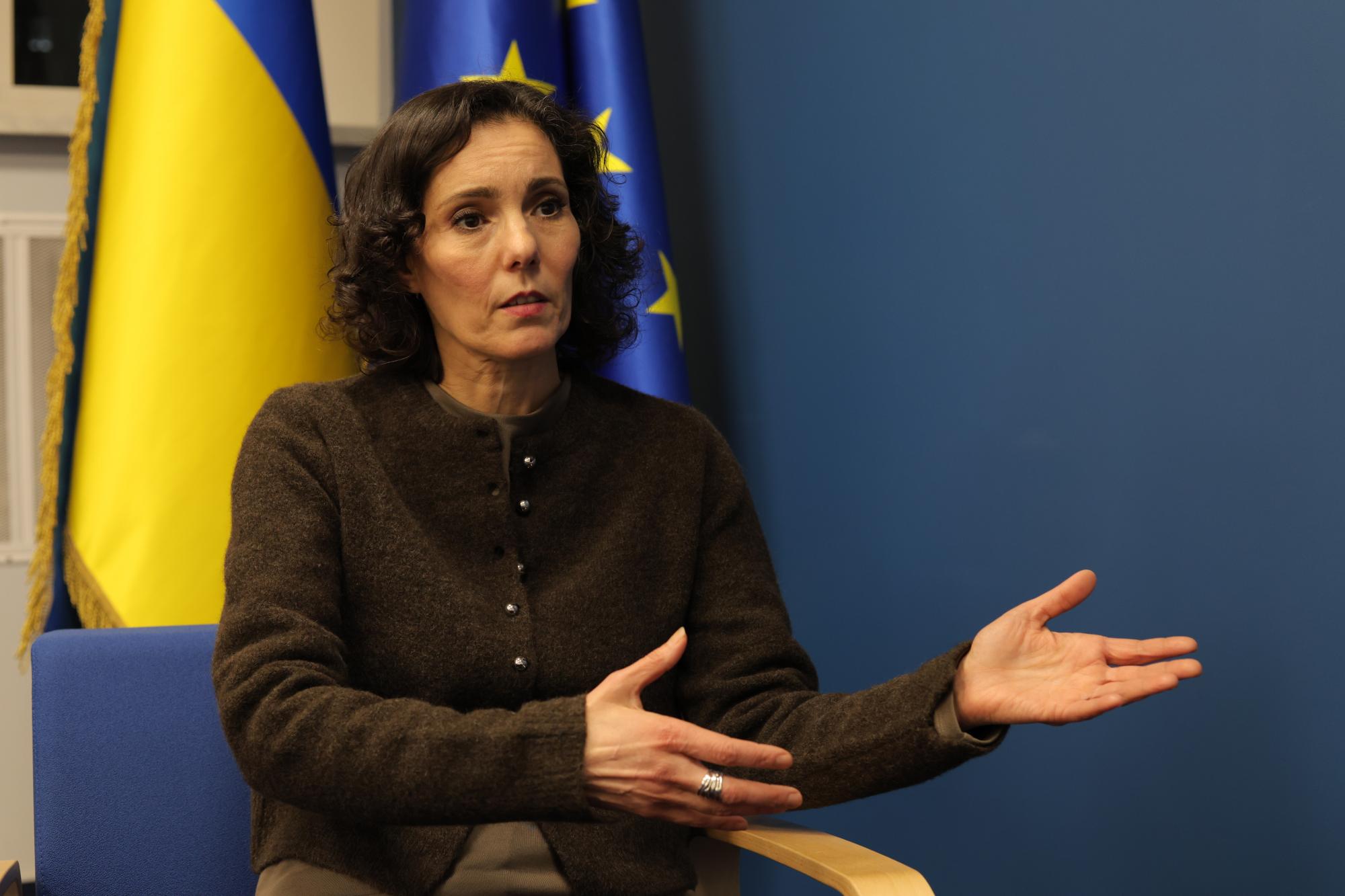 Since the start of the war, the EU has provided €193 billion to Ukraine (photo: Dmytro Semeniuk, RBC-Ukraine)
It will be about everything that Ukrainians need to hold during this freezing winter. So it's about food. It's about shelter. It's about sleeping bags. It's about generators, of course, and many, many, many items.
You have to know that since the beginning of the war, the EU, with its member states, has allocated €4.7 billion in the field of humanitarian aid (the European Commission alone made available €1.4 billion). And globally, it's 193 billion euros since the beginning of the war (encompassing financial, military, humanitarian aid, and assistance for refugees - ed.).
So it shows that this solidarity is not only words, it's concrete, it's financed, and it's about every kind of support.
— You have mentioned the generators. What are the remaining challenges in sourcing funding and delivering this very specific equipment to Ukraine?
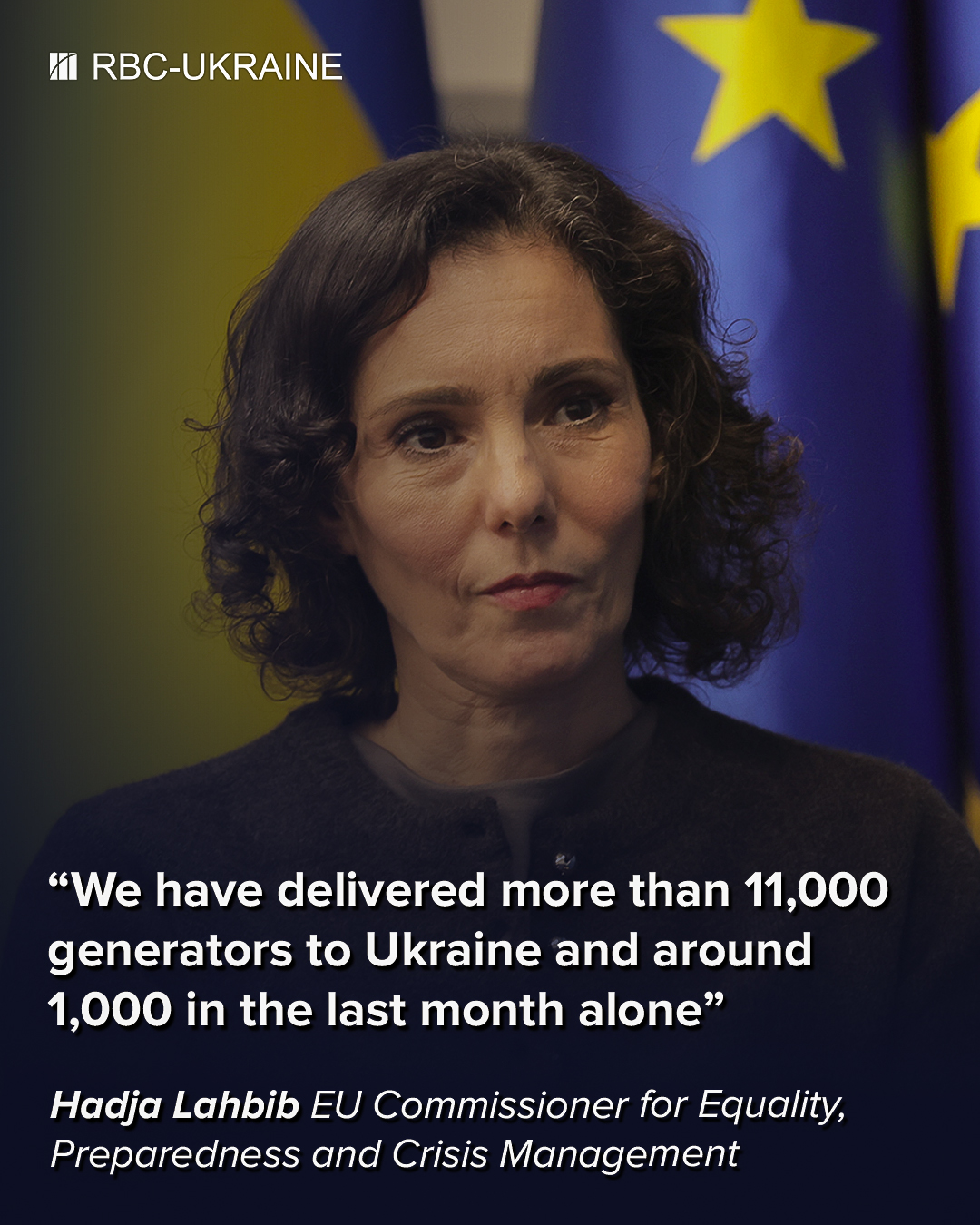
— Through the European Civil Protection Mechanism, we have delivered more than 11,000 generators to Ukraine, large and small, and around 1,000 in the last month alone. They come from both Member States and from our own strategic stocks. I am happy to say that European solidarity has remained steady and consistent throughout.
When it comes to repairs to energy infrastructure, first, they have to be adapted. We visited the CHP-4, for instance. It's an old infrastructure. I met the director and the engineers. They told me that they were about to renovate this post-Soviet infrastructure — when the war started.
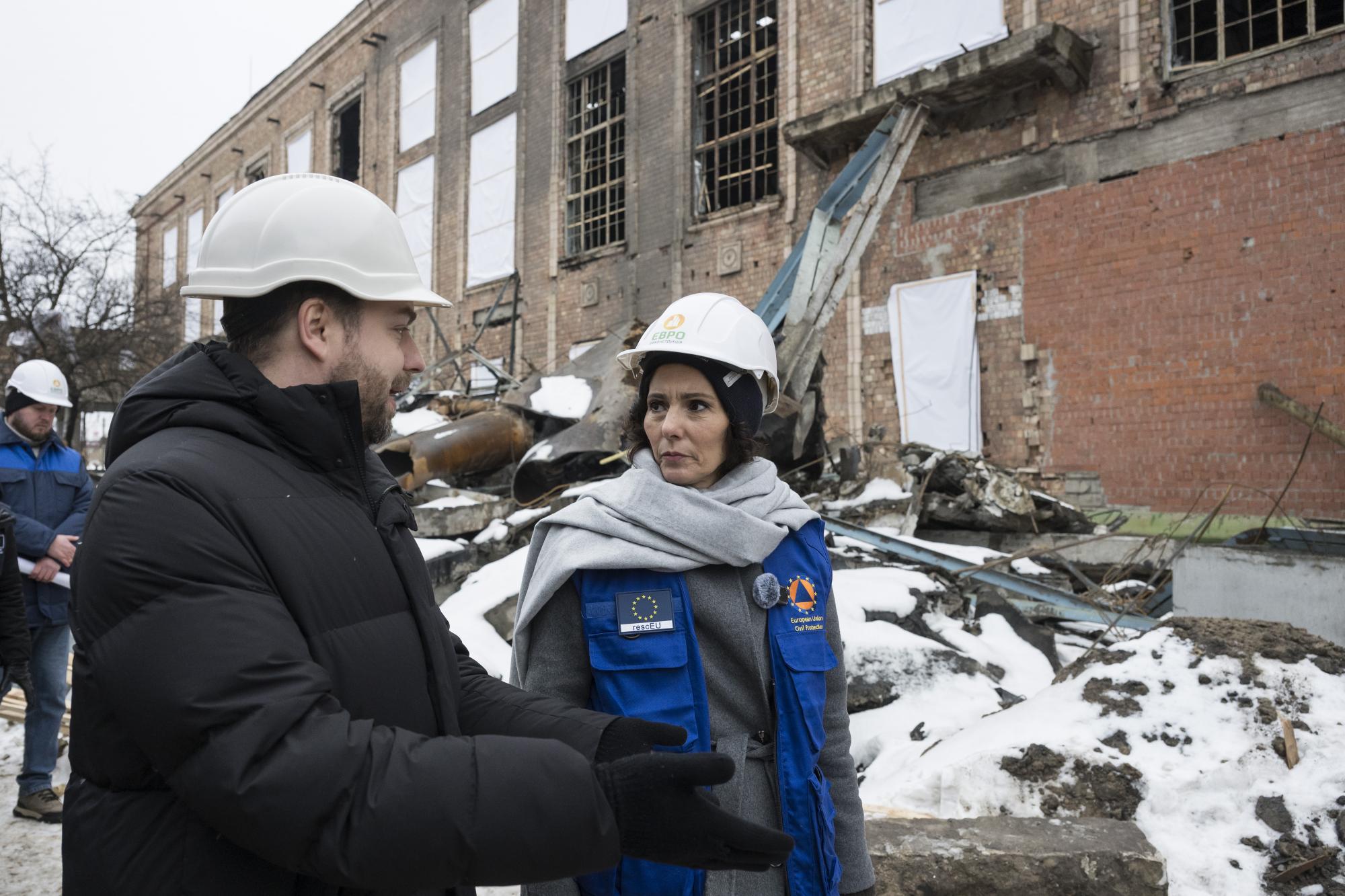 Hadja Lahbib's visit to Darnytska Thermal Power Plant together with the Ministry of Community and Territorial Development and the Ministry of Energy (photo: European Union)
So they couldn't renovate it. And now it's old, it's vulnerable, and the Russians know that. That's why, precisely, they are targeting it, and also to push the Ukrainians to surrender.
The main challenge is to find technical assistance that is compatible with this kind of Soviet infrastructure. That's why solidarity from Estonia, from Lithuania, and other countries that have experience with this kind of infrastructure is so valuable.
As you may know, the city of Vilnius gave a thermal power plant, and the challenge was how to transport it. It's 2,400 tons of materials.
We divided it into different pieces — this thermal power plant — and we transported it to Ukraine. The result is that when you combine all the generators, the thermal power plant, and so on, it means that we have been able to secure energy for 9 million Ukrainians. And to compare, it's roughly the population of the whole of Austria.
— If we go back to this last package from the EU, 153 million euros. Who exactly in Ukraine is intended to benefit from this aid? Maybe in some regions or for some projects?
— All humanitarian aid is based on the needs of the people. It is one of the principles of humanitarian aid. It needs to be independent, impartial, humane, neutral, and based on needs. So our support is reaching the most vulnerable populations, including those internally displaced, people living near the frontline, as well as veterans.
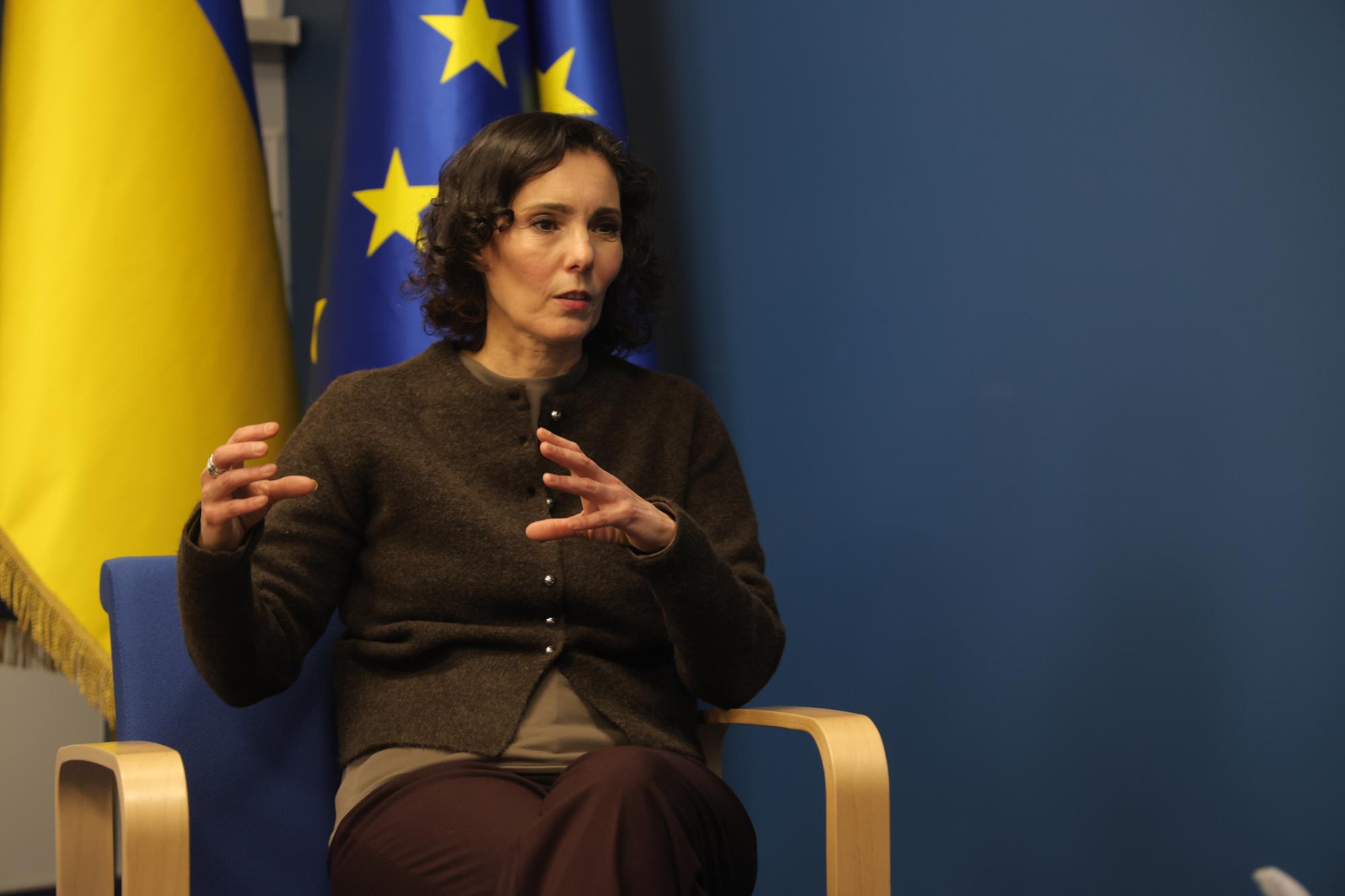 One-third of Ukraine's population needs humanitarian aid (photo: Dmytro Semeniuk, RBC-Ukraine)
We are working together with partners, including UN organisations and large NGOs, and we are really trying to localize it as much as we can – promoting partnerships with local actors, and ensuring they play a central role in response efforts.
We are not able to provide aid directly to local organizations, but our demand is that the international NGOs work hand in hand with local actors, because they know what is needed better than us. And it is also good for the circular economy and for better resilience.
— According to your estimates, how many people in Ukraine require this humanitarian aid?
— The figures show that one-third of the population is in humanitarian need. According to UN OCHA estimates, 10.8 million people are in need of humanitarian assistance this year.
— As far as a huge number of Ukrainians need humanitarian aid. What new tranches or new packages of humanitarian aid — new amounts will be announced this year, or is this the total this year?
— It's not the total. The 153 million is the first allocation for 2026, the base where we started, and we will certainly announce other tranches later on. I'm sure we will do so soon, considering the needs and the harsh winter you are going through. I'm quite confident that we will allocate more funding.
— You mentioned the cooperation with NGOs and local actors. How transparent is this process of aid distribution?
— We have very strict transparency rules, because we shouldn't forget that all this money comes from European taxpayers. We provide this amount through international NGOs. We have complete transparency and clarity on the process and how they distribute these funds.
But it is also important to work in a more dignified manner, to work in a localised way, to allow the Ukrainians to respond to their own needs. Strengthening local actors is essential.
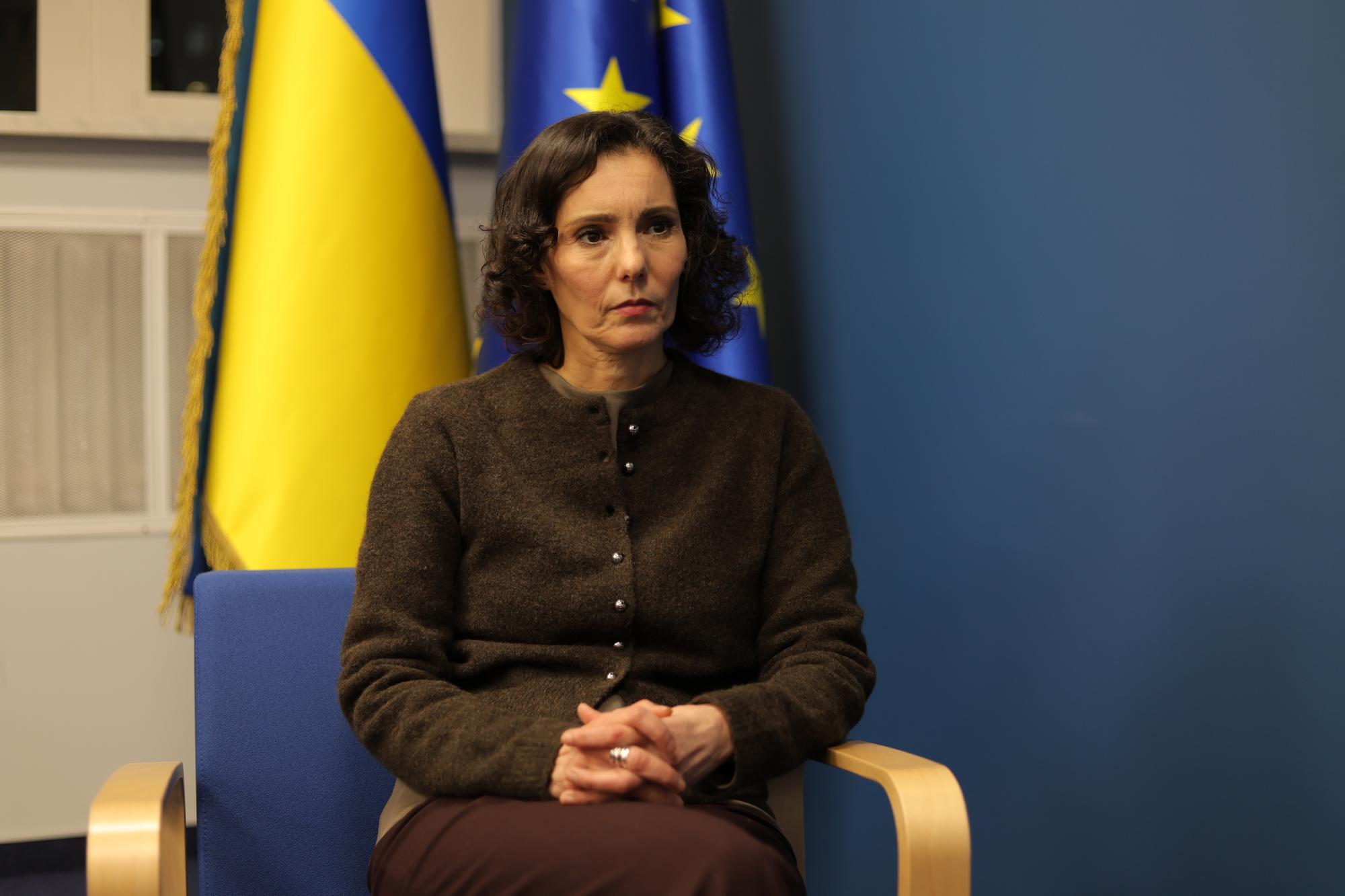 The EU evacuated about 5,000 seriously injured patients from Ukraine (photo: Dmytro Semeniuk, RBC-Ukraine)
I had constructive discussions with your authorities, including with Iryna Vereshchuk, who is also responsible for humanitarian coordination. The transfer of knowledge and responsibility is very important.
This is not about the EU simply providing humanitarian aid to Ukraine. It is about working hand in hand with Ukrainians, strengthening their own capacity, so they can be more resilient and resist this difficult period of time.
— To what extent are you, as a representative of the EU, satisfied with this process of transparent distribution?
— There are no critical questions. We have the same rules for everybody, in every country. And we are quite satisfied, of course, because we follow the same rules everywhere in the world.
— You're also the coordinator of the MedEvac program. How does this program work today, and what are the other plans to expand it?
— MedEvac is one of our success stories. You know, it's one of our rescEU capacities which was introduced to help in case of emergencies and disasters - in case of floods, wildfires, and so on. But now it's much more diverse.
MedEvac allows us to evacuate patients in a critical situation to a hospital where they can benefit from very specific treatment. And so far, we have been able to evacuate around 5,000 severely wounded patients from Ukraine to 22 countries.
— How does it work?
— We are working with the Ukrainian authorities and hospitals. They choose those who need specific treatment, and then we request from member states information on what kind of capacities they have.
For instance, Belgium is well known for treating patients with severe burns. The military hospital in Brussels has specialised expertise in this field. I visited some of the wounded soldiers there myself. In October 2024, President Zelenskyy came to award them medals.
It was a very emotional moment. I was very moved to witness this ceremony. President Zelenskyy spoke with the soldiers, presented them with medals, and met their families. They were receiving excellent care.
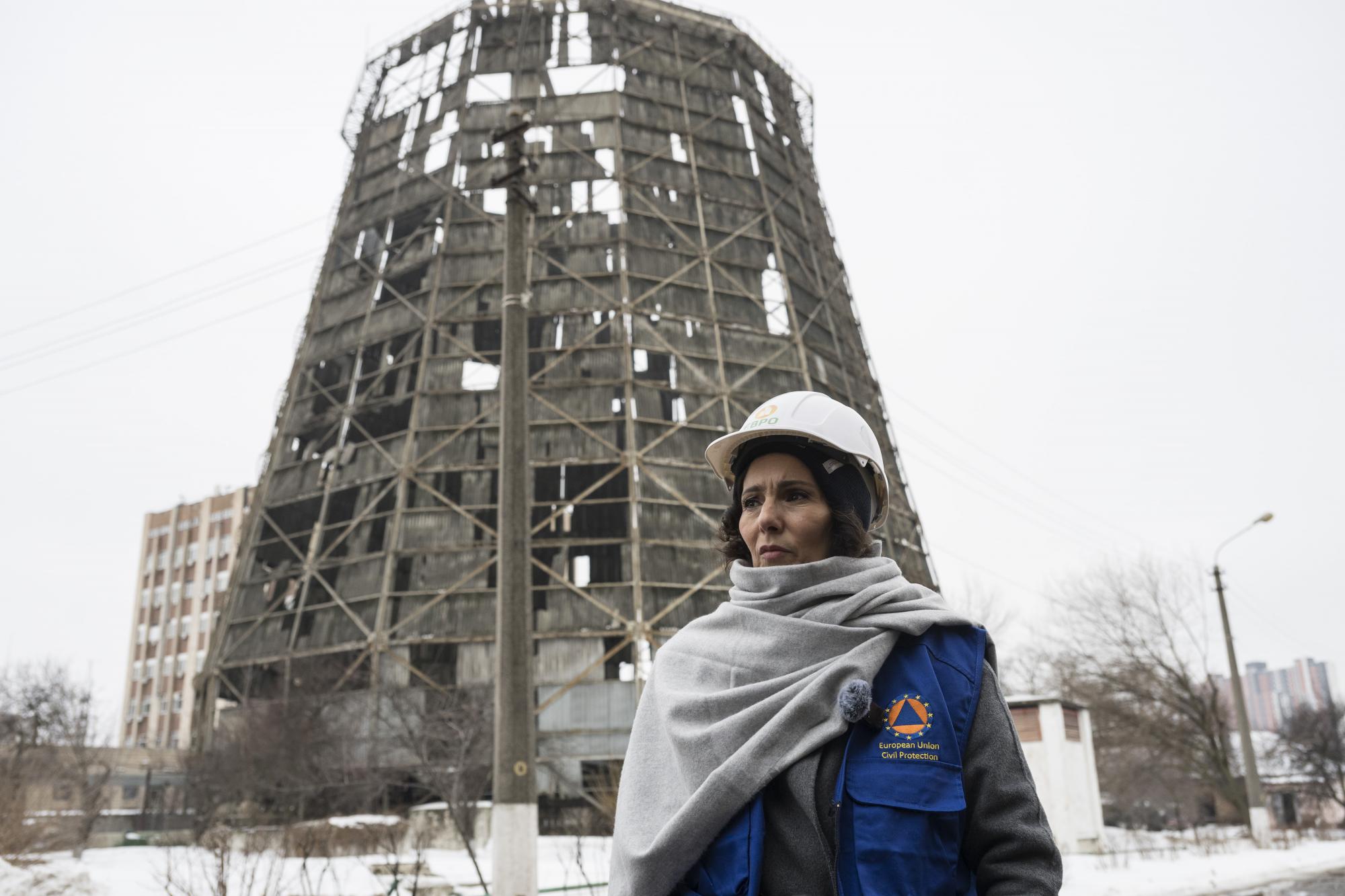 Hadja Lahbib against the backdrop of destroyed buildings and cooling towers (photo: European Union)
Very often, a wounded soldier or patient doesn't come alone – they arrive with their family, sometimes with their children. So we must ensure that the receiving country can provide comprehensive support – not only medical treatment but also the conditions for families to stay together.
— Currently, who is eligible to benefit from this program?
— It depends on the type of treatment that is requested, which hospital is ready to welcome the patients, in which country, and the transportation capacities. So following these criteria, it's objective and transparent.
— So it's more of a centralized process?
— No, it's a collective process. We receive a request from the hospital that doesn't have the capacity currently to give the patient adequate treatment. Do you have possibilities in one of our member states or participating states? Because there are not only 27 member states, but also 10 participating states outside of the European Union. Then we receive a proposal, and we can transport the patient.
— How do you see the future of this program? Maybe there is something to change or something to improve?
— There is always room for progress. We are always looking at how to improve our capacities. A recent large operation took place following the horrible fire that broke out in the Crans-Montana nightclub on 31 December. We were able to evacuate 38 young severely burned people. It shows that the mechanism worked very well. But we are always keen to improve our mechanisms. We need more medevacs, certainly.
— The European Union provides humanitarian aid not only to Ukraine. The initial humanitarian aid budget for 2026 amounts to €1.9 billion. At the same time, 239 million people worldwide require assistance, while many major donors are reducing their funding. How do you determine priorities?
— It's a good question. We are well aware of the funding gap, which is only growing and growing. It's because of the withdrawal, the brutal decision from the United States' new president, who decided to cut the funding of a lot of agencies.
 Transporting aid accounts for the lion's share of expenses (photo: Dmytro Semeniuk, RBC-Ukraine)
They just announced additional funding cuts to IOM, a lot of UN agencies, but also international NGOs, and specifically those who are alleviating the suffering and helping women. The consequences are dramatic. It's about not choosing to save lives.
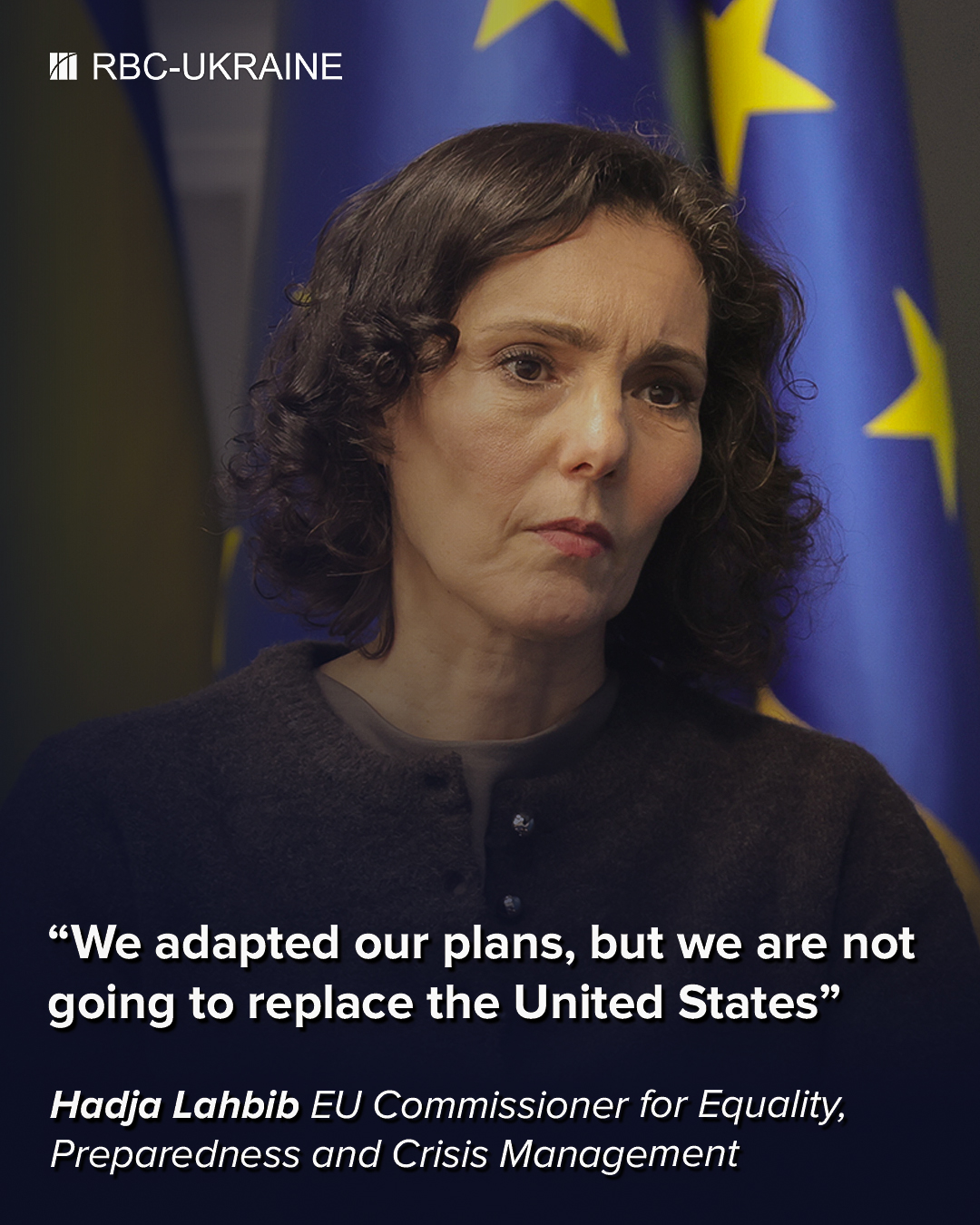
In light of this, the EU showed a lot of flexibility. We adapted our plans, but we are not going to replace the United States. The main purpose now is to be more efficient and to work on the supply chain, which represents 70% to 80% of the cost.
Read also: USAID on hold: Why billions in US aid to Ukraine have been frozen and what it means
Transportation is very costly,y and so we try to work on localization, to rely more on local actors and things like that. And this is part of what we call the humanitarian reset, which is part of the UN 80 reform.
 The EU is changing its approach to humanitarian aid (infographic: RBC-Ukraine)
We are working closely with all the UN agencies. Mainly with OCHA, which is the coordinator for UN agencies. So, we hope that we will succeed in being more efficient and in alleviating the suffering of nearly 300 million people who depend on humanitarian aid.
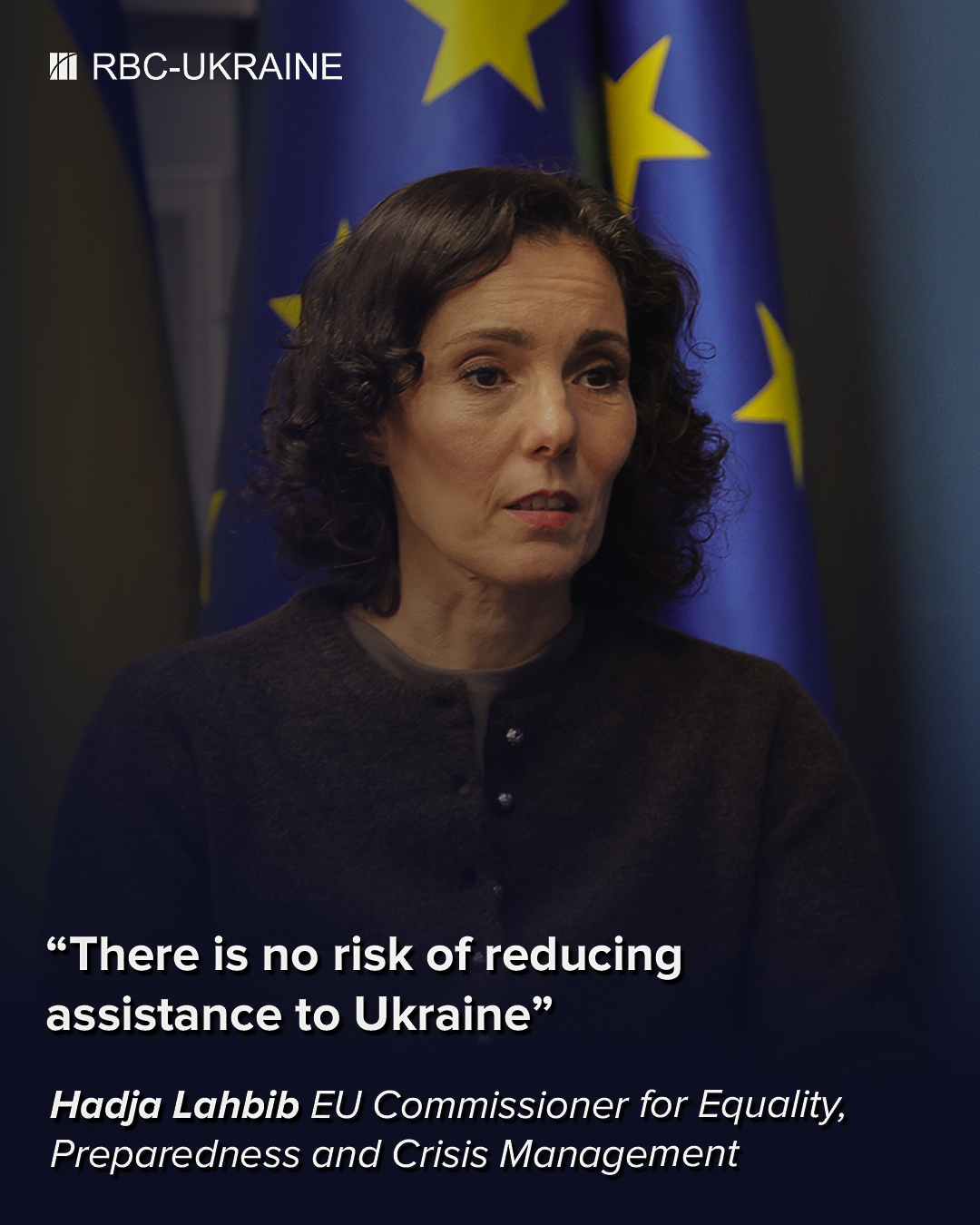
— In this context, is there a risk of reducing assistance to Ukraine?
— No, there is no risk of reducing assistance to Ukraine. We just decided on an important amount, and we are ready to step up if it is needed. Also, you may know that we are currently negotiating the MFF, which is a multi-annual financial framework for the next seven years, starting in 2028. We propose a very important and ambitious amount of budget for humanitarian aid.
And the purpose is to work in what we call Global Europe with all the other external actors. It means to work more closely with cooperation and development to deliver humanitarian aid in a more efficient and sustainable manner.
— But if we talk about a long-term perspective, to what extent is the European Union prepared to continue providing Ukraine with humanitarian support if the war is prolonged?
— As I told you, so far, we have not decreased our contribution to the country, and we have allocated so far more than 193 billion euros — it's huge. We just decided in December that we will provide a 90 billion euro loan for the two years to come. It also shows our long-term commitment to Ukraine.
— You are also responsible for the European preparedness strategy. What practices from Ukraine could you borrow to implement in this strategy, and how could Ukrainian experience help the EU?
— You know, the experience of Ukraine is really meaningful. It's a good example to follow. We will learn a lot from Ukrainians, thanks to your resilience. What I visited just recently, the invincibility centers are unique. We are contributing to 800 invincibility centers.
It is a good example of how to respond to many emergencies, to have tents like these, capable of welcoming hundreds of citizens for food, for electricity, for social assistance, psychological support, and so on.
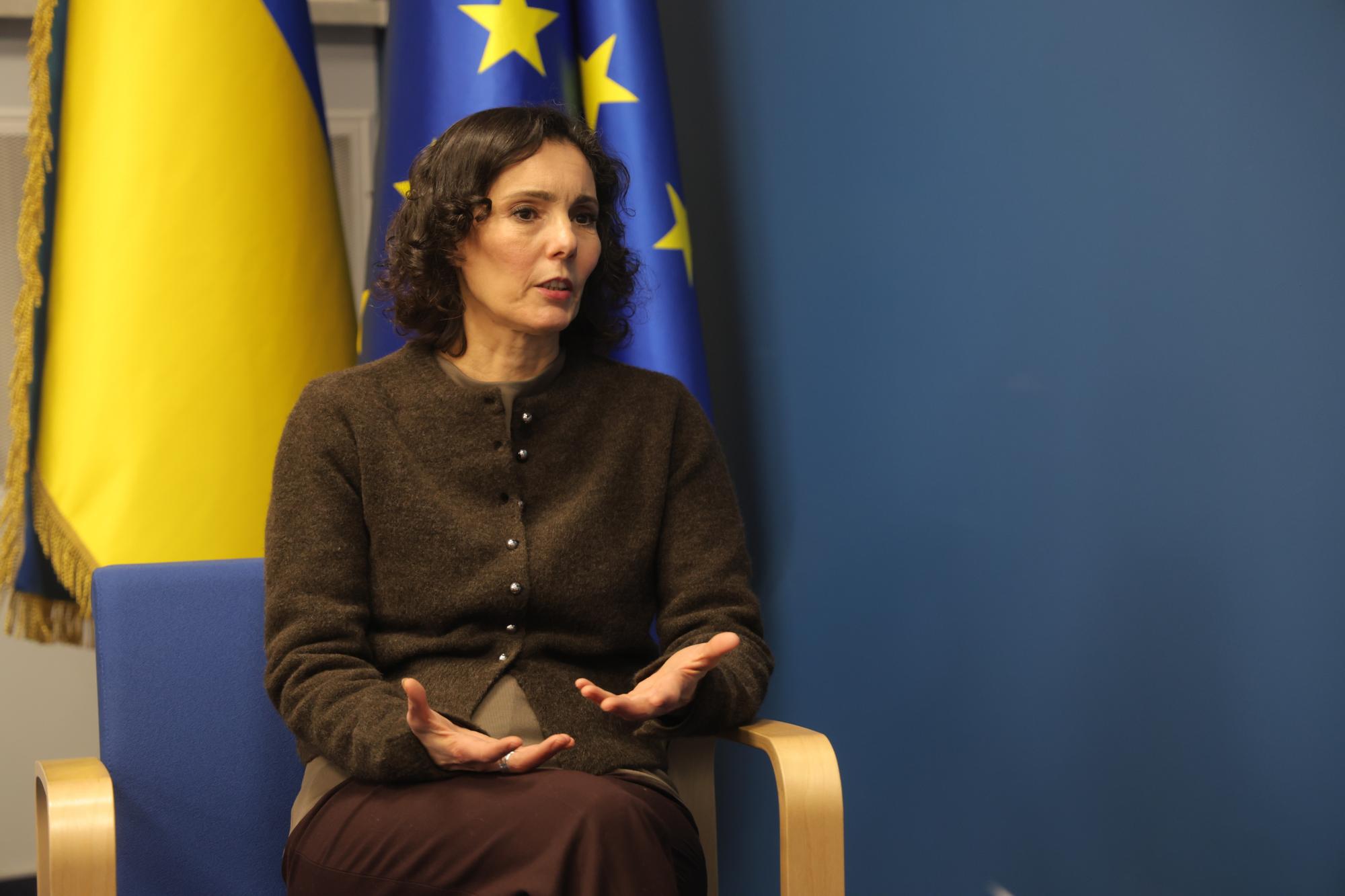 Ukraine cooperates with the EU on civil protection (photo: Dmytro Semeniuk, RBC-Ukraine)
It's very important and instructive for us. We are already exchanging the best practices. And you have to know that Ukraine is not only the recipient of our support when it comes to civil protection. They are also contributing.
Since Ukraine joined the Civil Protection Mechanism, you committed nine response capacities to the European civil protection pool. These include emergency medical teams, decontamination, forest fire fighting, and urban search and rescue. And you are already contributing, for example, in 2023, during the earthquake in Türkiye — you sent an urban search and rescue team to Türkiye after the earthquake — so it shows that we will learn a lot and we are already learning a lot from you.
— In the EU reality, how could these practices work? Because in Ukraine, there is one state government, and in the EU, there are 27 governments.
— Yeah, that's why it is important to differentiate between the EU Commission and the Member States. We are working together. The civil protection mechanism is about the EU as a whole, Member States capacities together with the Commission’s own strategic capacities.
For instance, the large generators, around 1,000 generators that we just sent, came from our own strategic reserve. So far, we have delivered more than 11,000 generators, and around 40% came from our strategic reserves, and the rest from Member States and participating states' donations.
It means that we request information on who has what, in which country, and who can contribute. And then the transportation is covered by the European Commission. We cover around 75% of the transportation cost.
It is in the interest of the member states to deliver their support through this UCPM (Union Civil Protection Mechanism), because we reimburse them three-quarters of the cost.
— The last question. You’ve been a European Commissioner for over a year now. What challenges for the near future have become apparent to you during this time?
— The real challenges are the funding gap. The fact that there is less and less money, the withdrawal from the United States, the backlash when it comes to human rights, and specifically when it comes to gender, persons with disabilities, and minorities, LGBTIQ+ communities. The number of wars in the world.
Also, there is a violation of international law and international human rights. These are really challenging because the direct consequence is the loss of life of humanitarian workers who are killed while they try to save lives.
 Ukraine remains a priority for EU aid (infographic: RBC-Ukraine)
And there is a lack of accessibility for humanitarian aid. Russians are violating international humanitarian law and preventing the delivery of humanitarian aid.
It is something that we can observe nearly everywhere, where there is a conflict. It is more and more difficult to have access to the people in need, although there are rules that apply, even in times of war.
So we are preparing humanitarian advocacy to find strategic answers to this loss of rules and humanitarian principles, and moreover, to these principles. Because at the end it's about our humanity and about preserving the lives of innocent civilians — children, women, elderly people — in times of war.
Quick Q&A
— Who is eligible for EU humanitarian aid in 2026?
— The aid is intended for the most vulnerable groups: internally displaced persons, veterans, and people living in frontline areas. Priority is given to meeting basic needs such as food, temporary shelter, medicine, and heating.
— How exactly are EU funds distributed for humanitarian needs in Ukraine?
— The European Commission does not transfer funds directly to local organizations, but works through UN agencies and large international non-governmental organizations (NGOs). These partners are required to involve Ukrainian activists and local communities, who are most familiar with the needs of people on the ground.
— Will EU support for Ukraine decrease due to the change in US policy?
— The European Union assures that there is no risk of a reduction in aid to Ukraine, despite the new US president's decision to cut funding for international agencies. Negotiations are currently underway on the budget for the next seven years, with support for Ukraine remaining one of the main priorities.
— How does the MedEvac program work for the treatment of seriously injured Ukrainians abroad?
— Ukrainian hospitals submit a request for specific treatment for a patient, after which the European Commission looks for available places in the program's member countries. The system covers transportation and treatment, and also allows relatives to accompany the patient for support, especially in complex cases such as burn injuries.