600k drones a month: US to recreate Ukraine's battlefield as Russia ramps up production

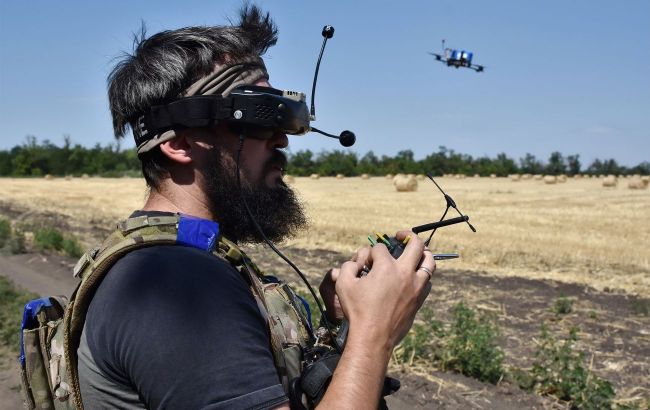 Photo: Ukrainian soldier operating an FPV drone (Getty Images)
The US Army plans to deploy at least two internal test ranges within the next four to six weeks to replicate real-world electronic warfare (EW) conditions seen on the battlefield in Ukraine, according to US Army Secretary Dan Driscoll.
Integrating developers and the military
The main goal of the new facilities is to bring together drone manufacturers, counter–unmanned aerial systems (C-UAS) developers, and service members.
"You can have a kind of electronic warfare and all of the contested environment created, and you can have drone manufacturers and counter-drone tool-builders engaging together. Then, we also want soldiers to be able to go there, so that they can strengthen their skills and work hand-in-hand with developers," Driscoll said.
Currently, US military counter-drone training often takes place without active jamming systems, due to strict domestic restrictions on the use of electronic warfare.
In addition to domestic ranges, the Pentagon is also considering creating a global test site outside the United States for "much more aggressive testing," including hypersonic weapons. The location has not been disclosed, as planning is still ongoing.
Scale of production and war of attrition
Dwayne Hayes from the Army's Strategic Threats Office outlined the current scale of drone use in the war:
- Russia produces between 3,000 and 5,000 one-way attack drones (such as Shahed-type drones) per month, as well as around 600,000 smaller FPV drones monthly.
- Ukraine produces about 30,000 interceptor drones per month to counter the threat.
Hayes stressed that the US has strong capabilities to produce high-tech and expensive "exquisite" munitions, such as interceptor missiles for Patriot or THAAD systems.
However, in a brutal war of attrition, the US military critically needs cheaper interception systems that can be used at scale.
Earlier, the US president said Ukrainian forces are "doing pretty well" on the front line despite Russia's significant advantage in manpower and resources.