'We are not close to peace yet.' Sikorski on negotiations, Putin, and Ukraine's EU bid


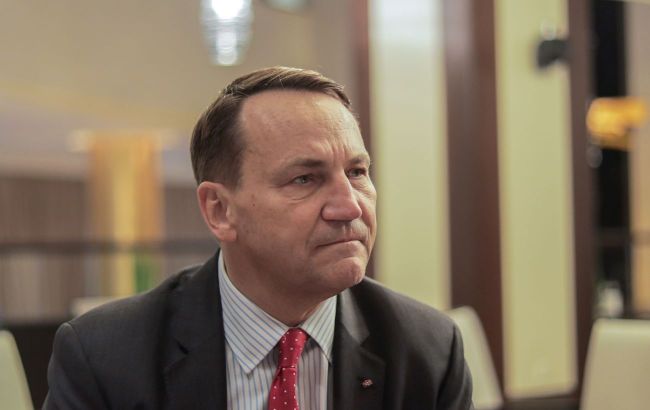 Radosław Sikorski, Polish Foreign Minister (photo: Andrii Puzanov/RBC-Ukraine)
"Putin still believes he can win at an acceptable cost," says Polish Foreign Minister Radosław Sikorski. On the anniversary of the full-scale invasion, he visited Kyiv with a sober forecast: peace is still far off, and Ukraine's path to the EU will not be quick.
In a quick-fire interview with RBC-Ukraine, the Polish Deputy Prime Minister shared his view on why Hungary manipulates facts about the shelling, whether Europe can step in for US aid, and when historical disputes between Kyiv and Warsaw might ease.
Read also: Another brutal chapter or peace? Ukraine faces crossroads as Russia's full-scale war hits year four
Key takeaways:
- Peace is still far off: Putin still hasn't realized that the cost of his war aims is unacceptable.
- Cracks in Russia's economy: Western sanctions are working, but Russia will feel their destructive effect only over time.
- Money as a weapon: The EU is allocating €90 billion to boost Ukraine’s defense industry by utilizing idle capacity.
- Hungarian manipulations: Budapest is using the Druzhba oil pipeline as a pretext to block aid to Ukraine.
- EU accession without illusions: Ukraine's path to membership will not be instant—Poland itself took nine years.
- Historical reconciliation: Ukraine and Poland are moving toward an agreement on past events through a Christian responsibility to give the dead a dignified burial.
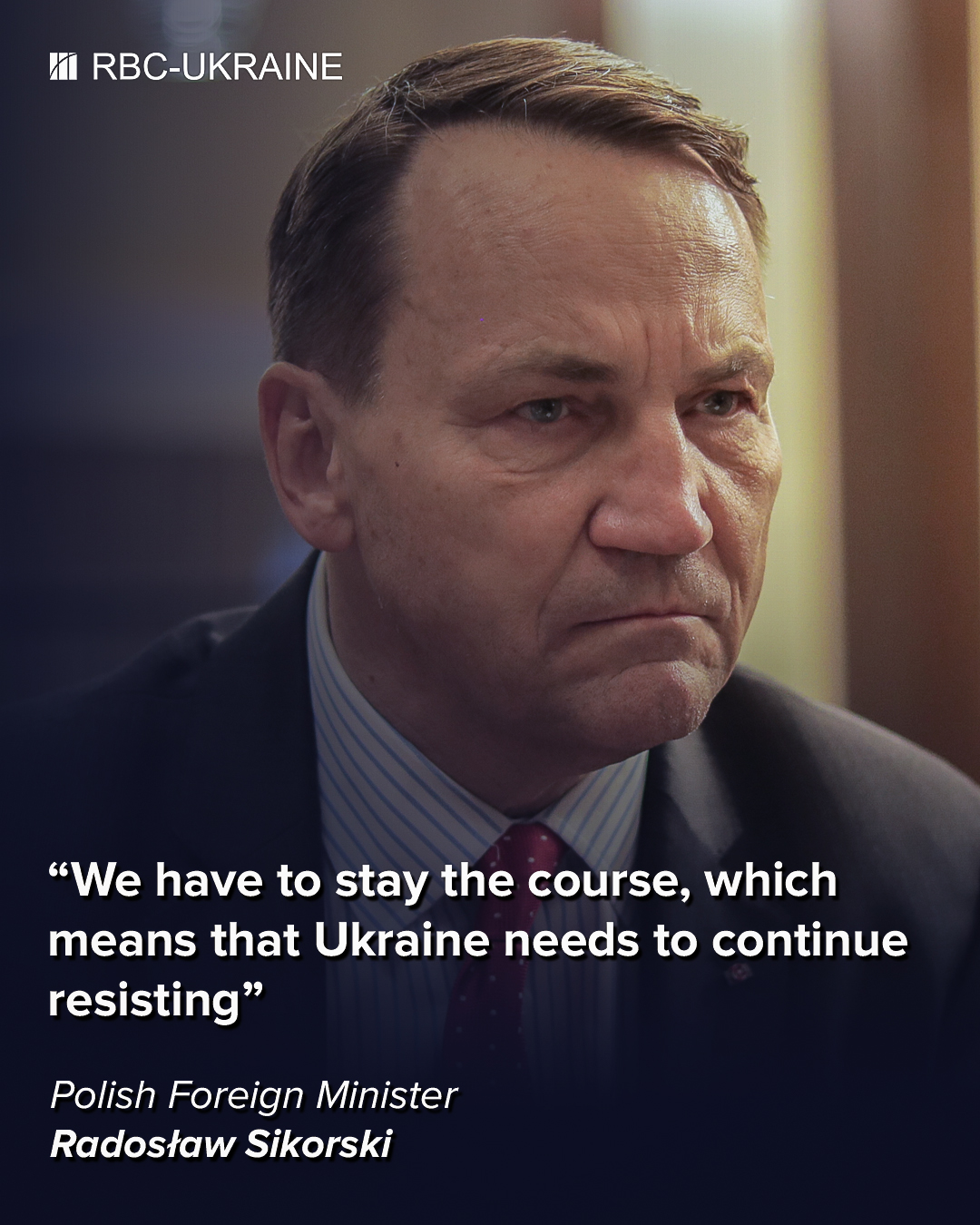 Sikorski is skeptical about the possibility of a quick end to the war (infographic: RBC-Ukraine)
These days, Kyiv has become the center of European diplomacy. Dozens of leaders and top politicians have arrived in the Ukrainian capital to show support for the people who, for the fifth year, continue to resist Russia's full-scale aggression.
Yet the tone of this year's commemorations has shifted. Instead of the usual slogans about a quick victory or negotiations, a sober call for a substantial increase in aid is being heard more and more.
With the leaders of the European Three – France, Germany, UK – absent, the spotlight has fallen on the Baltic states, Scandinavia, and Poland. They are now the loudest voices warning: Putin is not seeking peace, and Europe cannot afford fatigue. The outcomes of the trilateral talks in Abu Dhabi and Geneva give little reason to think otherwise.
RBC-Ukraine spoke with one of the EU's most experienced diplomats, Deputy Prime Minister and Foreign Minister of Poland, Radosław Sikorski. We met on the sidelines of a special YES event organized by the Viktor Pinchuk Foundation to discuss how to refocus the West's attention on Ukraine and what to expect from Warsaw at this critical moment.
– Today marks the 4th anniversary of the Russian full-scale invasion. Do you think there's a chance for peace now, or there will be another year of war?
– First of all, a “three-day” military operation has been lasting for four years now, so Putin miscalculated criminally, and Ukraine is still standing.
As we speak today on the anniversary, Ukraine is even recovering some shreds of its territory. I've been of the view that these colonial wars, unfortunately, usually take quite a few years, because for them to end, they need a change in the minds of the aggressor.
The aggressor has to understand that he made a mistake. I think they already do, but they also have to come to the conclusion that they can't achieve their war aims at an acceptable cost, and I don't think they've concluded that yet.
– How to make them understand that they will not be able to reach any goals?
– To impose costs on them. The cracks are clearly visible in the Russian economy, but it takes time. We have to stay the course, which means that Ukraine needs to continue resisting.
– And what do you think about the current negotiations? Do you think they may lead us to any peace or ceasefire anytime soon?
– I hope so, and it's legitimate to give negotiations a chance to check. In the end, it’s Ukraine that needs to decide what is acceptable. But Putin is still making maximalist demands, demands that Ukraine can't agree to. So while hoping and encouraging, my sober assessment is that we are not close yet.
– You've described the attempts of the current US administration to pressure Ukraine into making certain concessions to Russia as "shameful". Is Europe prepared to fight against such pressure from the United States to avoid making what you also said would be a "historical mistake"?
– Today at the meeting of the Coalition of the Willing here in Kyiv, Ursula von der Leyen announced, with the support of Antonio Costa, that the 90 billion euros for Ukraine will be on the way. This was promised by all the leaders of the EU countries. So this is our contribution. Money matters because you now have a Ukrainian defense industry with spare capacities.
If you get the money, you can make more weapons. And as you know, we also support Ukraine in other ways, by buying American arms, by sending our own arms. And I know it's never enough. But let me tell you, it's much more than many would have expected if you asked me four years ago.
– What is the greater obstacle to Ukraine's rapid accession to the EU — an insufficient level of reforms in Ukraine, or the political stance of certain member states combined with rigid rules and procedures?
– In Poland, we were very determined to join the European Union starting in the mid-1990s. And we only joined in 2004. It took us nine years. As far as I know, you have not yet fully implemented the Association Agreement.
Read also: Will Ukraine join EU in 2027? Interview with Zelenskyy's office deputy head Ihor Zhovkva
There are also some problems with voting legislation. To implement either the Association Agreement or the acquis communautaire. We are talking about 80,000 pages of legislation. You need your parliament to work really hard. On our side, we need to do assessments of the impact.
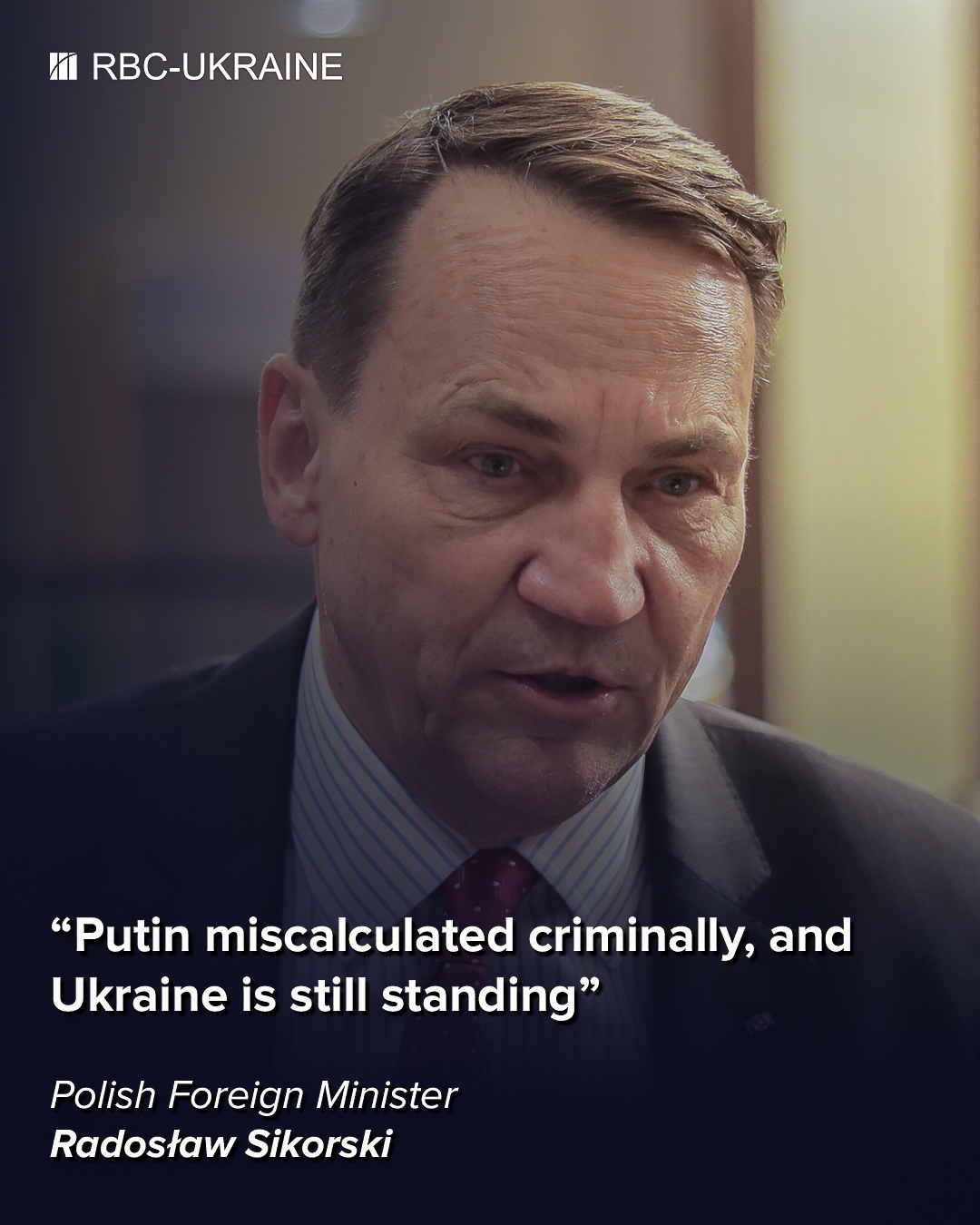 Russia must realize it has made a mistake (infographic: RBC-Ukraine)
You are a large country, so the impact on our economies will be sizable.
We need to make assessments, sector after sector, so that we can prepare ourselves for enlargement too. But look, you became a candidate country as an appreciation of your valor in record time.
Now we need to deal with the Hungarian question, regarding the start of the negotiations.
– This winter was very hard for Ukraine as it suffered unprecedented attacks on its energy infrastructure. Ukrainians were freezing in their apartments. And now we see what Hungary and Slovakia are doing, they threaten to cut off the electricity. How to deal with that?
– This was the subject of my conversations here in Kyiv, including with the head of Naftogaz. So we have an interesting circumstance.
Yesterday in Brussels, the foreign minister of Hungary claimed that there are no technical obstacles for the oil to flow through the Druzhba pipeline from Russia to Hungary. I have spoken today to the head of your Naftogaz, who showed me pictures of the damage that Russian drones and missiles have done to the Druzhba, to the Brody pumping station. And this is the reason, or rather the excuse, on which Hungary is stopping some decisions on behalf of Ukraine.
So in my view, we need European Commission experts on a fact-finding mission here on the ground in Brody to prove to the Hungarians that their information is incorrect.
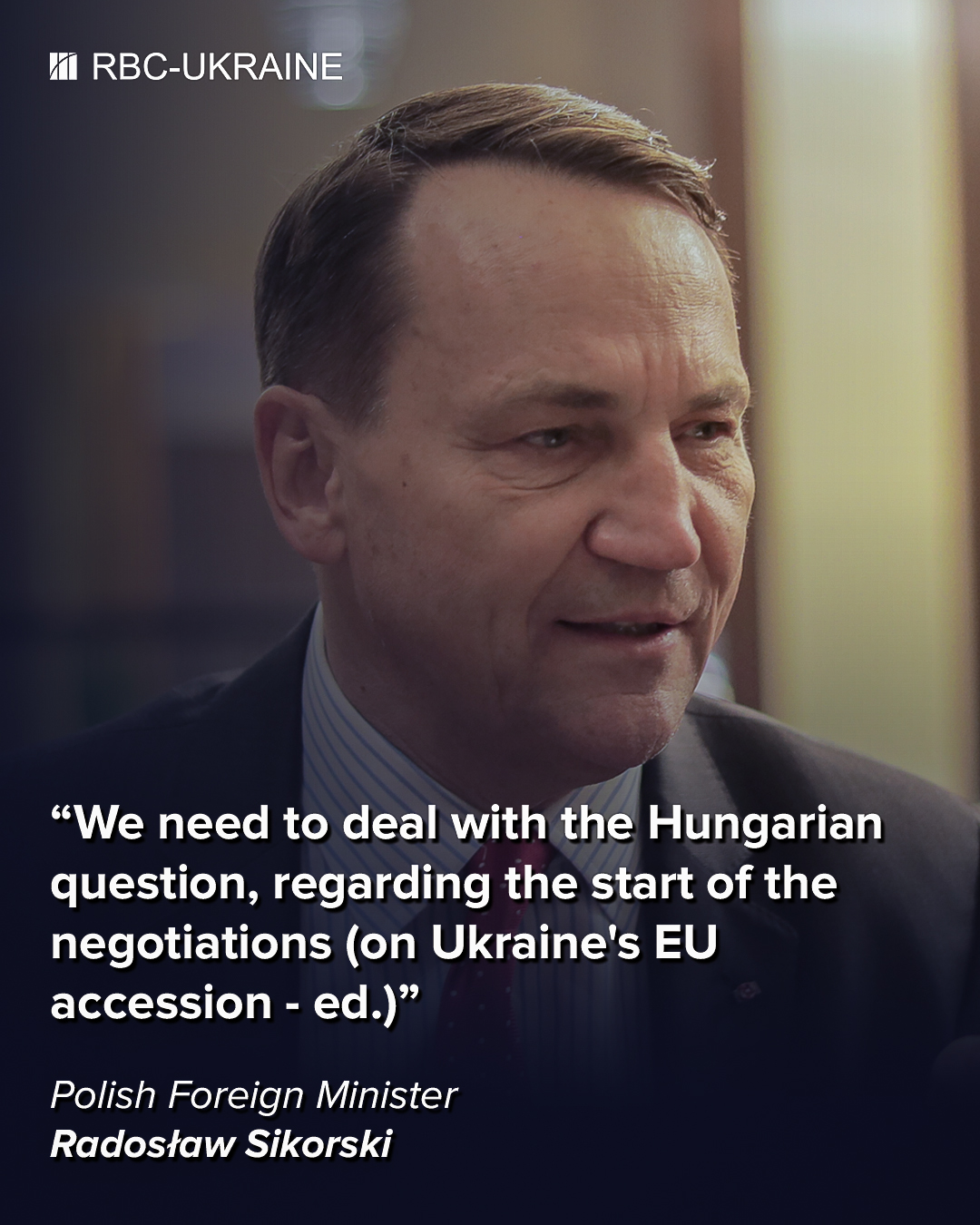 Hungary remains an obstacle to Ukraine's EU path (infographic: RBC-Ukraine)
– How to end this permanent blackmail of the entire European Union by one, or occasionally two, countries?
– Well, it's the pleasures of being a confederation. In a confederation, ultimate sovereignty lies with the member states. We are not a federal state.
Therefore, member states have to agree on things. It slows things down. But it also makes over-centralization and autocracy impossible.
So there are some advantages and some disadvantages.
– What practical and symbolic steps regarding the painful issues of our shared historical past must Ukraine take for this issue to permanently cease being a problem in Ukrainian-Polish relations? And if Ukraine maintains its own vision of the events of the past, will this become an obstacle on our path to Europe?
– For reconciliation to happen fully, we need to agree on facts. We can have different opinions. Contrary to what those who seek to sow discord between us want us to believe, we are moving in the right direction.
I think our historians mostly agree on facts. Minister Sybiha and I, and also our churches, have framed the issue in terms of Christian responsibility for burying the dead. And we have made progress, including decisions in the last few days, which are helping to turn down emotions.
And it's helping to intensify the Polish-Ukrainian collaboration. And I'm very happy about that.