Will Ukraine join EU in 2027? Interview with Zelenskyy's office deputy head Ihor Zhovkva


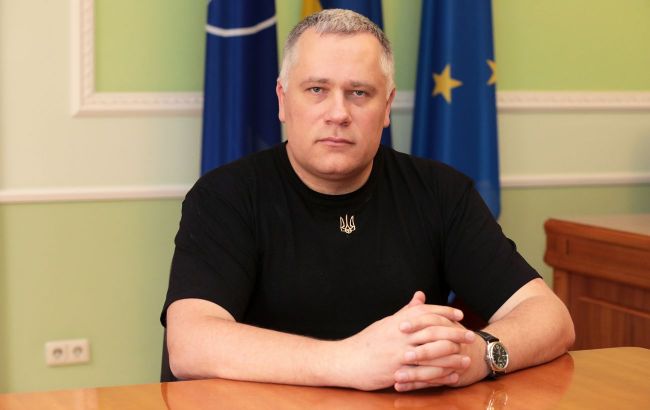 Ihor Zhovkva, Deputy Head of the Office of the President of Ukraine (photo: Getty Images)
Ukraine's accession to the European Union is part of the agreements on ending the war. Kyiv already wants to receive a clear date when this will happen.
How realistic the fast membership of Ukraine in the EU is, whether Europe is ready for this, and how sufficient Western aid is for us already now — read in an interview with the Deputy Head of the Office of the President of Ukraine, Ihor Zhovkva, for RBC-Ukraine.
Read also: Politico unveils 5-step roadmap for possible Ukraine's EU entry by 2027
Key points:
- Decision in 2027: Ukraine wants a decision regarding its future in the EU to be made next year.
- Rejection of "light" membership: Ukraine does not need ersatz membership in the EU. But the model of Ukraine's accession will be "unique."
- Get into the wave. It would be unfair if Albania, Montenegro, and Moldova join the European Union next, but not Ukraine.
- Ukraine already integrated: Even without official membership, Ukraine has entered the political segment of the EU. The European Council can no longer take place without the President of Ukraine.
- Delays in aid: If the West provided everything on time and in sufficient amounts, ballistic missiles would not destroy the Ukrainian energy sector.
- No extra conditions: Ukraine wants there to be no additional conditions for the allocation of funds for military aid.
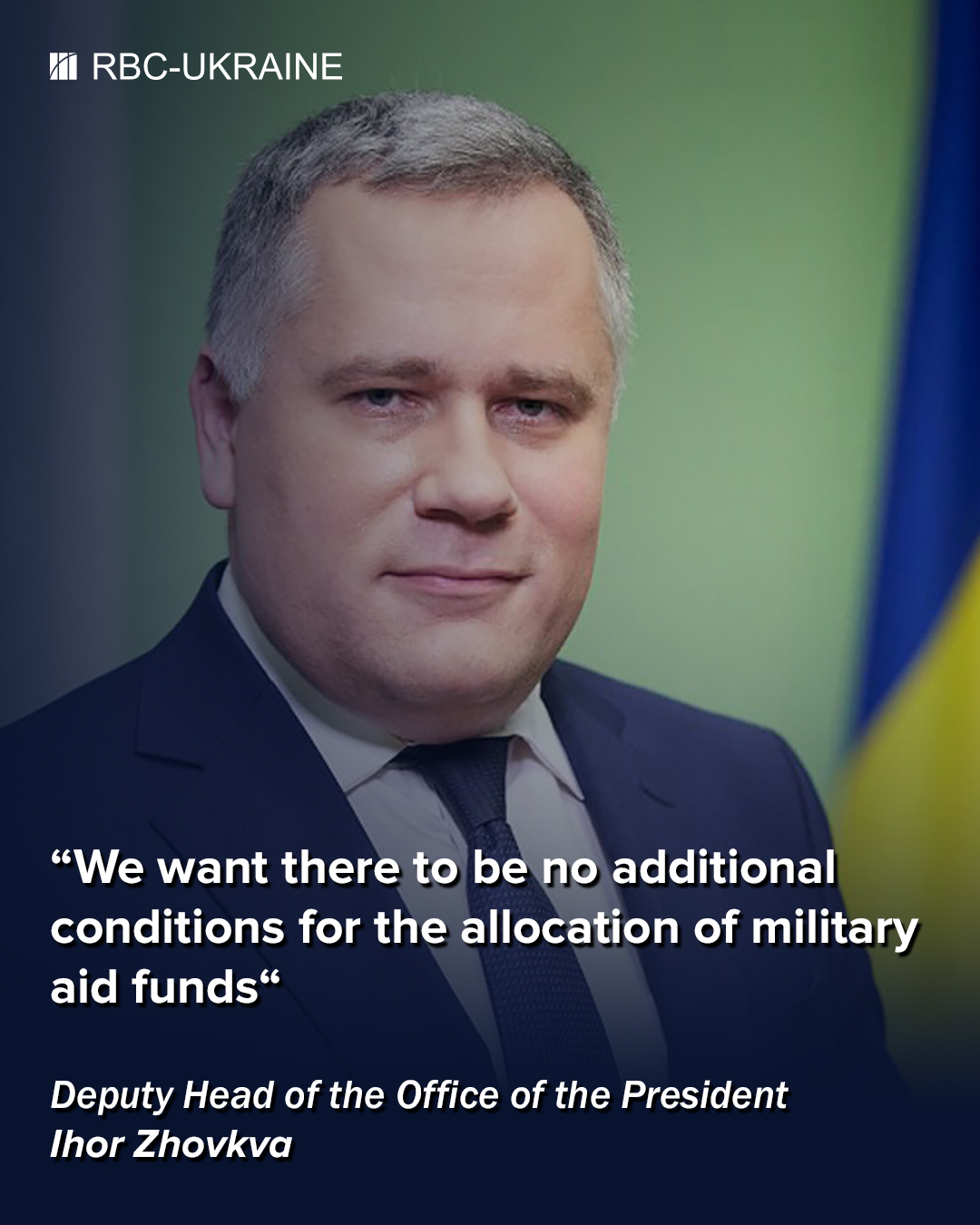
Ukraine wants there to be no conditions for the allocation of funds for military aid (RBC-Ukraine infographic)
Since the start of the full-scale war, Ukraine has repeatedly proven that the impossible is possible — as it did by securing EU candidate status.
On the fifth day of the full-scale invasion, when Russian troops were on the outskirts of Kyiv, Ukraine officially applied for membership in the European Union. Just four months later, in June 2022, it was granted candidate status.
Now Ukraineєs main ambition is to quickly become a full member of the EU. President Volodymyr Zelenskyy is demanding that European leaders set a clear accession date. As the head of state explains, the current moment — amid peace negotiations — presents the best possible window of opportunity, because later Moscow will go to extraordinary lengths to prevent Ukraine from ever joining the bloc.
This will require a shift in approach within the EU itself. Under the current procedure, a candidate country must methodically meet all required criteria across virtually every sphere of public life, while Brussels meticulously assesses the progress made. As a result, the process typically drags on for many years.
Resistance to changing the rules is not limited to Hungary, whose prime minister, Viktor Orbán, has made blocking Ukraineєs EU accession a key political objective. According to RBC-Ukraine sources, enthusiasm for departing from established procedures is also limited in several other European countries.
At the same time, Ukraine has many allies on this path, including within the EUєs top leadership — officials who are pushing the often slow-moving Brussels bureaucracy to act.
"It is very telling that Brussels' bureaucracy has started to move. There is sometimes a very high degree of inertia there when it comes to political decisions," Ihor Zhovkva, Deputy Head of the Presidential Office, told RBC-Ukraine.
He repeatedly stresses that Ukraine will not accept any form of “limited” or “light” membership in the EU, despite widespread media speculation. The goal is full membership — possibly with transitional arrangements in certain sectors, similar to those experienced by many current EU member states.
In the interview, RBC-Ukraine also addressed Ukraine's current challenges, including whether Western assistance is sufficient given the intensity of Russian attacks and the winter cold.
"If aid had been delivered on time and in sufficient quantities, ballistic missiles probably would not have struck our energy infrastructure facilities," the Deputy Head of the Presidential Office said. He added that Europe is trying to do everything it can, though it could do more.
Below are the key takeaways from Zhovkva's interview with RBC-Ukraine.
On the EU enlargement strategy and Ukraine's place in it
Ihor Zhovkva emphasized the importance of a fair approach toward all candidate countries in the future enlargement of the European Union. He stressed that Ukraine will not accept selectivity in matters of European integration.
"It would be deeply unfair if, in the next wave of EU enlargement, Albania, Montenegro, and Moldova were included — but Ukraine was not," he said.
He also underlined that Ukraine must not become a hostage to internal EU processes, including changes to its rules and procedures.
"There will be full membership, but first there must be a political decision on full membership, with a clear date," Zhovkva said.
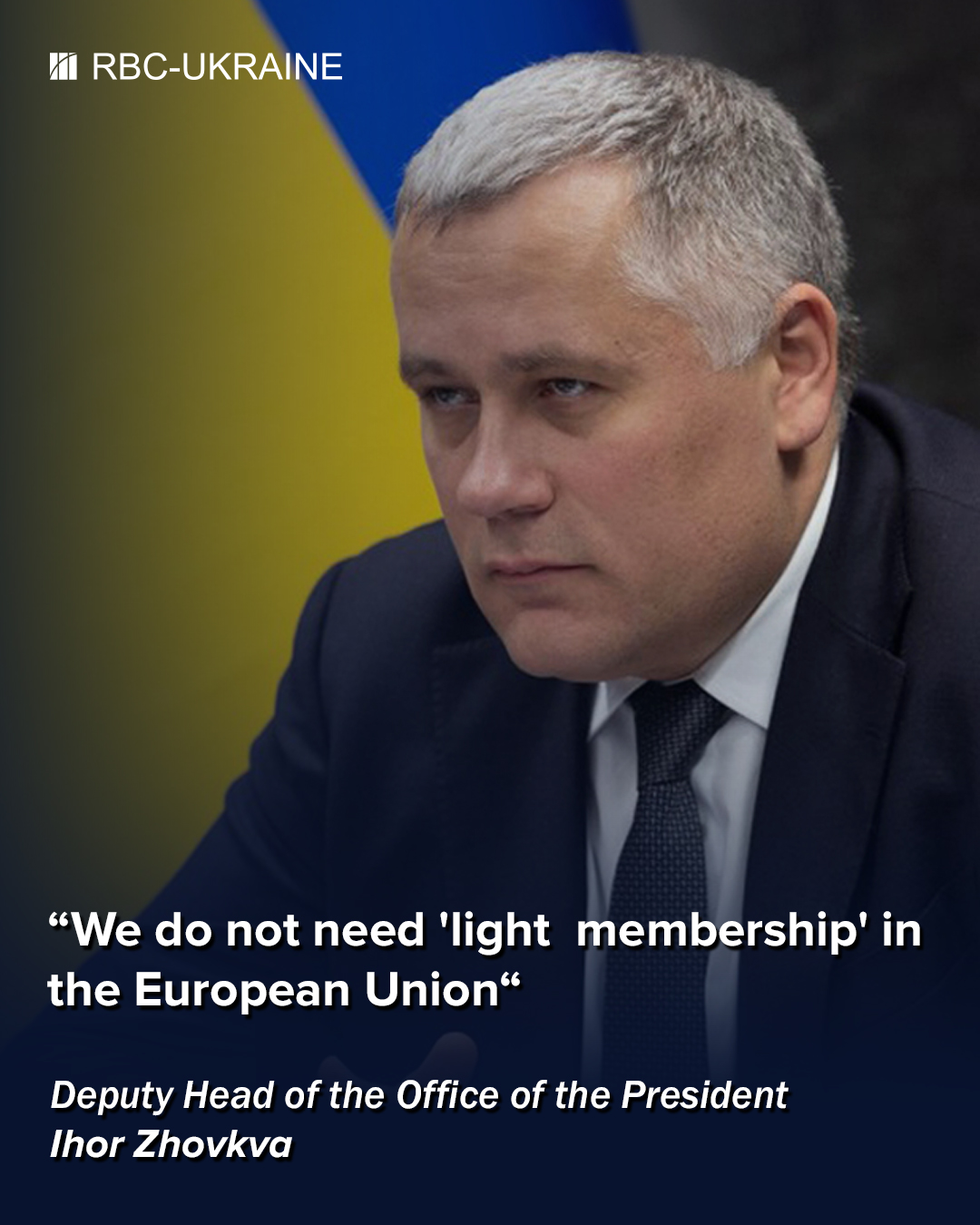
Ihor Zhovkva rejects any ideas of "simplified" formats of membership for Ukraine (RBC-Ukraine infographic)
On the inadmissibility of alternative membership formats
The Deputy Head rejected any ideas of "simplified" formats of membership for Ukraine that have been widely discussed in the media.
"We do not need ersatz membership in the European Union," he said.
At the same time, transitional stages in certain sectors may be possible, he noted — but the key issue is a political decision on Ukraine's accession to the EU.
"The ultimate goal is full membership — without question. And we have already begun discussing this. It is very telling that Brussels' bureaucracy has started to move. There is sometimes a very high degree of inertia there when it comes to political decisions," the Deputy Head of the Presidential Office said.
On unconditional military assistance and funding
Zhovkva acknowledged that current Western assistance is still insufficient.
"If aid had been delivered on time and in sufficient quantities, ballistic missiles probably would not have struck our energy infrastructure facilities," he said.
At the same time, Ukraine would like to see various forms of assistance move faster and with less bureaucracy.
"We are grateful for the EU’s €90 billion loan over two years, and grateful that €60 billion will go specifically toward Ukraine’s military needs. We want it to move faster. We want there to be no additional conditions attached to military funding. And we want it without unnecessary bureaucracy," the Deputy Head of the Presidential Office said.
Quick Q&A:
– When is a political decision on Ukraine's EU membership expected?
It would be desirable for a clear political decision on the future of Ukraine in the European Union to be adopted in 2027.
– Will Ukraine agree to a "light" version of EU membership?
Ukraine does not need ersatz membership or "inferior" membership. The model of accession will be unique, but it will definitely not be light.
– Is Europe managing to supply Ukraine with the necessary aid on time?
Now the situation is significantly better than at the beginning of the full-scale war, but there are still issues with the allocation of funds, with political will, and with the expansion of European production.
– How does Ukraine want to receive military aid?
The requirement is that no additional conditions be imposed on the allocation of funds for military assistance.