Ukraine's 2030 EU goal: What could slow it down


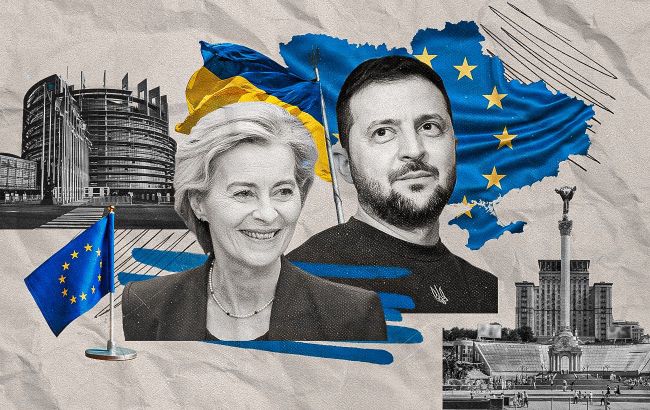 Photo: Volodymyr Zelenskyy and Ursula von der Leyen (Collage: RBC-Ukraine)
Ukraine’s European integration process will soon move forward after being stalled for a long time. However, it is unlikely to advance too quickly.
Read RBC-Ukraine’s report on when all negotiation clusters may be opened, whether EU membership by 2030 is realistic, and whether Poland could still create unexpected obstacles.
Key points:
- The process is moving forward: On June 15, after a lengthy pause, Ukraine will open its first negotiation cluster, “Fundamentals,” which covers rule-of-law reforms and is considered the most important part of the EU accession process.
- Hungary’s position changes: Prime Minister Peter Magyar agreed to support the opening of negotiations after consultations and Ukraine’s commitment to address national minority rights issues.
- The Polish question: Despite concerns and controversy surrounding historical disputes, Poland is not expected to block the opening of negotiation clusters.
- Membership timeline: The optimistic target for Ukraine’s EU accession remains 2030, but further progress will depend on how quickly parliament and the government implement reforms needed to close all six negotiation clusters.
In one week, on June 15, Ukraine is finally expected to achieve formal progress on its path toward the European Union after nearly two years of stagnation.
The first of six negotiation clusters — groups of legislative areas in which Ukraine must implement reforms to join the EU — is expected to be opened.
Although the main obstacle that frustrated everyone, Viktor Orbán’s Hungarian veto, has finally been removed, it would be premature to expect Ukraine to race toward EU membership without further hurdles.
European integration after Orbán
Peter Magyar’s decisive election victory created overly optimistic expectations among many Ukrainians. Some believed that once Orbán was gone, all vetoes would automatically disappear, including those affecting Ukraine’s EU accession.
However, Magyar quickly made it clear that he is not specifically pro-Ukrainian. At most, he is pro-European and, above all, pro-Hungarian. The day after his election victory, he stated that the rights of ethnic Hungarians in Ukraine’s Zakarpattia region would be among his priorities in relations with Kyiv.
Magyar was not prepared to lift the veto automatically. He agreed to do so only after consultations with Ukraine. According to informed RBC-Ukraine sources, one reason for Budapest’s approach was domestic politics. The new prime minister did not want to give the opposition grounds to accuse him of being excessively pro-Ukrainian.
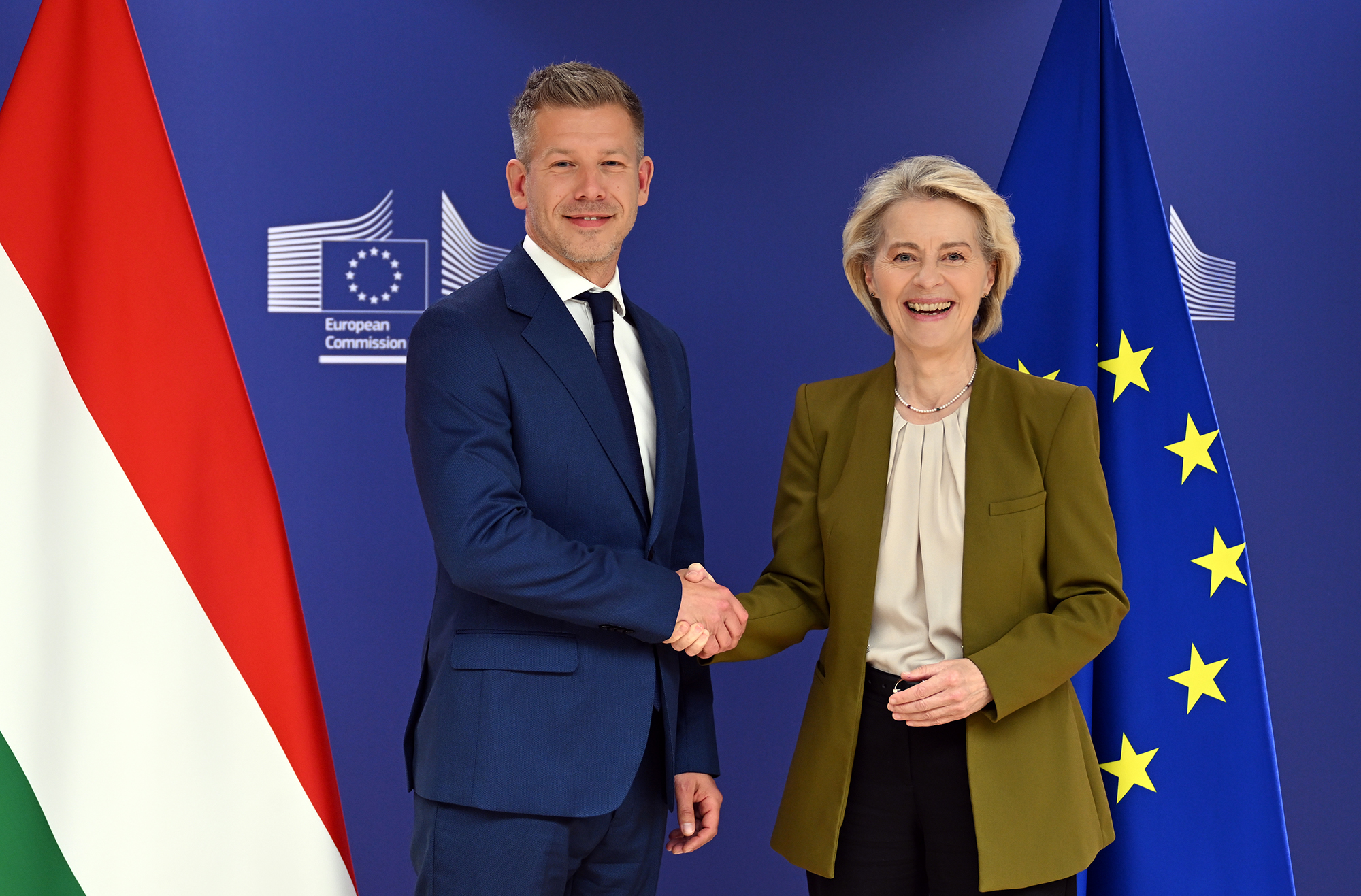
Photo: Peter Magyar and Ursula von der Leyen (Getty Images))
There is, however, a fundamental difference between Orbán and Magyar. For Orbán, the issue of ethnic Hungarians in Zakarpattia was primarily a political tool, and he had little interest in actually resolving the matter. Magyar, by contrast, appears genuinely interested in constructive dialogue with both Kyiv and Brussels.
For him, it was important to present the development as a political success. Ukraine accommodated Hungary’s concerns, allowing the new prime minister to argue that while Orbán had failed to solve the issue for years, the new government managed to do so within weeks.
“If this happens (Ukraine fulfilling its commitments regarding national minorities), the Hungarian government will support the opening of the first round of accession negotiations with Ukraine,” Magyar said.
For Ukraine, making concessions was not particularly difficult. Essentially, the commitments made to Hungary are measures Kyiv would have had to implement anyway as part of EU standards for protecting national minorities.
When will the clusters be opened?
Ukraine, especially after the change of government in Hungary, pushed hard to open the negotiation clusters as quickly as possible, even as early as May.
However, European bureaucracy stood in the way. Any substantive decision in the EU requires numerous technical steps, and issues with Hungary had not yet been fully resolved. But Hungary was not the only challenge.
In May, Western media outlets reported — information later confirmed by RBC-Ukraine’s diplomatic sources — that several other countries also had concerns about the negotiation process.
For a long time, European governments understood that Ukraine’s accession process was effectively frozen by Orbán’s veto. As a result, some countries may not have closely examined individual reform benchmarks. Once the Hungarian obstacle disappeared, additional concerns emerged.
According to RBC-Ukraine sources, Poland and France were among the countries raising issues. For Poland, agriculture remains especially sensitive. Warsaw openly fears that Ukraine’s accession, given its powerful agricultural sector, could severely impact Polish farmers.
Moreover, conservative Polish voters are concentrated in rural regions, and these constituencies tend to be particularly sensitive to historical disputes with Ukraine.
At the height of preparations for opening the first negotiation clusters, controversy erupted after one of Ukraine’s military units was named after UPA heroes. The issue generated a disproportionately strong reaction in Poland.
Somewhat surprisingly, criticism came not only from right-wing and far-right opposition figures but also from Poland’s more moderate governing circles.
This immediately fueled concerns that Poland might veto or at least delay the opening of negotiation clusters for Ukraine.
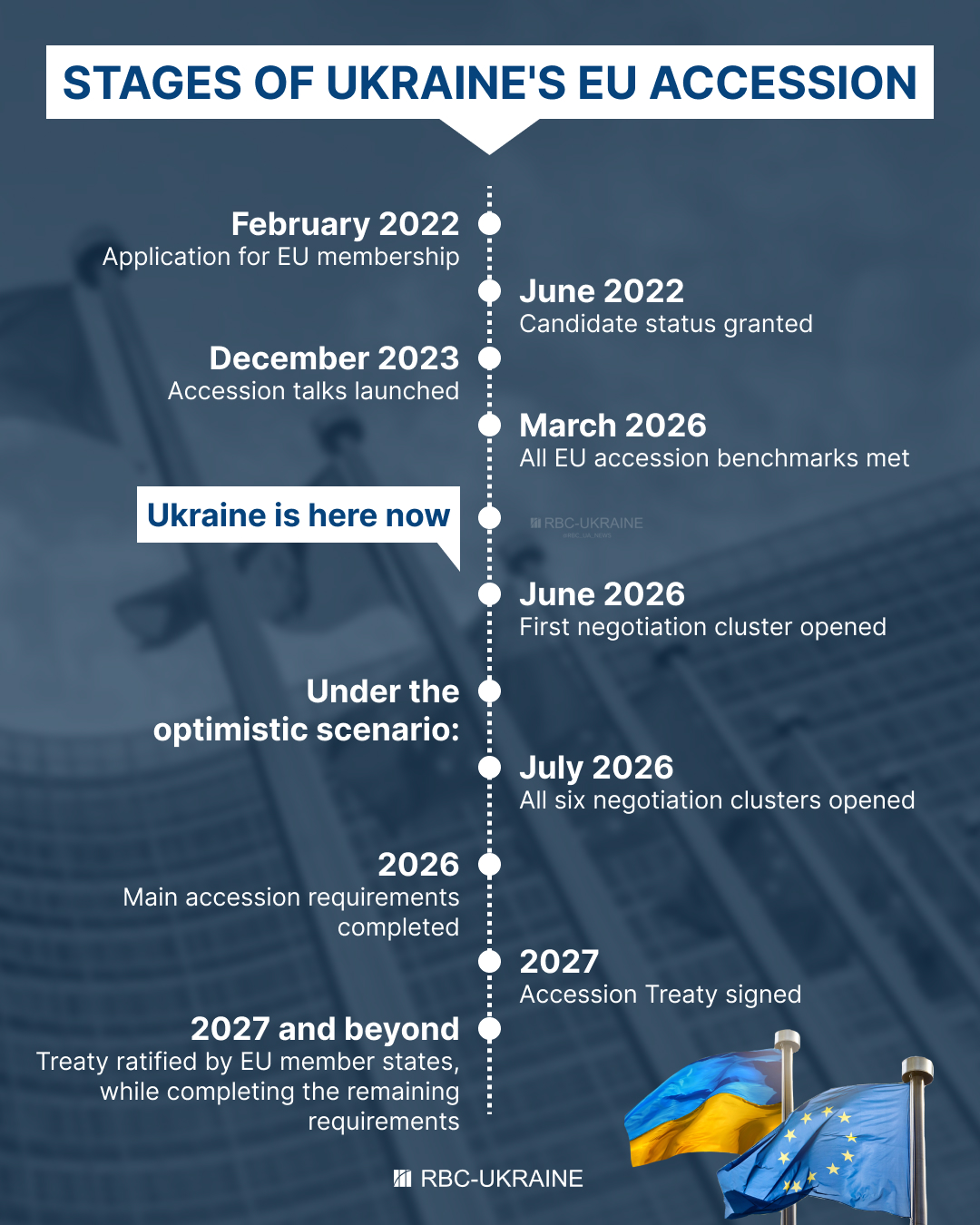
Timeline of Ukraine’s European integration (infographic: RBC-Ukraine)
However, several RBC-Ukraine sources, both within the government and diplomatic circles, confirmed that at least for now, the “Bandera issue” will not become an obstacle to opening negotiation clusters, and Poland will not block anything.
As a result, the next steps look as follows. On June 15, the first negotiation cluster, “Fundamentals,” will be opened. This cluster is always opened first and closed last.
At the same time, Ukraine is ready to begin negotiations on all five remaining clusters.
It is worth noting that the term “negotiations” is somewhat conditional in this context. This is not a negotiation between two equal parties, Ukraine and the EU. Rather, it concerns how Ukraine will fulfill the requirements set by the European Union. There is some room for flexibility, but Kyiv cannot simply reject any major EU requirement, because it is Ukraine that seeks to join the EU, not the other way around.
The position of the European Commission, led by Ursula von der Leyen, is that both Ukraine and the EU have long been technically ready to open all negotiation clusters. However, the decision is made not by the Commission but by EU member states, and always unanimously.
“The question is whether we will move sequentially or in parallel with opening the clusters. All decisions will be made by the member states of the European Union. And we are working with them,” Deputy Prime Minister for European and Euro-Atlantic Integration Taras Kachka recently told reporters.
According to RBC-Ukraine sources, the optimistic scenario is that all six clusters will be opened by the end of July. The pessimistic scenario is that the process will be completed sometime in the fall.
“You talk a lot about opening clusters. But the real challenge is not opening them—it’s closing them,” one European diplomat told RBC-Ukraine.
To close the clusters, Ukraine will need to meet countless requirements aimed at bringing its legislation into line with EU rules.
From a practical standpoint, once the clusters are opened, responsibility for further progress largely shifts to Ukraine. The pace of reforms—and therefore progress toward EU membership—will depend on parliament, the government, and other state institutions.
Recently, however, serious problems have emerged, particularly in Ukraine’s parliament.
“Probably nowhere follows the work of your parliament as closely as Brussels does,” one European diplomat told RBC-Ukraine.
The most important of all clusters is the first one, “Fundamentals,” which includes rule-of-law reforms—an area where progress in Ukraine has traditionally required external pressure.
European officials have high expectations regarding strengthening the independence of SAPO and NABU, reforming the State Bureau of Investigation, changing the procedure for appointing the prosecutor general, and other measures.
For now, there appears to be little political will to implement these reforms, even though Ukraine officially committed to them at the end of last year. This could become a serious issue in the near future.
The ball is in Ukraine’s court
At present, the optimistic target for Ukraine’s EU accession remains 2030, when the next wave of EU enlargement could take place.
According to informed RBC-Ukraine sources, 2–2.5 years of the remaining time may be needed simply to ratify Ukraine’s accession Treaty in all 27 EU member states.
That means negotiations must be completed—including both opening and, more importantly, closing the clusters—and the accession Treaty itself must be drafted by 2027–2028.
Of course, many developments could affect the timeline, including peace negotiations.
On one hand, if the war ends, it could ease concerns among some European countries about admitting a nation that is still at war. It could also provide a major political boost to the accession process, especially if Ukraine’s EU membership is referenced in a future peace agreement.
On the other hand, European integration is not something that can simply be accelerated overnight.
Even if Zelenskyy, Trump, Putin, Merz, Macron, and von der Leyen were all to agree that Ukraine should join the EU, the process would not be completed until every final legal procedure had been approved by countries such as Malta, Cyprus, and Portugal.
Each government ultimately answers first to its own voters, not to decisions made by larger powers.
Furthermore, many European countries—including major players such as France—are likely to experience political changes in the coming years. In some cases, right-wing populist forces skeptical of Ukraine could come to power.
As a result, various creative proposals are emerging—both on how to accelerate the process and on what could potentially be offered to Ukraine instead of full membership if accession remains too difficult.
Earlier this year, there was discussion of a concept known as “reverse enlargement,” under which the EU would allow Ukraine to join first in exchange for a firm commitment to complete remaining reforms within a defined timeframe.
The idea was supported by Ursula von der Leyen herself.
However, it faced opposition from many EU member states.
This once again demonstrates a fundamental reality: regardless of what decisions the EU bureaucracy may support, the final word always belongs to the member states, each of which has its own interests and motivations.
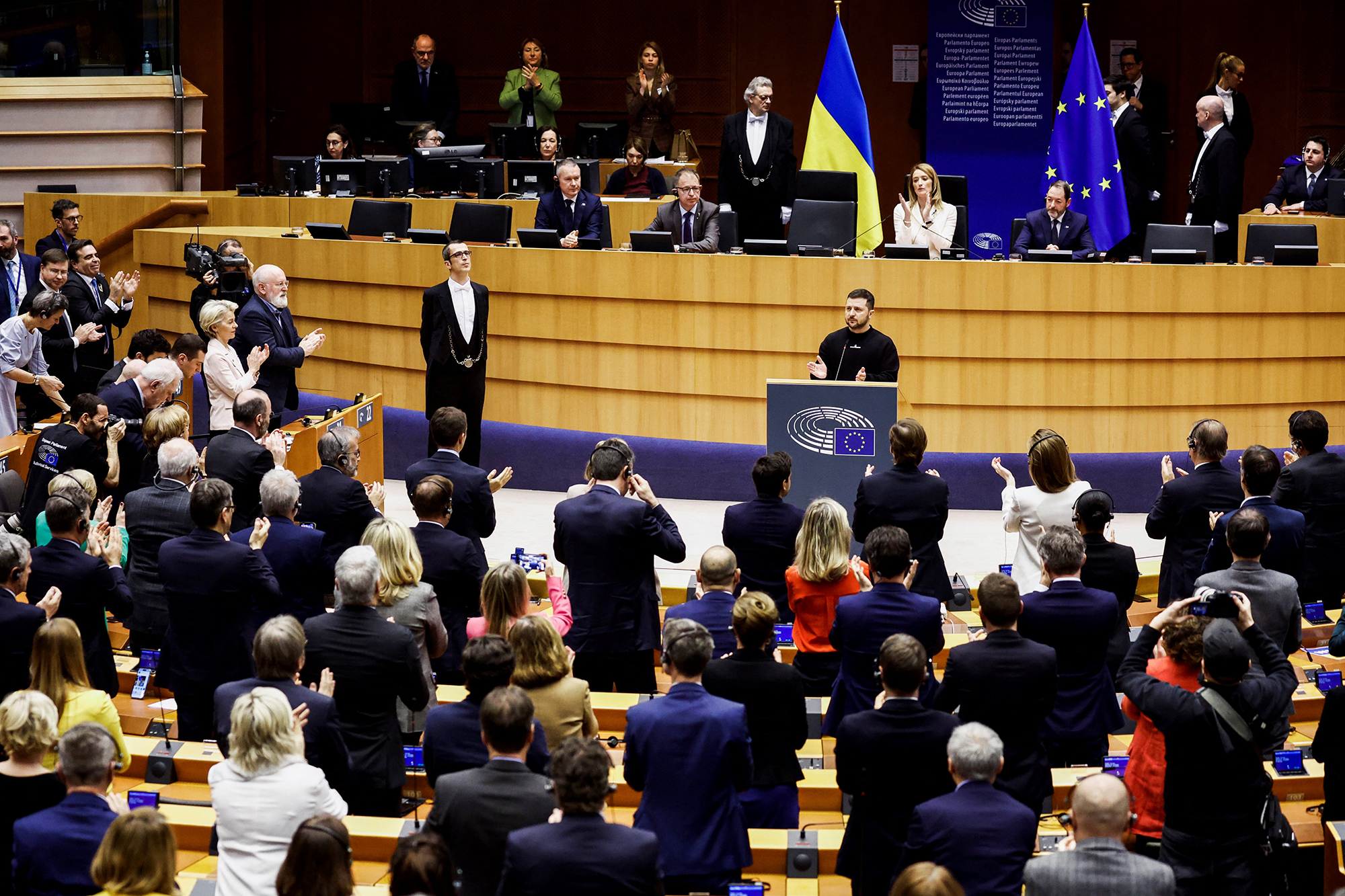
Photo: Volodymyr Zelenskyy addresses the European Parliament (Getty Images)
Ultimately, the idea failed to gain traction, and Ukraine will continue to be assessed under a merit-based approach, meaning progress toward EU membership will depend on the country's reform achievements.
RBC-Ukraine has heard from diplomats across several European countries that, despite recognition of Ukraine's resilience, difficult wartime conditions, and broader geopolitical considerations, none of these factors can replace reforms — and they will not.
Alternative proposals have also emerged, including German Chancellor Friedrich Merz's idea of "associate membership" as an interim status before full EU accession. However, the proposal lacked concrete benefits and, in practice, would have offered Ukraine a status without meaningful advantages while potentially complicating the path toward full membership. As a result, Kyiv quickly rejected the idea, and it also failed to gain broad support within the European Union.
Therefore, if Ukraine completes the stage of opening negotiation clusters in the near future, the next phase will involve lengthy and routine legislative work. At the same time, Kyiv will need to overcome skepticism among some long-standing EU members, many of whom already believe Ukraine's accession process is moving too quickly.
As one senior official familiar with the process told RBC-Ukraine, the best way to address those concerns is through active reforms.
Quick Q&A
– When will real progress in EU accession talks begin?
A formal step will be taken on June 15, when Ukraine opens its first negotiation cluster, titled "Fundamentals," after a two-year pause.
Under the optimistic scenario, negotiations on the remaining five clusters could begin by the end of July. Under the pessimistic scenario, the process may stretch into the fall.
– Is it true that Hungary will no longer block Ukraine?
Viktor Orbán's veto has been lifted, but new Prime Minister Peter Magyar does not intend to automatically approve every step taken by Kyiv.
For Budapest, the rights of ethnic Hungarians in Ukraine's Zakarpattia region remain a key issue. Magyar agreed to support the opening of the first cluster only after Ukraine committed to strengthening minority rights protections in line with European standards.
– Could Poland derail the process because of historical disputes?
Despite the controversy in Poland surrounding the naming of a Ukrainian military unit after UPA heroes, diplomatic sources confirm that Warsaw will not block the opening of negotiation clusters at this stage.
However, Poland continues to have long-term economic concerns regarding Ukraine, particularly related to competition in the agricultural sector.
– What is the realistic timeline for Ukraine's EU membership?
The most optimistic target remains 2030.
The ratification process alone is expected to take approximately 2 to 2.5 years across all 27 EU member states. This means Ukraine must complete all negotiations (opening and closing all six clusters) and finalize the accession Treaty by the end of 2028.