Ukraine's industrial power problem: Why direct energy contracts could be the answer


 Photo: Steelmakers are forced to buy expensive electricity, so they need access to direct contracts with generators (collage: RBC-Ukraine)
High electricity prices are undermining Ukraine's steel industry in the international market. New contracts were meant to lock in prices over an extended period.
RBC-Ukraine analyzes how the first auctions for long-term contracts went, why traders became the dominant buyers, and how the industry can secure long-term access to electricity at an acceptable price.
Key points:
- Electricity prices for Ukrainian industry are quite high, often exceeding levels in EU countries.
- Expensive electricity compounds other challenges — shelling, the blockade of sea exports, rising rail tariffs, and the carbon border tax.
- Ukraine's steel industry is losing competitive ground to domestic EU producers and to outside suppliers from China and Türkiye.
- Long-term contracts reduce the risk of price swings, and both generators and industrial consumers need them.
- Traders won most of the first long-term contract auctions, suggesting the auction model needs to be revised.
- Industry needs the ability to buy electricity months ahead at an acceptable price. That will require cutting out traders, increasing lot sizes, building a discount into the starting price, and fixing the size of the security deposit.
Expensive electricity for industry
Since the massive strikes on the power grid began in the fall of 2022, electricity prices for industrial consumers — particularly the energy-intensive steel sector — have risen significantly. Prices in Ukraine quite often exceed electricity costs in European countries.
The state analytics firm Ukrpromzovnishekspertyza cited last year's figures. In January–September 2025, the average price on Ukraine's day-ahead market (DAM, the market's benchmark price) was 106 euros per megawatt-hour. Over the same period, it was 61 euros in France, 94 euros in Czechia, and 80 euros per megawatt-hour in Germany, Serhii Povazhniuk, deputy director for development at Ukrpromzovnishekspertyza, told RBC-Ukraine.
A similar picture emerged in the bilateral contracts segment (deals signed weeks to months ahead). Over the first nine months of last year, the average price for such contracts in Ukraine was around 106 euros per megawatt-hour — well above the equivalent segment in France (65 euros) and Germany (77 euros), he added.
In May of this year, the weighted-average price on Ukraine's day-ahead market was 101 euros per megawatt-hour, higher than prices in Slovakia, Germany, France, and Spain, according to data from the GMK Center think tank, cited by the Ukrainian Union of Industrialists and Entrepreneurs.
Although in July–August the average day-ahead base-load price in neighboring European countries exceeded Ukraine's market rate (due to abnormally high temperatures and low water levels on the Danube), electricity remains quite costly for Ukrainian end users — especially steel plants.
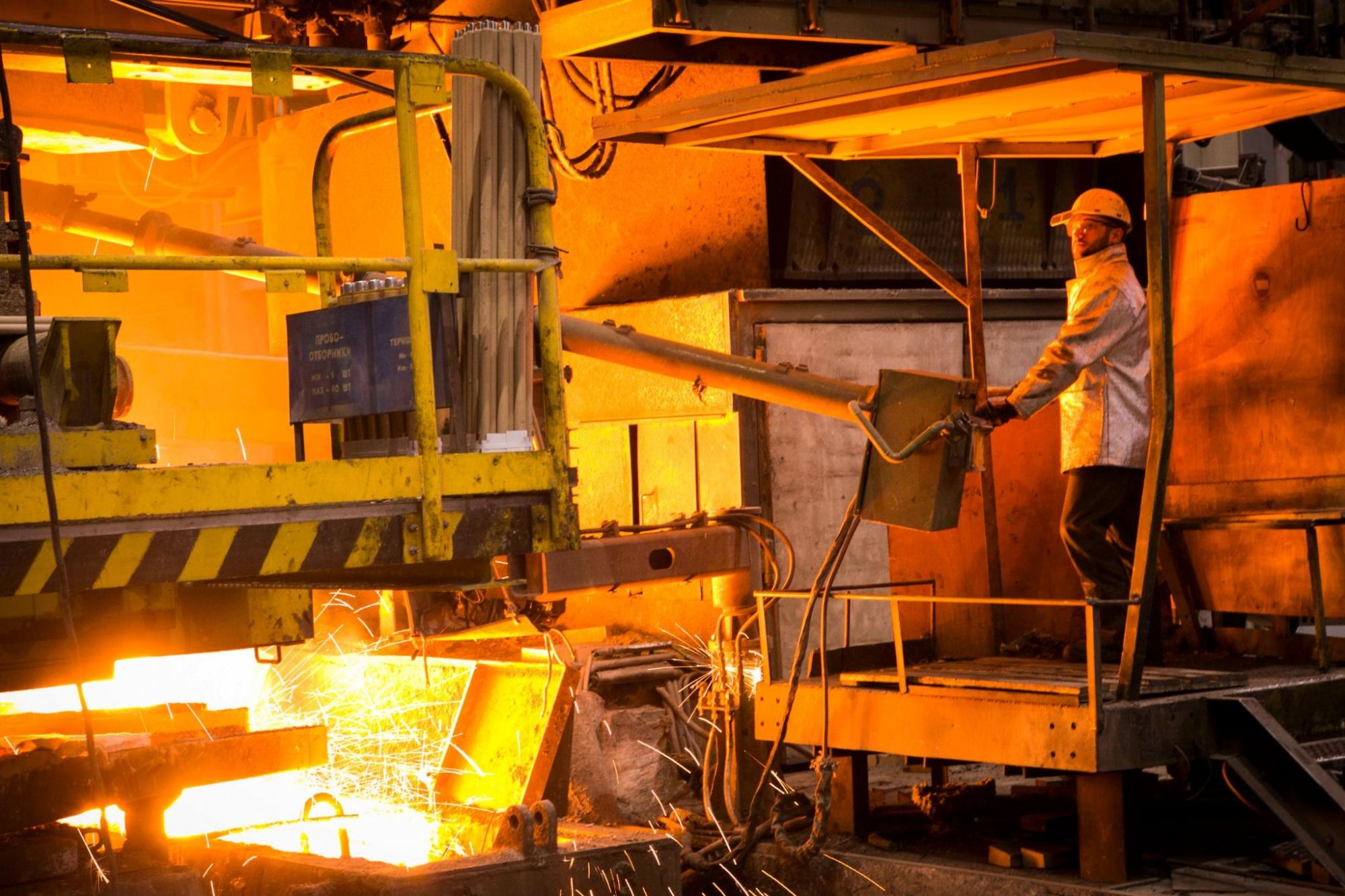
Photo: Steelmaking is an industry that requires enormous amounts of energy (ArcelorMittal Kryvyi Rih)
Electricity costs make up a significant share of the cost structure of steel products. For example, the energy component accounts for 50–60% of the cost of iron ore concentrate, 30–35% of iron ore pellets, and 10–15% of steel produced in electric arc furnaces, says Andrii Hlushchenko, a GMK Center analyst with a PhD in economics.
In recent years, electricity's share of the cost structure has also grown substantially for another key steelmaking input: ferroalloys — alloys of iron and other chemical elements added to give steel its required properties.
The energy component in ferroalloy production has grown from 22–27% in 2021 to 35–40% today, notes Serhii Kudriavtsev, executive director of the Ukrainian Association of Ferroalloy and Other Electrometallurgical Producers.
Tough competitive environment
Spending more money on electricity to produce one ton of steel puts Ukrainian metallurgy at a disadvantage compared to competitors — European producers and other suppliers to the EU market, such as China and Türkiye.
China's government has fully exempted electricity supplied to non-ferrous metallurgy plants from taxes and partially removed the tax burden on electricity for the ferrous metallurgy sector. As a result, in some Chinese provinces, prices for industrial consumers can drop as low as 30 euros per megawatt-hour, Serhii Povazhniuk notes.
For comparison: over the first 10 days of August, the average day-ahead base-load electricity price in Ukraine exceeded 140 euros per megawatt-hour, according to data from the state company "Market Operator."
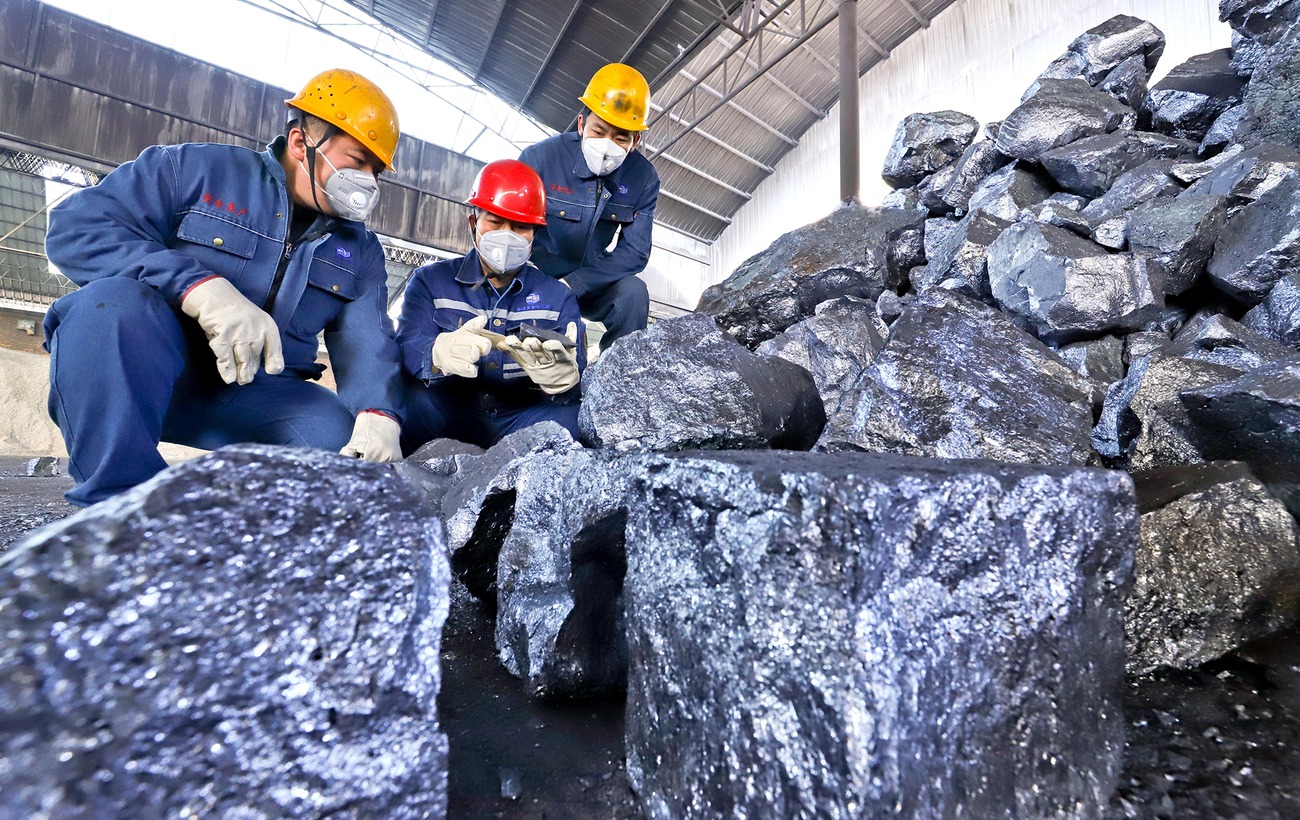
Photo: China's government keeps electricity prices low for its own steel industry. Workers at a steel plant in Zhangye, China, check the quality of ferroalloys (Getty Images)
In addition, until 2024, China actively purchased raw metallurgical inputs from Russia — slabs (large steel plates) — at a significant discount of up to 20% below market value, a representative of Ukrpromzovnishekspertyza notes.
Türkiye remains an active buyer of Russian slabs, billets, and long rolled products. Local producers buy Russian slabs at $100 per ton below market price, roll them into finished products, and sell them into the EU market.
Europe is trying to combat this, Povazhniuk acknowledges, but there's currently no mechanism to verify what steel a given rolled product was actually made from.
As a result, Ukraine's competitors in supplying metal to Europe have access to cheaper electricity and raw materials.
EU support programs for the steel industry
Metal producers in the European Union receive support both from the European Commission and at the national level. One such program is compensation for indirect carbon costs, provided to companies with high energy consumption and significant carbon emissions.
In 2024, the EU allocated 3.2 billion euros to pay out such compensation, Andrii Hlushchenko told RBC-Ukraine.
In June 2025, European countries launched another support program for energy-intensive industries — the Clean Industrial Deal — which provides funding to such companies aimed at reducing their energy costs by 2030.
In effect, this amounts to subsidizing part of companies' energy expenses, Hlushchenko explains, citing Germany as an example: it has approved a budget of 3.8 billion euros for such subsidies for 2026–2028.
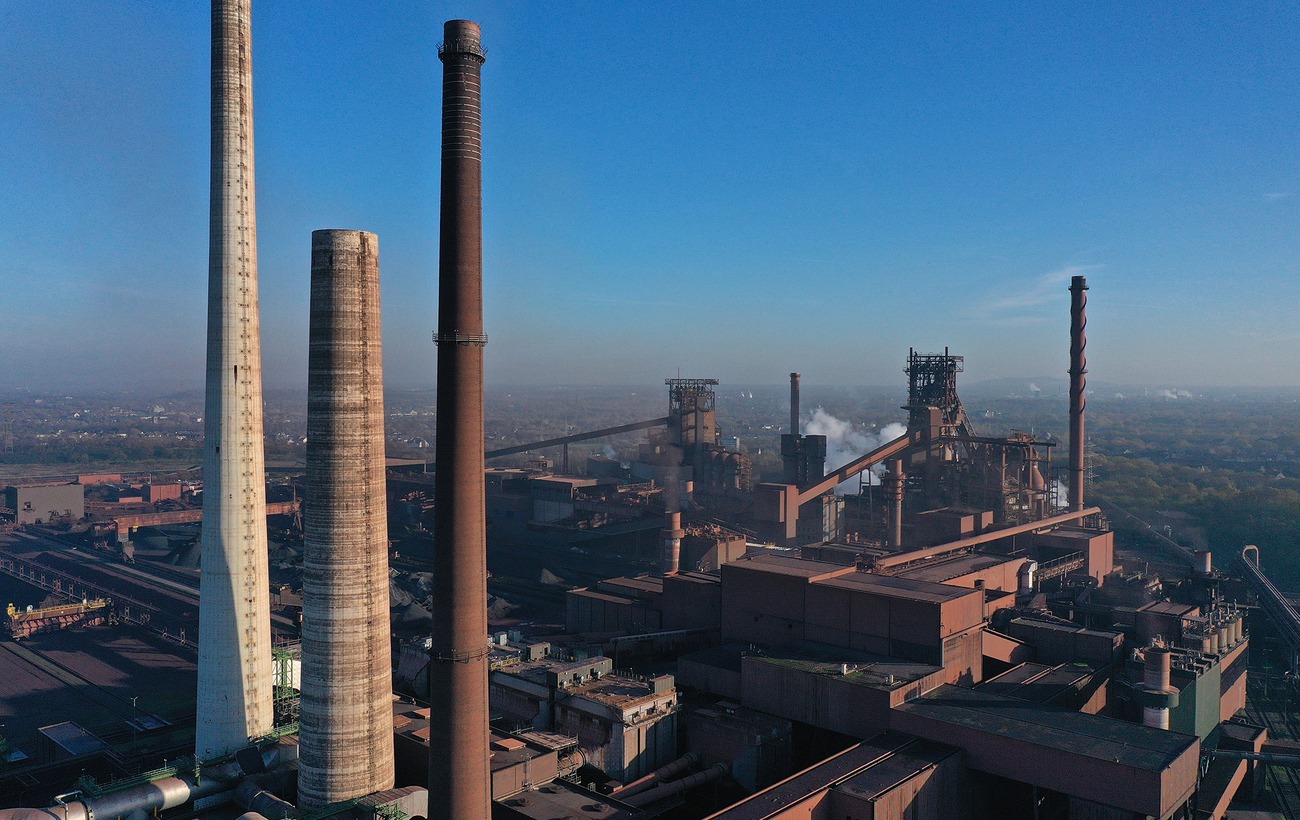
Photo: The EU steel industry receives substantial support from governments and the European Commission. A Thyssenkrupp plant in Germany (Getty Images)
Europe also has national support programs for the steel industry. For example, Italy's Energy Release 2.0 program, in place since 2024, guarantees a fixed electricity price of 65 euros per megawatt-hour for energy-intensive industries. The difference between the actual and the fixed price is covered by state funds, the GMK Center analyst notes.
Developed EU countries understand the importance of industries like steelmaking and don't leave manufacturers to fend for themselves amid the sharp rise in global energy prices triggered by the blockade of the Strait of Hormuz.
This isn't a coincidence — it's the result of deliberate industrial policy, says Dmytro Kysylevskyi, a member of parliament and deputy chair of the parliamentary committee on economic development, in comments to RBC-Ukraine.
Steel companies on their own won't be able to compete with rivals backed by such powerful government support, the lawmaker believes.
High electricity costs add to a whole range of challenges facing Ukraine's steel industry. These include the blockade of Black Sea ports (the main export channel), rising rail transport costs, constant enemy shelling, and the carbon border tax introduced on the EU border starting January 1 of this year.
Under these conditions, any increase in energy prices further erodes the competitiveness of Ukrainian products on European markets, says Anatolii Kinakh, president of the Ukrainian League of Industrialists and Entrepreneurs, in comments to RBC-Ukraine.
To address the high cost of electricity, steelmakers are already building their own generation capacity. However, in the coming years this will only be able to cover up to 5% of their own electricity consumption, Hlushchenko says.
A facility as large as a steel plant requires hundreds of megawatts of capacity, and beyond that, building power plants isn't a core business for a steel company.
You can't count on the steel industry building enough generation capacity to fully meet its own needs, the GMK Center analyst adds.
Launch of long-term contracts
One mechanism for supporting large electricity consumers in Europe is the development of a long-term contracts market. Such contracts, for example, are signed between generating companies and large energy-intensive businesses. Long-term contracts allow both sides to lock in a set energy price over an extended period.
In 2025, the European Commission and the European Investment Bank launched a pilot program offering bank guarantees worth a total of 500 million euros to encourage this kind of contracting practice. These financial instruments help confirm a consumer's creditworthiness.
In Ukraine's electricity market, the lack of a developed long-term contracts segment is a fairly acute problem. The day-ahead price (the DAM segment) remains the main benchmark, and the bilateral contracts recently signed by, for example, state-owned generation companies have not extended beyond about ten days.
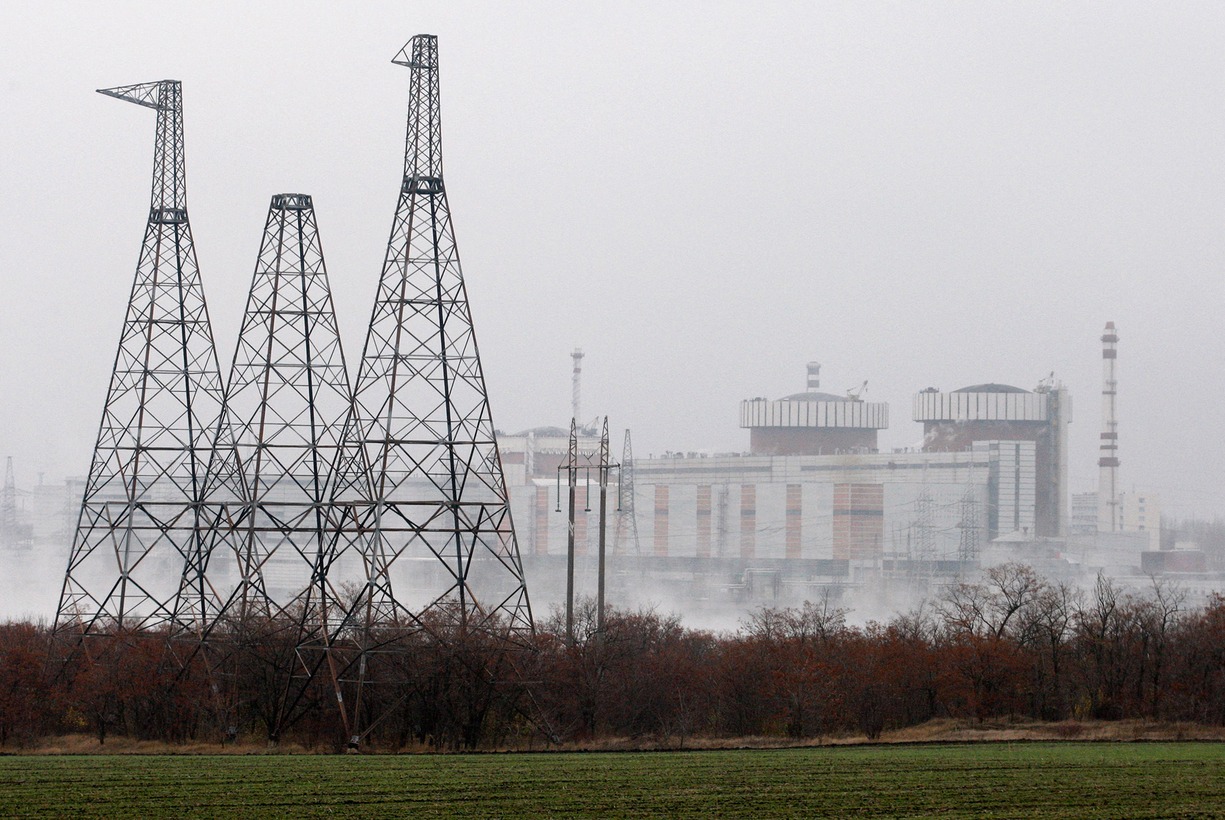
Photo: Auctions are meant to give large generators the ability to sign direct contracts with major industrial consumers. The Pivdennoukrainsk Nuclear Power Plant (Getty Images)
Relying on the day-ahead market carries risks because it's highly volatile — prices can be high one month and low the next, explains Andrii Herus, member of parliament and chair of the parliamentary committee on energy and utilities, in comments to RBC-Ukraine. It's important, he says, for Ukraine's energy sector to move toward longer-term relationships, with indicative prices set one to two years ahead.
In mid-June, the Cabinet of Ministers authorized auctions for contracts covering a quarter, half-year, and full year. The obligation to sell electricity for these periods was placed on the state companies Energoatom (which operates the nuclear power plants) and Ukrhydroenergo (which operates the major hydro and pumped-storage plants).
By signing long-term contracts, power producers can protect themselves against the price drops that typically occur in May–June, while consumers can protect themselves against the price spikes typical of January–February. In Europe, industry buys about 70% of all its electricity through the long-term contracts segment, Herus adds.
The first auctions took place in the second half of July. Due to preparation delays, the delivery periods were shortened by a month, so the auctioned volumes covered August–September (2 months), August–December (5 months), and August 2026–June 2027 (11 months). Under the law, Energoatom and Ukrhydroenergo were allowed to sell up to 4% of their output this way (2% at the quarterly auctions, 1% at the half-year auctions, and 0.5% at the annual auction).
The entire volume on offer sold at the first two auctions, while only about half sold at the third (the 11-month delivery contract). The buyers were mostly traders — companies that purchase electricity to resell it.
Winners at the auctions were mostly traders rather than end consumers. During the bidding, prices rose to a level that didn't match the expectations or business model of major industrial companies such as ArcelorMittal Kryvyi Rih, the company told RBC-Ukraine.
Even for the contract with the longest delivery period — 11 months — the price didn't fall to a level buyers were offering. That's fairly odd, company representatives note, since the longer the delivery period, the lower the price should be, as it gives the seller more room to manage risk over time.
Under the auction rules, traders are required to resell 50% of the electricity they purchase to end consumers, but there's currently no effective mechanism to enforce that requirement — another point raising concerns.
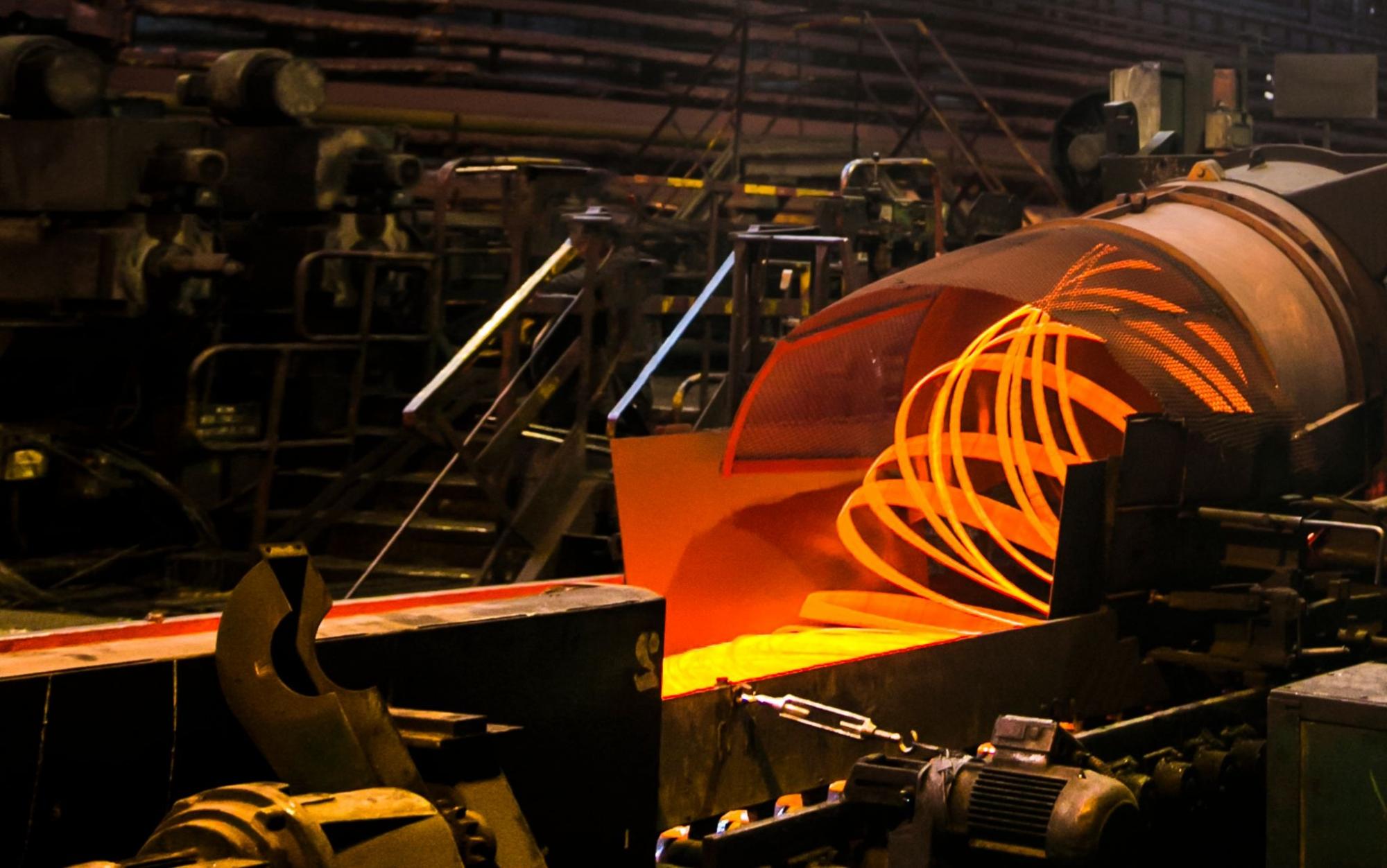
Photo: Large volumes of electricity sold under direct contracts should primarily go to end consumers, especially energy-intensive industry (ArcelorMittal Kryvyi Rih)
Auction participants were also troubled by uncertainty over the exact size of the security deposit required from generating companies. Current law allows the seller to set the deposit anywhere up to 12% of the starting price for quarterly auctions and up to 2% for annual auctions.
This kind of variability creates unpredictable financial conditions for auction participants, ArcelorMittal Kryvyi Rih says.
The first auctions revealed a pattern of high starting prices combined with small lot sizes (2–5 MW each). These conditions don't allow large consumers to sign long-term contracts and hedge price risk over an extended period.
Prices formed with traders as the dominant participants reflect not the balance of supply and demand, but speculative expectations about where day-ahead prices are headed. As already noted, the market needs to gradually move away from this kind of price link to the volatile day-ahead segment.
The small volumes state generators are putting up for sale create an artificial shortage that pushes prices upward — to levels that can't be built into the business model of a highly competitive industrial sector.
If the auctions continue to run with high starting prices, small lot sizes, and unpredictable security deposit rates, large industrial consumers will keep being shut out of the long-term bilateral contracts segment, market sources told the outlet.
Proposals for improving auction terms
Traders typically buy electricity under long-term contracts to resell it on the day-ahead market. To do this, they base their bids on expected future day-ahead price movements rather than on the actual balance of supply and demand among end consumers.
As a result, trader participation prevents the auction price from becoming an objective benchmark for end consumers. Improving the auction model would mean excluding traders from participation.
Lot sizes should also be increased — to 20 megawatts, for example. Such a volume would better match the consumption profile of large industrial enterprises and let them use the long-term contracting mechanism more effectively, ArcelorMittal Kryvyi Rih told RBC-Ukraine.
The results of July's auctions show that the method for setting the starting price needs to be revised. A sound approach would be to use the weighted-average day-ahead price from the corresponding prior period as a benchmark, with a 30% discount applied.
Prices rise unjustifiably during auctions because of limited supply, so the volume offered for sale by state generating companies needs to at least double.
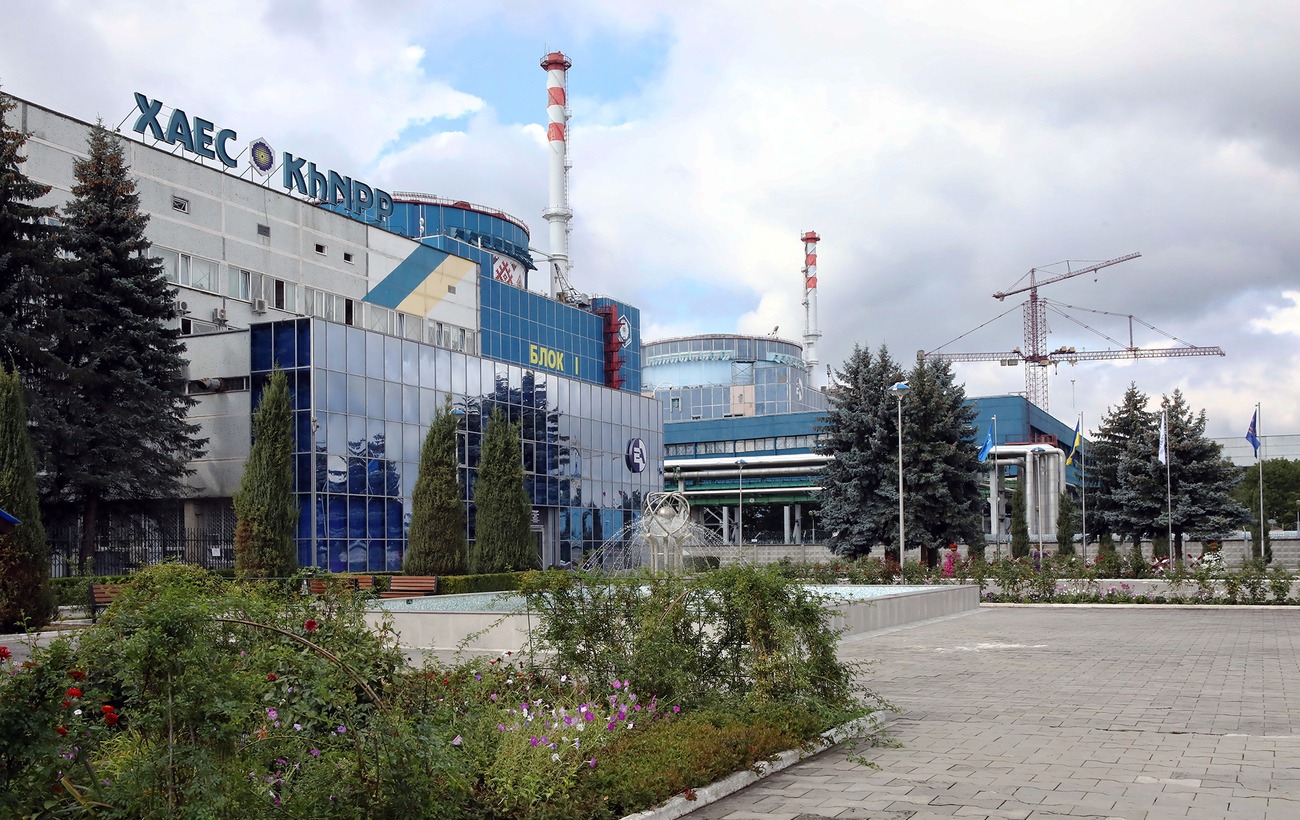
Photo: Major generators need to increase the supply of electricity sold under bilateral contracts. The Khmelnytskyi Nuclear Power Plant, part of Energoatom (Getty Images)
The requirement for a minimum of five auction participants is an unnecessary barrier to successful bidding and should be scrapped, since current rules don't prevent buyers from submitting bids below the starting price anyway.
To make costs more predictable for buyers, the security deposit rate applied by the seller should be fixed, according to several electricity buyers surveyed by RBC-Ukraine.
Any further revision of the auction terms should also examine how well they let industrial companies obtain energy at a price that keeps them competitive.
If, because of how the auctions are structured and their specific parameters, electricity ends up costing end consumers more than they can economically bear, then the mechanism is failing its purpose, says Anatolii Kinakh, adding that any intermediaries only drive up the price for the end consumer.
The results of the first auctions need to be judged not only by whether they provided liquidity to electricity trading, but also by what economic outcome they produce for industry, according to the president of the Ukrainian League of Industrialists and Entrepreneurs.
Access to long-term contracts for industrial consumers should be one of the key criteria in shaping the auction rules, Kinakh stressed.
The ability to buy electricity at a fixed price months in advance is an important step toward supporting energy-intensive industries. However, the results of the first such contracts show that the auction terms still need refinement. They should be designed to encourage bilateral contracts between major generators and industry.
Obtaining energy at an acceptable price would improve the standing of critically important industries that, even under wartime conditions, remain a foundation of Ukraine's economic development.