Russia's new strategy for attacking Kyiv: Jet-powered Shaheds and strikes on energy


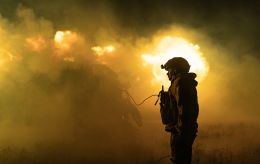
 Russia expands strikes on Ukraine's critical infrastructure ahead of winter (RBC-Ukraine collage)
Russia is ramping up its use of jet-powered Shahed drones while simultaneously expanding its campaign of strikes against Ukraine's rear. After targeting logistics, transport, and digital infrastructure, Moscow has stepped up attacks on the energy sector, preparing for a new phase of the campaign ahead of winter.
How have Russia's tactics changed, how is Ukraine trying to counter them, and is an energy truce possible?
Key points:
- Russia is ramping up production of jet-powered Shaheds. According to RBC-Ukraine, Russia is producing around 2,000 Geran-4 and Geran-5 drones per month and wants them to account for up to 80% of its attacks by winter.
- Russia's attack tactics have changed. Jet-powered and conventional Shaheds are being launched in small groups and waves, stretching attacks over many hours and exhausting Ukraine’s air defenses.
- Ukraine is looking for ways to counter the jet-powered drones. But scaling up these efforts is constrained by funding and ammunition. At the same time, according to RBC-Ukraine sources, active efforts to hunt down Russian missile systems have forced Russia to move some launchers roughly 200 kilometers (124 miles) from the border.
- A new stage in a broader campaign against Ukraine's rear. RBC-Ukraine sources view the strikes on the energy sector, along with attacks on transport, logistics and digital infrastructure, as an attempt to disrupt the operation of basic systems that support everyday life.
RBC-Ukraine sources are skeptical about a quick energy truce. Moscow's decision will depend on the scenario it chooses: if the Kremlin is betting on a prolonged war, it could be interested in a pause to restore its oil refineries. But if it seeks to force Ukraine to surrender as quickly as possible, it could instead opt for a large-scale campaign against the energy sector.
For more than a month, Kyiv and the surrounding region have been subjected to almost nonstop Russian air attacks. Moscow is increasingly using jet-powered drones capable of flying significantly faster than conventional Shaheds and periodically supplementing them with ballistic missile strikes.
At the same time, the range of targets Russia is striking is also changing. In recent weeks, Russia has attacked logistics hubs, business warehouses and industrial facilities, and on some days has targeted transport infrastructure and gas stations. Damage to such facilities can disrupt the supply of goods, the operations of businesses and retail chains, not to mention causing economic losses and casualties.
Over the past week, data centers and telecommunications infrastructure have also come under attack. Then, on the night of September 30, Russia launched its main strike against Kyiv's energy infrastructure and the surrounding region.
In effect, Moscow is gradually expanding its air campaign against Ukraine’s rear, adding new categories of targets. Jet-powered Shaheds have become one of the main tools in these attacks. Their speed, combined with conventional attack drones, creates additional challenges for Ukraine’s air defenses.
Jet-powered Gerans: What changed in Russia's attacks
The backbone of the new jet-powered component of Russia's attacks consists of Geran-4 and Geran-5 drones. Unlike conventional Shaheds powered by piston engines, they are equipped with jet engines and travel significantly faster. This reduces the time available to detect and intercept them and narrows the range of systems capable of effectively engaging such targets.
According to RBC-Ukraine sources in Ukraine's Defense Forces, Russia is currently producing around 2,000 Geran-4 and Geran-5 drones per month. Sources say Russia has managed to ramp up production partly by discontinuing the earlier jet-powered model, the Geran-3, and redirecting some components toward newer models.
However, further scaling is currently constrained by Russia's reliance on turbojet engines, which Moscow obtains primarily from China. According to sources cited by the outlet, Russia is already trying to establish domestic production of the engines.
Russia also has significant stockpiles of conventional attack drones powered by piston engines. According to an informed RBC-Ukraine source, their number could have stood at around 10,000 as of last week.
In its attacks, Russia combines jet-powered and conventional gasoline-powered Shaheds. Russian forces launch them in small groups and waves — two or three at a time, and sometimes four or five, with drones of both types potentially included.
These groups follow one another, stretching attacks over many hours. One purpose of this tactic is to maintain a prolonged aerial threat, exhaust Ukrainian air defenses, and force them to constantly respond to new targets. For residents of Kyiv and the surrounding region, this means hours-long air raid alerts and explosions that can sound repeatedly throughout the day.
Read also: New army chief, battle for Donetsk and winter threat: What's happening on Ukraine's front
According to RBC-Ukraine sources, jet-powered drones have recently accounted for around 50–60% of the drones used in Russian attacks, although the share may vary from one raid to another. By the beginning of winter, sources say, Moscow plans to raise that figure to 80%. RBC-Ukraine sources believe that virtually all the jet-powered UAVs launched against Ukraine are coming directly off the production line.
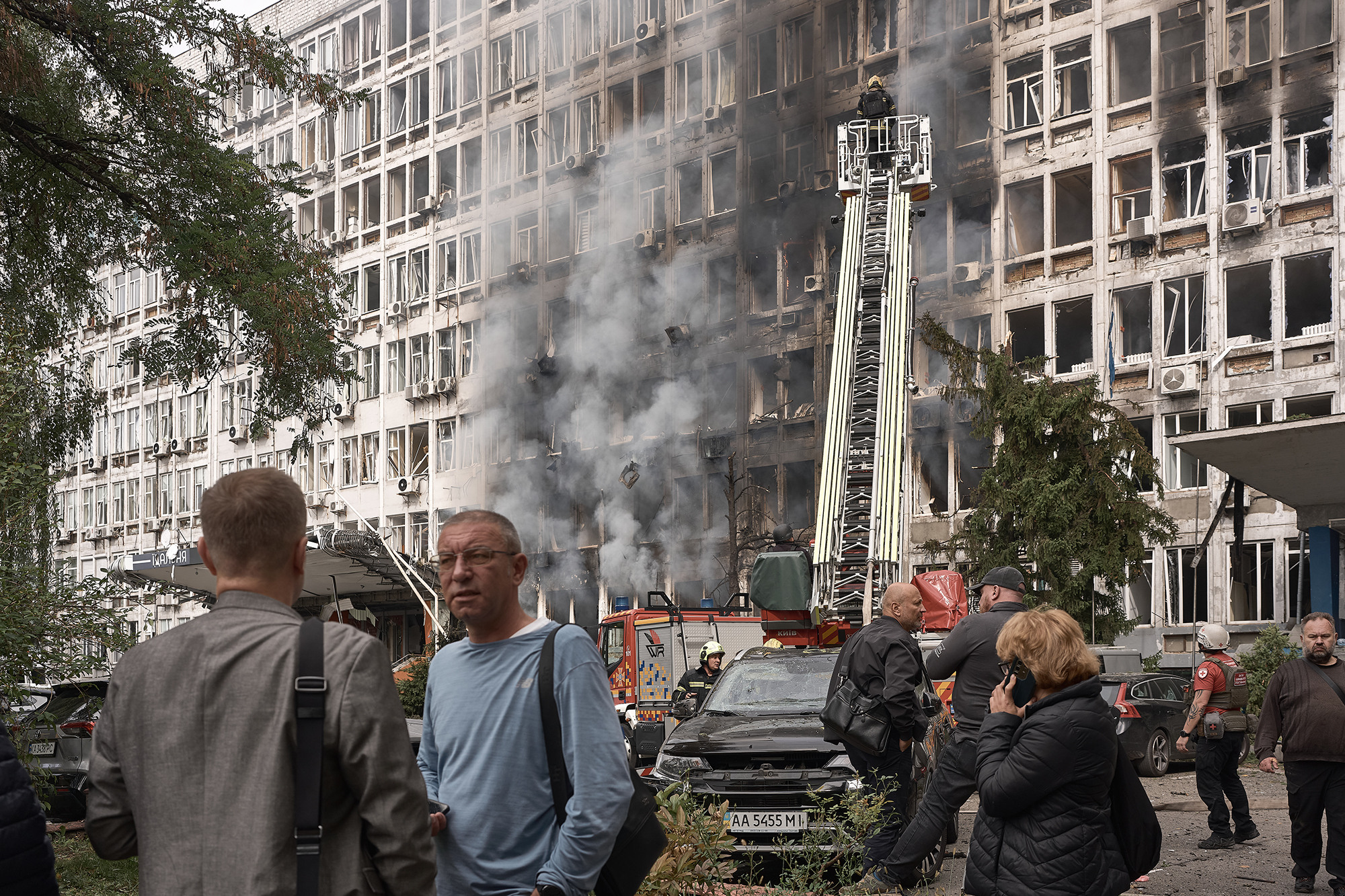
The aftermath of one of the attacks on the capital in September (photo: Getty Images)
In terms of interception difficulty, jet-powered Shaheds have now become one of the biggest challenges for Ukrainian air defenses, alongside ballistic missiles. These are different types of targets, but both are significantly harder to shoot down than conventional attack drones. Jet-powered drones are particularly challenging because of their high speed and the scale of their use, while ballistic missiles leave an extremely short window for interception and face a severe shortage of specialized defense systems.
According to Ukrainian President Volodymyr Zelenskyy, Ukrainian forces are currently neutralizing around 57% of jet-powered Shaheds, while the interception rate for conventional ones exceeds 90%.
Why Russia started targeting data centers
Another distinctive feature of Russian attacks over the past week has been strikes on Ukraine's digital infrastructure. These include data centers — facilities that house servers, data storage systems and the technical infrastructure required to operate digital services.
Data centers support far more than individual websites or apps. They are also essential to internet providers, business systems, e-commerce and other digital services. Damage to such facilities can therefore disrupt a large number of systems used by people and businesses on a daily basis.
Over the past several days, a number of such facilities in Kyiv have come under attack. Russian strikes on telecommunications infrastructure have already caused internet disruptions in Kyiv and the surrounding region.
At the same time, this does not mean Russia can paralyze Ukraine's entire telecommunications infrastructure with a single strike. Information about possible attacks on data centers was available before they began, so operators were likely able to take at least some preparatory measures.
Read also: Kyiv under jet-powered terror: How Russia is changing its tactics for the fall
Sources cited point to the infrastructure's extensive and distributed nature, as well as the ability to back up data and services, as factors contributing to its resilience. In their assessment, Ukraine’s system differs in this respect from more centralized elements of Russia’s telecommunications infrastructure. This makes it harder to significantly disrupt its operation with one or several strikes, although individual attacks have already caused service disruptions.
At the same time, Russia has continued attacking transport and logistics infrastructure and defense-industry facilities in recent days. In other words, the new targets are not replacing the old ones entirely.
How Ukraine is trying to counter Russia's attacks
Russia's growing use of jet-powered drones is forcing Ukraine to look for new ways to counter them. According to RBC-Ukraine sources, the tools being used against such drones include electronic warfare, where it can be effective, as well as combat aircraft.
However, these capabilities have their limitations. According to sources, aircraft operations require air-to-air missiles and cannon ammunition. The issue is particularly acute for F-16s and Mirage fighters, which rely on imported ammunition that is not always available.
The use of aircraft over Kyiv also faces additional restrictions because of the risks to both civilians and pilots. That makes intercepting aerial targets before they reach the capital particularly important.
Another area of focus is the development of new Ukrainian interceptor drones. The first successful shoot-downs of jet-powered Shaheds using such systems have already been publicly reported. In particular, in late September, Volodymyr Zelenskyy said Ukraine had several effective prototypes.
According to sources, successful interceptions using the new interceptor models are still relatively rare, but several developments have already demonstrated positive results.
One possible approach is to adapt Ukrainian jet-powered drone platforms currently used for long-range strikes. According to sources, some solutions based on these platforms have already shown good results as interceptors.
The main question now, however, is how quickly Ukraine can reduce the cost of such interceptors, establish mass production, and procure them in sufficient quantities. According to sources, one of the key constraints remains funding. Ukraine is already negotiating with its partners to secure financing to scale up production and purchase new systems.
Ukraine's Defense Forces are trying not only to intercept Russian aerial weapons but also to limit the enemy's ability to use them. According to sources cited by the outlet, Ukrainian forces are striking Russian drone ports used to launch jet-powered UAVs. However, sources say the strikes have so far failed to make Russia abandon its attacks. According to RBC-Ukraine, the active drone bases currently used to launch Geran-4 and Geran-5 drones are Tsymbulova, Shatalovo, Millerovo and Primorsko-Akhtarsk.
Another area of countering jet-powered drones involves the communications systems Russia uses to control them. Ukraine's Defense Forces regularly conduct interference operations against repeaters and mobile communications towers located in Belarus and used by Russia as a MESH network for drone control.
In addition, according to RBC-Ukraine sources, Ukrainian forces have stepped up their efforts in recent weeks to hunt down Russian missile systems. One source explained that whereas Russian forces previously launched ballistic missiles from positions around 100 kilometers (62 miles) from the Ukrainian border, the pressure has now forced them to move some launchers farther back — roughly 200 kilometers (124 miles) from the border. The RBC-Ukraine source noted that this creates range limitations for missiles such as the RM-48U surface-to-surface missile used by S-300 and S-400 systems, whose range does not exceed 250 kilometers (155 miles).
Energy infrastructure under attack again
As Ukraine looks for ways to strengthen its defenses against Russia's new drones, Moscow is expanding its campaign against critical infrastructure. On the night of September 30, Russia launched a large-scale combined attack, with Kyiv and the surrounding region’s energy infrastructure as its main target, according to President Volodymyr Zelenskyy.
The overnight attack damaged the capital's energy infrastructure. Power was restored to more than 8,000 consumers on Kyiv’s left bank by the morning. Authorities confirmed damage to the generating equipment at the Trypillia Thermal Power Plant. The company has not disclosed the extent of the damage for security reasons.
The consequences of the attack continued to affect the power system throughout the day. On the evening of September 30, emergency outages were introduced in parts of Kyiv, Kyiv region, Chernihiv region, and Zhytomyr region after the strikes caused equipment overloads. In the capital, emergency outages were in effect for some time, temporarily halting ground-based electric public transport in some areas.
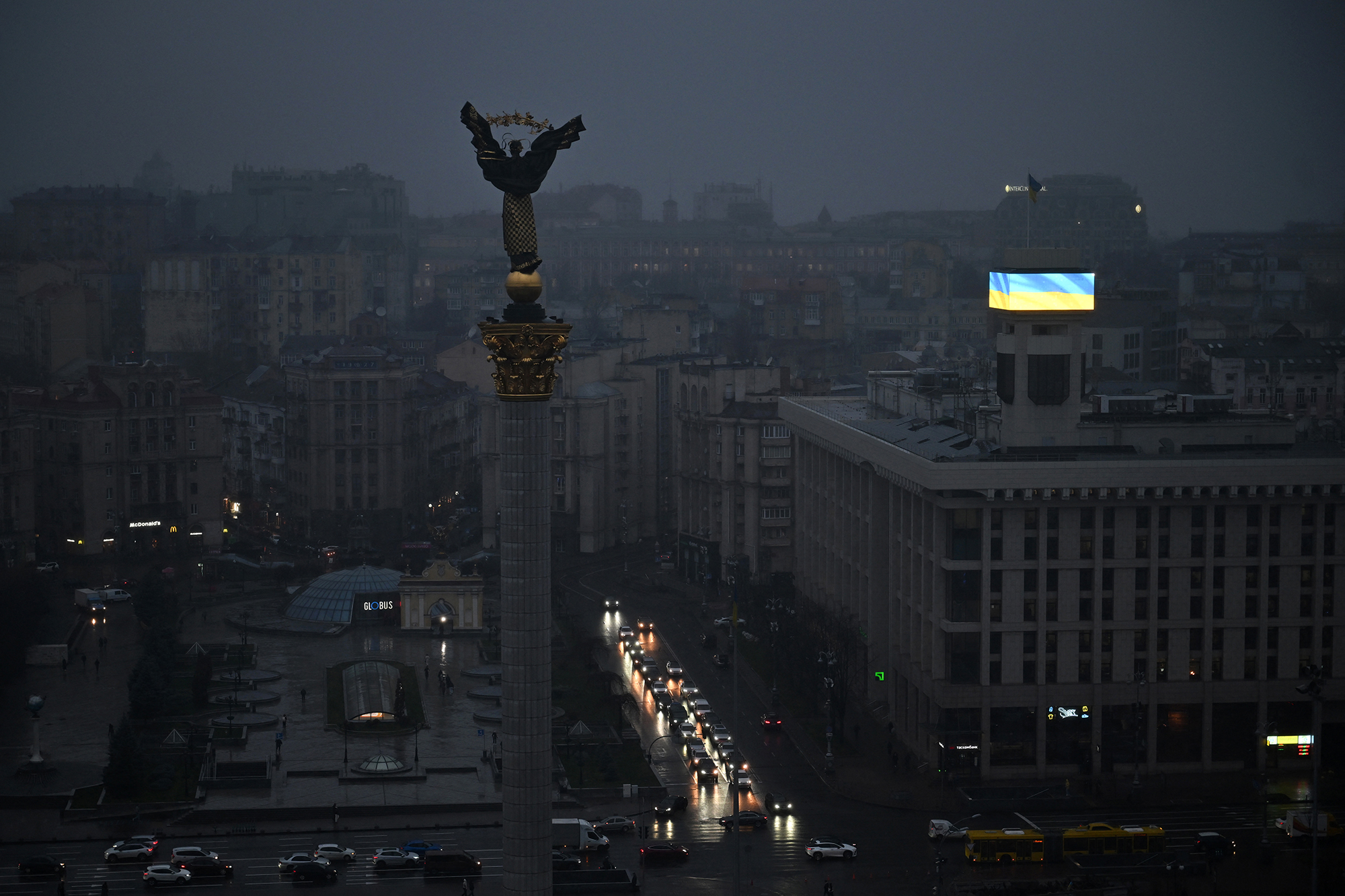
Power outages in Kyiv in November 2025 (photo: Getty Images)
Russia's Defense Ministry also claimed that it had struck the Kyiv Hydroelectric Power Plant in Vyshhorod, the Kyivska substation near Nalyvaikivka village, and an electricity storage facility in Horenychi settlement. During the day, pro-Russian Telegram channels also reported alleged attempts to attack Kyiv’s CHPP-5 and CHPP-6 thermal power plants with drones. It is worth noting that Russia's Defense Ministry has repeatedly claimed successful strikes whose reported results were later not confirmed. Russian statements therefore provide a better indication of the targets Moscow says it is pursuing than of the actual consequences of the strikes.
Although Russia has targeted Ukraine's energy infrastructure before, the September 30 attack points to the beginning of a new and more intense phase of the campaign ahead of the heating season.
At the same time, RBC-Ukraine sources suggest viewing the attacks on the energy sector as part of a broader Russian campaign against Ukraine's critical infrastructure and basic life-support systems. Attacks on railways disrupt transportation, strikes on data centers disrupt internet and digital services, while the destruction of logistics warehouses and businesses creates risks for food, medicine, and other essential goods supply.
Large-scale attacks on the energy sector are now being added to that list, posing a direct threat to electricity supplies.
Moscow had also been preparing for the new wave of attacks. In an August interview with RBC-Ukraine, Vadym Skibitskyi, deputy head of Ukraine's Defense Intelligence, said Russia had developed a specialized drone designed to strike the metal supports of power transmission lines. According to an RBC-Ukraine source, Russian forces were already using such drones to attack power lines in the capital during the day on September 30.
Read also: Is Russia ready for peace? Ukraine's deputy intel chief reveals Kremlin's next moves
Ukrainian intelligence data also points to detailed planning of the Russian strikes. On September 24, Energy Minister Denys Shmyhal reported that Russian documents had identified specific energy facilities, the types of weapons, and the number of weapons Russia planned to use against them.
According to RBC-Ukraine sources, Russian forces plan to use different types of drones and missiles depending on the nature of the targets. This is another indication that the current attacks are part of a pre-planned campaign rather than isolated strikes on energy infrastructure.
At the same time, sources in military and political circles cited by the outlet fear that as temperatures drop, Russia may target not only power generation and transmission infrastructure but also infrastructure on which the population’s water and heating supplies depend.
The risk is that several basic life-support systems could experience disruptions simultaneously. Even without a large-scale nationwide blackout, such attacks could create serious problems for individual cities and regions, particularly during freezing weather.
Against this backdrop, the question of a possible energy truce between Ukraine and Russia has resurfaced.
Is an energy truce possible
Several informed RBC-Ukraine sources are skeptical that a lasting energy truce can be reached in the near future, although they do not rule out such a scenario.
One possible framework under discussion in political and expert circles would involve a mutual halt to strikes: Russia would refrain from attacking Ukrainian energy infrastructure, while Ukraine would primarily refrain from striking Russian oil refineries.
In mid-September, Donald Trump said that Moscow and Kyiv had allegedly already agreed to stop strikes on energy infrastructure. Volodymyr Zelenskyy later explained that there was no formal agreement. Ukraine is prepared to consider such an arrangement if Russia demonstrates a genuine willingness to abide by it.
A mutual restriction on strikes would represent a significant compromise for both sides. However, one informed RBC-Ukraine source suggests that Moscow's willingness to agree to an energy truce may depend on the scenario Russia's leadership chooses for the next stage of the war.
If Putin is prepared to continue fighting for years while gradually taking Ukrainian territory, he will need to preserve the financial resources required to sustain the war. Under that logic, the Kremlin could agree to a mutual halt to energy strikes to gain a respite, restore damaged oil refineries and reduce losses in Russia’s fuel sector.
But if Moscow is counting on forcing Ukraine to surrender as quickly as possible, the logic could be the opposite. In that case, the Kremlin could decide to tolerate attacks on its own refineries and the resulting economic losses for several more months while betting on a large-scale winter campaign against Ukraine’s energy sector.
Unable to achieve its goals quickly on the battlefield, Russia could try to break Ukrainian resistance by striking the rear, including electricity, heating and water infrastructure. The calculation would be that prolonged power outages and a lack of heat and water would force Ukraine to surrender. Under this scenario, an energy truce would mean giving up one of the main instruments of pressure that the Kremlin is counting on this winter.