Plan B for Ukraine: Why EU rejects Russian-asset-backed loan


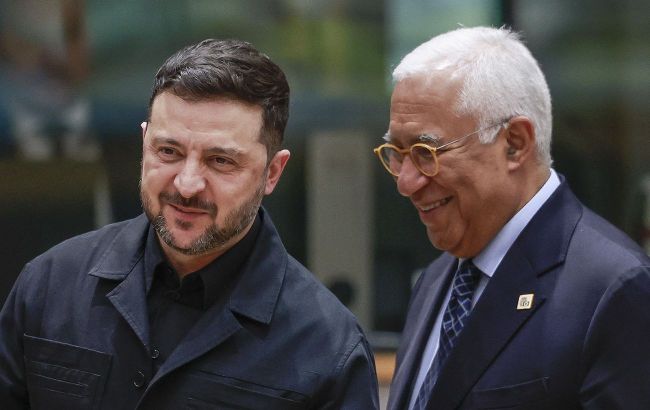 President of Ukraine Volodymyr Zelenskyy and President of the European Council António Costa (Getty Images)
The EU summit brought Ukraine a result that was not ideal, but quite acceptable. The €90 billion loan is less than expected, but it will cover the lion's share of Ukraine's needs for the next two years. Russian assets will remain frozen in Belgium's Euroclear and could potentially still be used to Ukraine's advantage. For more details, see the article by RBC-Ukraine.
Key questions
- What was approved in Brussels?
- Why was it not possible to agree on a reparations loan?
- Why does Belgium refuse to use Russian assets?
- Does the US have any influence on the decision regarding the reparations loan?
- Can Russia demand the return of frozen funds?
At the EU summit in Brussels on December 18, no decision was made on granting Ukraine a reparations loan. However, an alternative option, the so-called Plan B, was agreed upon.
Discussions on Ukraine lasted all day and into the night. In the early hours of December 19, it became known that a €90 billion loan had been approved. Its term was limited to two years, 2026-2027. "We committed, we delivered," European Council President António Costa wrote on X at around 4 a.m.
Hungary, Slovakia, and Czechia refused to participate in the joint loan.
The loan funds are non-repayable and interest-free for Ukraine, says Ukrainian Finance Minister Serhii Marchenko. "Work on the Reparations Loan must continue—its implementation requires additional preparation," the Minister says.
Repayment of the €90 billion loan is only envisaged after Russia compensates Ukraine for its losses. It will not be linked to frozen Russian assets in any way. The source is joint borrowing by the European Union, backed by budgetary commitments from EU member states.
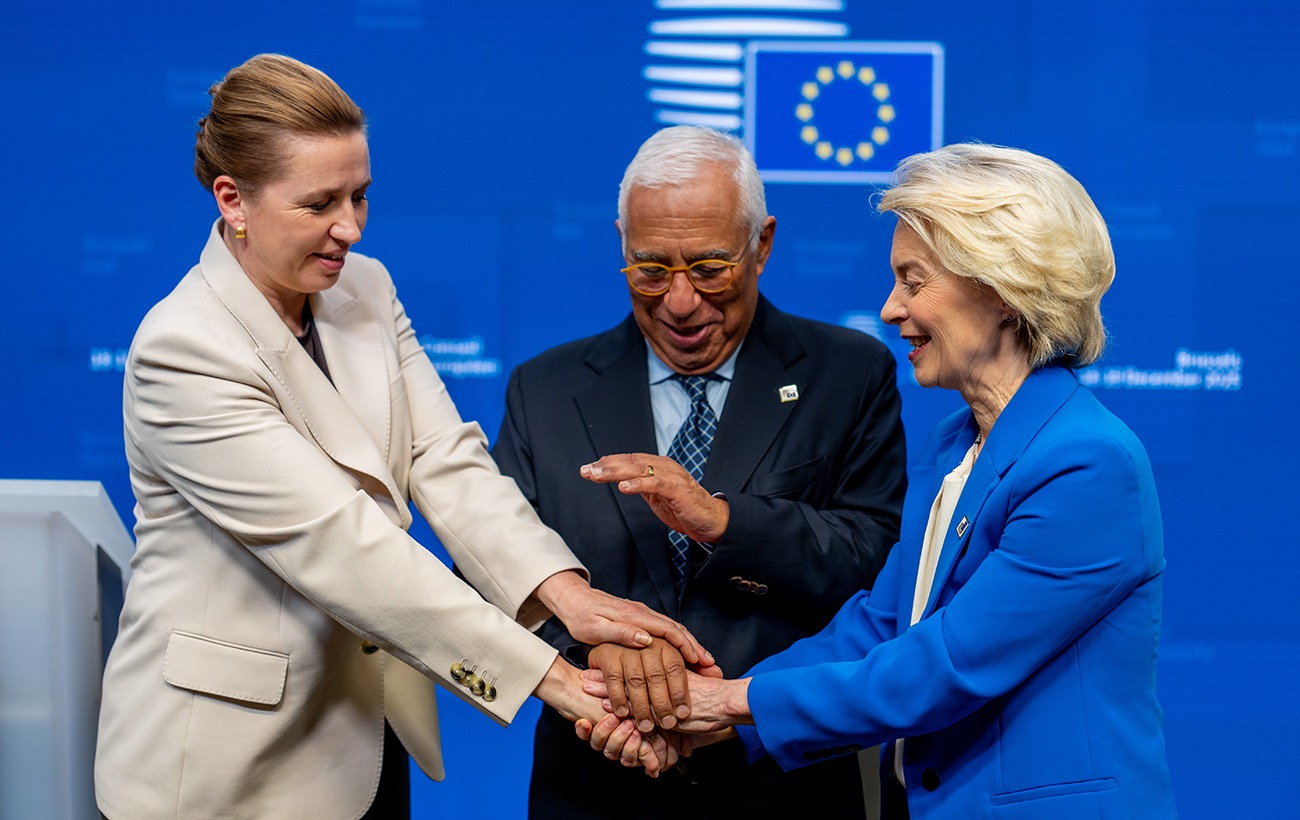 At the EU summit (Getty Images)
Following the EU's decision, the issue of financing Ukraine for the next two years can be considered resolved. 90 billion euros will come from the European Union, and another 45 billion euros from other partners of Ukraine, in particular the IMF. Agreements with them have already been reached in most cases.
With regard to the EU loan, all that remains is to carry out the technical work of preparing the agreement and formulating the conditions for its provision, which have not yet been announced. "Since the agreed international aid should be sufficient for the first quarter of 2026, there is plenty of time to finalize the mechanism and agree on the schedule for providing funds," Taras Kotovych, senior financial analyst at ICU Investment Group, says in a comment to RBC-Ukraine.
Reparations loan
According to the EU's High Representative for Foreign Affairs, Kaja Kallas, the success of Thursday's EU summit talks on granting Ukraine a reparations loan can be assessed as 50-50. Thus, the decision on a reparations loan for Ukraine of €210 billion, €90 billion of which was planned to be allocated in 2026-2027, is on hold.
They wanted to consider the issue on the 19th. European Commission President Ursula von der Leyen even made it clear that the summit would not end without a positive outcome — either a decision on the loan or some alternative financing instrument. In the end, they settled on option B.
Plan A did not pass because Belgium categorically refused to allow Russian assets held in Brussels in the Euroclear depository to be used as collateral for the Ukrainian loan. The European Commission's decision to freeze Russian funds indefinitely also failed in this case. Moreover, it was adopted by a qualified majority, i.e., without taking into account the opinion of Hungary, which was against it.
Previously, sanctions had to be renewed every six months. Belgium feared that if the next renewal failed, Russia would demand the return of its funds, which would already be pledged as collateral, and Brussels would have to use its own budget to pay off the Russians. But a week ago, the European Commission abolished the need to extend the freeze.
This proved to be insufficient. Belgium wants more convincing guarantees and the distribution of debt liability among all EU members. In addition, the Belgian authorities criticize other countries where Russian assets are also frozen, namely the US, Japan, Canada, and other EU members, for not rushing to make any similar decisions.
This reproach worked on Germany. Chancellor Friedrich Merz confirmed his agreement to use Russian assets frozen in Germany for Ukraine. However, the amount in question is relatively small — only about €4 billion.
Nevertheless, it was not possible to change the position of Belgian Prime Minister Bart De Wever, despite the fact that negotiations with him were held on December 18 by representatives of EU countries, the European Commission, and Volodymyr Zelenskyy, who had come to Brussels specifically for the summit.
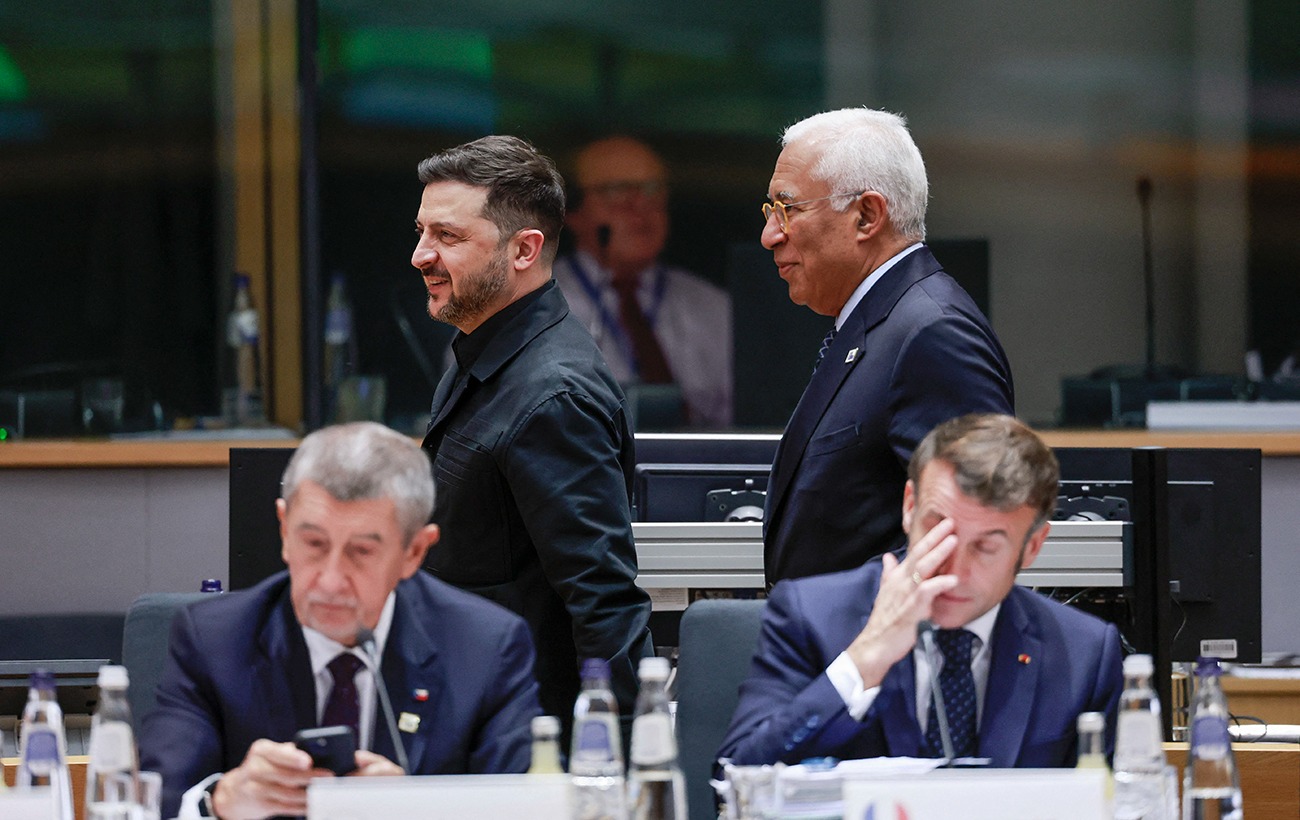 At the EU summit (Getty Images)
According to the Ukrainian President, he and the Belgian Prime Minister exchanged positions at the meeting. "Was it productive? We will see. We need a little time," Zelenskyy said at a press conference.
Negotiations went in opposite direction
Preparations for the consideration of the issue of a loan to Ukraine at the EU summit on December 18-19 were tough and tense. Literally on the eve of the summit, there was no clarity about the prospects for a decision.
Belgian Ambassador to the EU Peter Moors said that negotiations on this issue were going in the opposite direction. "We are going backward," he told his colleagues on Wednesday during closed-door negotiations, Politico reports.
According to a senior official who wished to remain anonymous, the chances of reaching an agreement worsened rather than improved, even on Tuesday. He said he wanted to cry, describing the mood at a meeting of EU ministers in Brussels who were preparing for the summit.
There are reports that Russia is pressuring Belgium not to agree to the use of frozen assets and is even resorting to intimidation tactics. Threats were made against Euroclear CEO Valerie Urbain and other senior executives of the depository, The Guardian reported.
Hungarian Prime Minister Viktor Orbán said that the issue of a loan to Ukraine would not be on the summit agenda at all. However, this information was immediately denied by EU representatives.
Volodymyr Zelenskyy flew to the EU summit hoping for a positive decision, as without these funds, Ukraine will face major problems with financing the Armed Forces and providing logistical support.
"This decision is on the table, and today it depends on political will. I will talk to all the leaders, present our arguments, and I really hope that we can get a positive decision. Without it, there will be a big problem for Ukraine," he said.
The reparations loan funds are needed to support the army, defense production, and social budget needs. For 2026-2027, Ukraine needs at least €90 billion from the EU out of the total loan amount, and it cannot do without these funds.
If the fighting continues, the loan money will be used to support the army and purchase weapons. If there is no money, Ukraine will lag far behind Russia in the production of drones and will simply have nothing to fight with. "Ukraine will significantly reduce the production of drones," Zelenskyy says. The ability to deliver long-range strikes will also decrease.
If the war ends, the loan will be used for reconstruction. "If we can agree on a plan after the war ends, then the decision on how to use this money will be focused entirely on reconstruction," Zelenskyy said.
"Imagine, if there is no war, 45 billion a year is a very serious injection into Ukraine's macro-financial stability," the Ukrainian President said.
US factor
On the eve of the EU summit, several major Western news agencies reported that the US does not support the idea of using Russian funds to finance Ukraine. According to Politico, Trump administration officials held behind-the-scenes talks with the capitals of some EU countries, as a result of which Italy, Bulgaria, Malta, and Czechia no longer express unconditional support for the loan.
"According to a leaked draft peace plan negotiated by the White House and the Kremlin, Washington wants to use part of Russia’s frozen assets to fund U.S.-led reconstruction efforts," the agency says. Indeed, the initial version of the peace plan included a clause on the unfreezing of Russian assets and their use by the US. But today, it has been removed from the document. The Times also writes that the US is against transferring Russian money to Ukraine.
Bloomberg also reported that US officials had convinced EU member states that Russia's frozen assets were necessary to reach a peace agreement between Kyiv and Moscow and should not be used to prolong the war.
In this context, it cannot be ruled out that if a peace agreement is reached, sanctions against Russia, including the freezing of assets, will have to be lifted in whole or in part. The US also has frozen Russian assets worth $5-6 billion, and Washington is not raising the issue of their possible use for Ukraine.
Legal liability and risk sharing
Belgium's position on the reparations loan has remained unchanged, while most EU members understand and support this decision, albeit with some reservations. These reservations concern the strengthening of the legal basis for such a decision and fears that the money will have to be returned to Russia.
The option of proportional liability is being considered, but so far it has not been specified. It is still unclear how the risks will be distributed — proportionally to the contribution of the association members to the EU budget or depending on the share of capital in the European Central Bank.
According to the latest information, to alleviate Belgium's concerns, the possibility of increasing the EU's reserve of money to repay the Ukrainian loan from 50% of the first tranche to 75% was considered. In theory, this would increase Brussels' confidence that if an unforeseen situation arises with Russia, the European Union will cover Belgium's financial losses to a greater extent, by 75%.
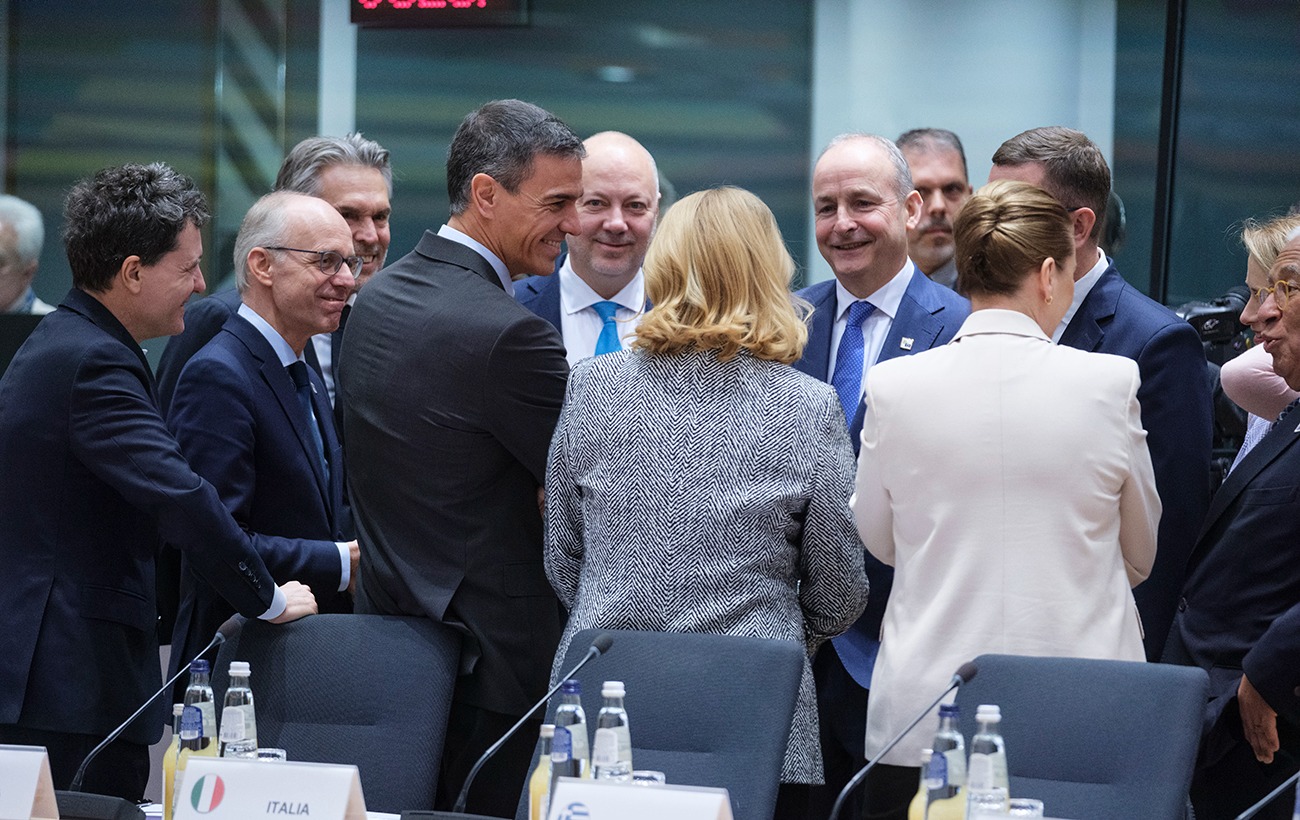 At the EU summit (Getty Images)
As for the legal side of the issue, the European Central Bank is closely monitoring it. Its president, Christine Lagarde, has repeatedly stressed the importance of compliance with international law. On December 18, she expressed hope that an acceptable solution would be found. The ECB President says the importance of this issue (granting a loan - ed.) is so great that she is completely confident that EU leaders will find a solution.
The legal risks of transferring frozen funds as collateral for Ukraine's loan are indeed significant, and Reuters recently wrote about them in detail. Russia may block the use of its assets, and it is difficult to predict the outcome of such a move.
Russia has already begun fighting for its money. The Central Bank of Russia has filed a lawsuit against Euroclear in a Moscow court, demanding compensation of $230 billion. "If the Central Bank wins, it can demand the seizure of Euroclear's assets in other jurisdictions, especially those that Russia considers friendly," the agency writes.
For now, the issue has been resolved in a way that is not optimal, but still quite acceptable for Ukraine. The main thing is that there are guarantees from the EU to finance military and logistical needs for the next two years.
Sources: public comments by EU officials, the President of Ukraine, and world media.