New threat? What fiber-optic drone spotted over Kharkiv could mean for Ukraine


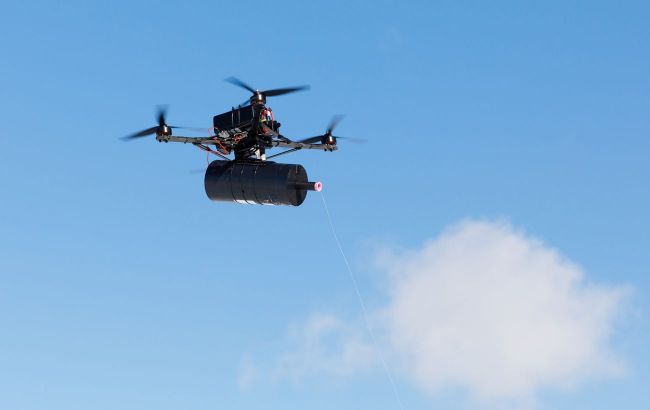 Illustrative photo: fiber-optic FPV drone reaches Kharkiv for the first time (Getty Images)
A Russian fiber-optic FPV drone has reached Kharkiv for the first time, marking a new technological challenge. The technology makes the UAV invisible to traditional electronic warfare systems. However, there is no reason for panic, stated Defence Express expert Ivan Kyrychevskyi.
Read also: Russia's fiber-optic FPV drones on rise: Ukraine's strategy to fight back
Key points:
-
First confirmed case: The Kharkiv Regional Prosecutor’s Office officially confirmed the first use of a fiber-optic drone against the city.
-
Consequences of the attack: The drone struck a tree in Kharkiv’s Kyivskyi district.
-
Countermeasures: Fighting such drones requires technological solutions, including radar systems, acoustic detection, and innovative tracking technologies.
-
Will it become widespread: For now, the threat remains limited, and Kharkiv has already faced much more powerful attacks during the war.
First fiber-optic FPV drone incident in Kharkiv
On February 25 at around 3:00 p.m., Russian forces used a 13-inch fiber-optic FPV drone against the Kyivskyi district of Kharkiv. The UAV hit a tree.
According to the Kharkiv Regional Prosecutor’s Office, this is the first recorded use of this type of drone against the city since the start of Russia’s full-scale invasion.
Law enforcement authorities opened a criminal case over a suspected war crime and released images of the fiber-optic drone that reached the city.
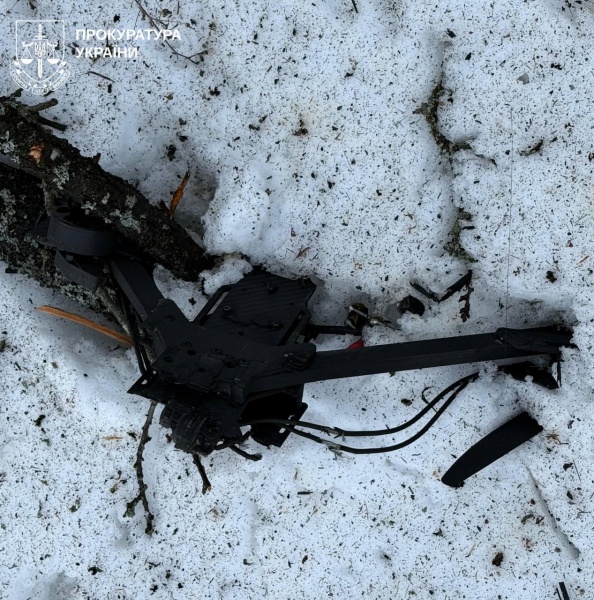
Photo: Russia uses fiber-optic drones to attack Kharkiv (Office of the Prosecutor General of Ukraine)

Photo: Russia uses fiber-optic drones to attack Kharkiv (Office of the Prosecutor General of Ukraine)
Defense Ministry adviser Serhii Beskrestnov ("Flash") said the appearance of enemy fiber-optic drones over Kharkiv represents a real threat that requires technological countermeasures, as electronic intelligence systems are ineffective against them.
"Detection based on electronic intelligence will not work here. Radars can help, but for low-flying FPV drones, they are not a panacea. Acoustics? Possibly," he wrote.
Meanwhile, Kharkiv Regional Military Administration head Oleh Syniehubov said it is impossible to fully cover the city with anti-drone nets.
According to him, such nets are installed only in areas where FPV drone attacks have already been recorded or where civilian logistics need to be protected in advance.
"These measures are primarily aimed at protecting civilians. Yes, they may look unattractive, but safety matters more than appearance now. Completely covering Kharkiv, a city with a population of over one million, is simply impossible," Syniehubov stressed.
Is this really a new threat to the city?
A serviceman of the 413th Raid Regiment of Ukraine’s Unmanned Systems Forces and a Defence Express weapons expert, Ivan Kyrychevskyi, says the appearance of such a drone over Kharkiv should be viewed calmly.
Although a fiber-optic drone has a flight range of about 43–50 km, comparable to artillery range, its destructive power is not comparable.
"If we compare this to May 2022, when Kharkiv was shelled with Pion artillery systems with a range of about 40 km, the strike power of artillery was significantly greater. Kharkiv has already faced more serious security risks. There is no need to place too much importance on the idea that the enemy will now rely solely on such drones," Kyrychevskyi explained.
Quick Q&A
- Does this mean the drone can no longer be jammed?
Traditional electronic warfare systems do not work against such drones because the signal is transmitted through a physical cable (fiber-optic line) rather than radio waves.
- Will this become a widespread threat to Kharkiv?
There are currently no grounds to speak about mass attacks using fiber-optic drones against Kharkiv, as only a single incident has been recorded so far. However, similar cases may occur again during the war.
- How can they be countered if electronic warfare is ineffective?
Detection using radio-electronic intelligence will not work in this case. Radar stations or acoustic systems capable of detecting drone noise may help.
- What is the real danger for civilians?
The threat exists, but Kharkiv has already faced, and continues to face, far more powerful attacks during the war.
Read also: