Europe's leverage comes from keeping Russia isolated - Estonian FM Margus Tsahkna
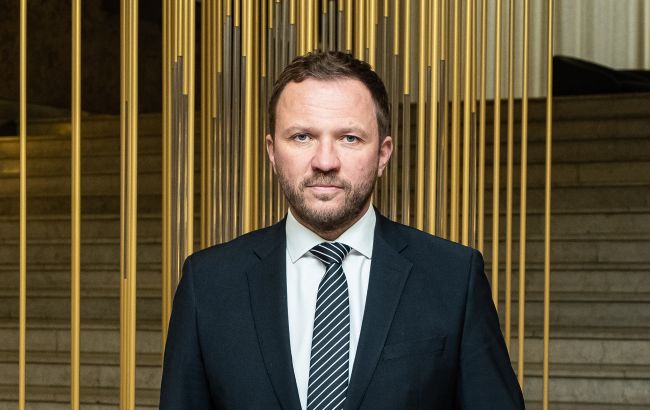 Margus Tsahkna, Minister of Foreign Affairs of Estonia (Photo: Estonian MFA press service)
As Ukraine intensifies strikes on Russian targets and gains strategic momentum, Putin is becoming visibly more insecure and anxious. We are seeing increasing signs of desperation in Moscow. Yet Putin remains unwilling to scale back his objectives. Instead, he is seeking another way to achieve them by undermining Europe's policy towards Ukraine. Easing off now would hand Putin exactly what he seeks.
At the negotiating table, Putin would try to secure what he had failed to achieve on the battlefield. His strategy now hinges on buying time by sowing division within Europe over who should engage with Moscow and by weakening Europe's role as Ukraine's most important supporter and strategic partner. Easing off now would hand Putin exactly what he wants: an opportunity to tilt possible negotiations in his favour. Europe cannot afford to fall into that trap. Before contemplating talks, we must define our core objectives and non-negotiable red lines.
European unity has been our strongest instrument against Russian aggression. By supporting Ukraine while maintaining consistent pressure on the aggressor through isolation, restrictions, and sanctions, Europe has pursued a strategy that is delivering results. The situation has shifted significantly. Today, Ukraine's position is considerably stronger, and internal dissatisfaction within Russia is growing; its strategic position is stagnating, its reputation as a global player is eroding, and battlefield losses have left it in its weakest state in years.
For the Kremlin, time is the most precious commodity, and a divided Europe the most valuable gift. This is why Europe cannot waver. Peace will come, but the decisive question is whether it will be a just and lasting peace or one that rewards aggression.
Russia’s ongoing bombardment of Ukrainian cities and civilians with missiles and drones, making May 2026 one of the deadliest months of the full-scale invasion, shows no sign of easing. Combined with Putin’s blunt dismissal of President Zelenskyy’s call for peace talks, it makes it clear that the Kremlin has not shifted even a centimetre from its objectives. Nor has it shown the slightest indication of readiness to make concessions.
Putin’s ambitions extend far beyond occupying parts of Ukraine. He has repeatedly signaled his intent to reshape Europe’s security architecture, weaken NATO and the European Union, and restore a Russian sphere of influence across Central and Eastern Europe. The full-scale invasion of Ukraine was intended as the first phase of a much more elaborate plan to expand Russia’s grip on Europe.
Yet the Kremlin made a profound miscalculation. Ukraine is not merely holding the line; it has denied Russia decisive victories and developed military capabilities and expertise that now reinforce the security of the entire European continent. Crucially, Ukraine has become an unparalleled source of practical knowledge for Europe, demonstrating how to build resilience, defend critical infrastructure, counter hybrid threats, and adapt rapidly under sustained military pressure.
For European partners, Ukraine presents a unique opportunity to learn, to strengthen our own defenses, and to modernize Europe’s security thinking. This growing strategic importance is reflected in the EU’s decision to open the first and sixth accession clusters with Ukraine. Unsurprisingly, this deepening alignment between Ukraine and the European community has provoked frustration in Moscow, hence its continued missile showers across Ukraine.
The central question echoing across European capitals is when, and under what conditions, Europe should engage with Russia. What must remain clear is that Moscow will only reconsider its course once it recognizes that victory is unattainable and that time is no longer on its side. Expecting meaningful behavioral change before that point is futile.
Europe must therefore intensify pressure on Russia while reinforcing support for Ukraine, ensuring that Moscow cannot secure at the negotiating table what it has failed to achieve on the battlefield. This requires adopting more robust EU sanctions packages and making the aggression as costly and uncomfortable for Russians as possible. Russia must be placed in a position where it feels completely isolated. Europe has to remain united and steadfast until Russia itself demonstrates a genuine willingness to negotiate meaningfully.
At the same time, Europe should define its own strategic objectives to safeguard its future. To avoid playing into Russia’s hand, the following principles must guide efforts to achieve a just and lasting peace:
- No recognition of borders changed by force – Europe cannot accept any concession that undermines Ukraine’s sovereignty or internationally recognized borders. Any reward for aggression would embolden future violations and erode the foundations of international law.
- Full integration of Ukraine into Europe – Durable peace requires Ukraine’s full political, economic, and security integration into the European space. This includes credible mutual security guarantees and rapid progress on EU accession through the opening of all negotiation chapters. Ukraine’s security is inseparable from Europe’s security.
- Accountability for aggression and war crimes – No peace agreement can legitimize violations of international law or obstruct justice. Lasting peace cannot rest on impunity. Mechanisms such as the special tribunal for the crime of aggression must advance rapidly and secure broad international support.
- Long-term deterrence and containment – Even after the war, Russia will remain a long-term strategic threat. Europe’s post-war security architecture must include credible deterrence and containment measures to prevent renewed aggression.
- Conditional future relations with Russia – Any normalization of relations can occur only if Moscow demonstrates genuine respect for international law, fulfils its obligations, accepts accountability, and rebuilds trust through concrete actions rather than rhetoric.
Negotiations, if and when they occur, will shape Europe’s security architecture for decades to come. Europe must therefore enter these talks from a position of strength, unity, and strategic clarity. Only then can Europe secure a durable and credible security framework for the future.
This column was written exclusively for RBC-Ukraine by Estonian Foreign Minister Margus Tsahkna