Wreckage analysis reveals Russia's new Oreshnik missile uses 2017 technology

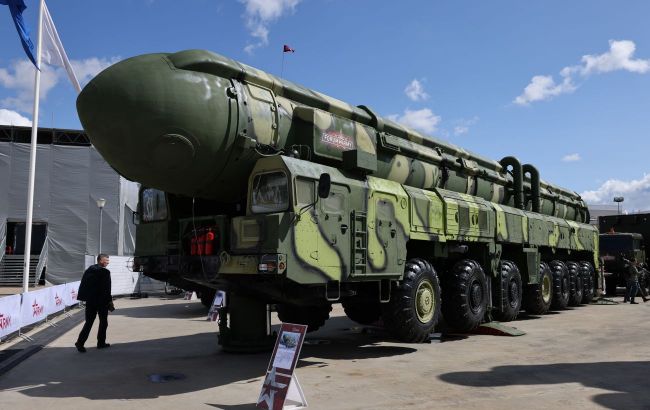 Photo: Russian intercontinental ballistic missile system (Getty Images)
Russia’s Oreshnik missile, presented by the Kremlin as a revolutionary next-generation weapon, was actually assembled back in 2017 and is based on older technologies, according to Reuters.
What the debris analysis revealed
According to the outlet, Ukrainian specialists carefully studied fragments of the Oreshnik intermediate-range ballistic missile launched by Russian forces against Ukraine in January.
The analysis disproved Russian propaganda claims that this weaponry is unique and state-of-the-art.
Experts found that the missile had been assembled in 2017 using components manufactured in 2016 or earlier. In addition, the electronics contain elements produced exclusively in Russia and Belarus.
"We were rather surprised, because they say that this is a very new missile, but if you look at the year of assembly, it says 2017," a Ukrainian expert noted.
Ukraine’s military leadership considers the Oreshnik not a new development but rather a modernized version of the Soviet/Russian RS-26 Rubezh missile, which was first successfully tested back in 2012.
Components replaced with Chinese alternatives
Presidential Commissioner for Sanctions Policy Vladyslav Vlasiuk said that intact electronics were recovered from a missile that struck near Lviv in January. Specialists are now continuing to study fragments from subsequent attacks.
According to Vlasiuk, investigators are observing a trend in which Russia, due to Western sanctions, is being forced to replace European and American microchips with Chinese alternatives.
At the same time, Western-made chips entering Russia through illegal import networks are still being widely found in Russian weapons, prompting Kyiv to urge partners to tighten export controls.
How many Oreshnik strikes have been recorded
Russia has used ballistic missiles of this type at least three times during the full-scale invasion. One such strike targeted an area near Kyiv during the massive air attack on May 24.
The Oreshnik is capable of carrying a nuclear warhead and reportedly has a range of more than 5,000 km. Russian President Vladimir Putin has repeatedly claimed that the weapon cannot be intercepted by modern air defense systems, although international and Ukrainian analysts question those statements.
What is known about the Oreshnik
During a combined overnight attack on Kyiv, Russian forces launched an Oreshnik intermediate-range ballistic missile, fragments of which were collected in large quantities and handed over to experts for analysis. Despite Russia’s ambitions, the actual impact of the strike proved to be low.
Western allies later joined the investigation of the missile fragments, with debris from the Oreshnik handed over to US intelligence agencies for examination.
American lawmakers said the use of such a weapon represented another escalation attempt by Vladimir Putin, but also provided Ukraine and the West with a unique opportunity to closely study the missile’s real technical capabilities.
Analysts from the Institute for the Study of War (ISW) also suggested that Russia may have launched not one but two Oreshnik missiles during the night attack on May 24.
According to OSINT researchers, the second Russian Oreshnik malfunctioned and struck Russian positions in the occupied Donetsk region. If confirmed, this would mean that one in four missiles of this type fails during launch.