Why strikes on Chonhar Bridge matter: Logic behind attacks on Crimea’s key routes


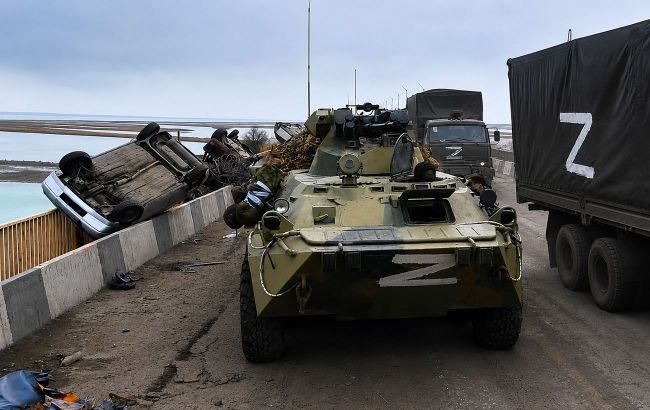 Photo: The Defense Forces destroyed a bridge in Chonhar (video still)
Ukrainian forces have destroyed the Chonhar Bridge, which connected Crimea with the Kherson region.
Why this bridge is important for Russia and how its loss may affect the front was analyzed by RBC-Ukraine.
Key points:
- Disruption of Russian plans: The damaged logistics network hampers Russia’s offensive capabilities in the southern direction and causes concern and uncertainty about further Ukrainian actions.
- Enemy vulnerability: The Russian forces are forced to reroute cargo through alternative paths (via Perekop), where it becomes an easier target for strikes.
- Isolation of Crimea: The Defense Forces continue their operation to demilitarize the peninsula, stripping it of its status as a fully functional military base.
- Strike on logistics: The destruction of the bridge cuts off key supply routes for weapons and fuel from Russia to the occupied parts of the southern front.
Why the Chonhar Bridge is important
Russian forces use the Chonhar Bridge to deliver fuel and ammunition to the temporarily occupied parts of the Zaporizhzhia and Kherson regions, Andriy Kovalenko, head of the Center for Countering Disinformation at Ukraine’s National Security and Defense Council, told RBC-Ukraine.
Therefore, any disruption of logistics directly affects Russia’s ability to carry out combat missions.
Even before the start of the full-scale invasion, the enemy turned Crimea into a major military base and logistics hub, Ukrainian Armed Forces serviceman and military expert Oleksandr Musiienko noted in a comment to RBC-Ukraine.
"Therefore, our key priority now is to cut Crimea off logistically, demilitarize it, and make it impossible to use as a large military base. And movement in this direction is ongoing," Musiienko said.
Isolation of Crimea and the occupying forces’ vulnerability
According to Musiienko, Ukrainian forces are currently carrying out a strategic operation aimed at creating maximum problems for Russia in the south. It includes strikes on targets from Mariupol to military cargo along the route from the Rostov region.
Due to fear of attacks, the enemy is no longer willing to risk transporting large shipments via the Kerch Bridge.
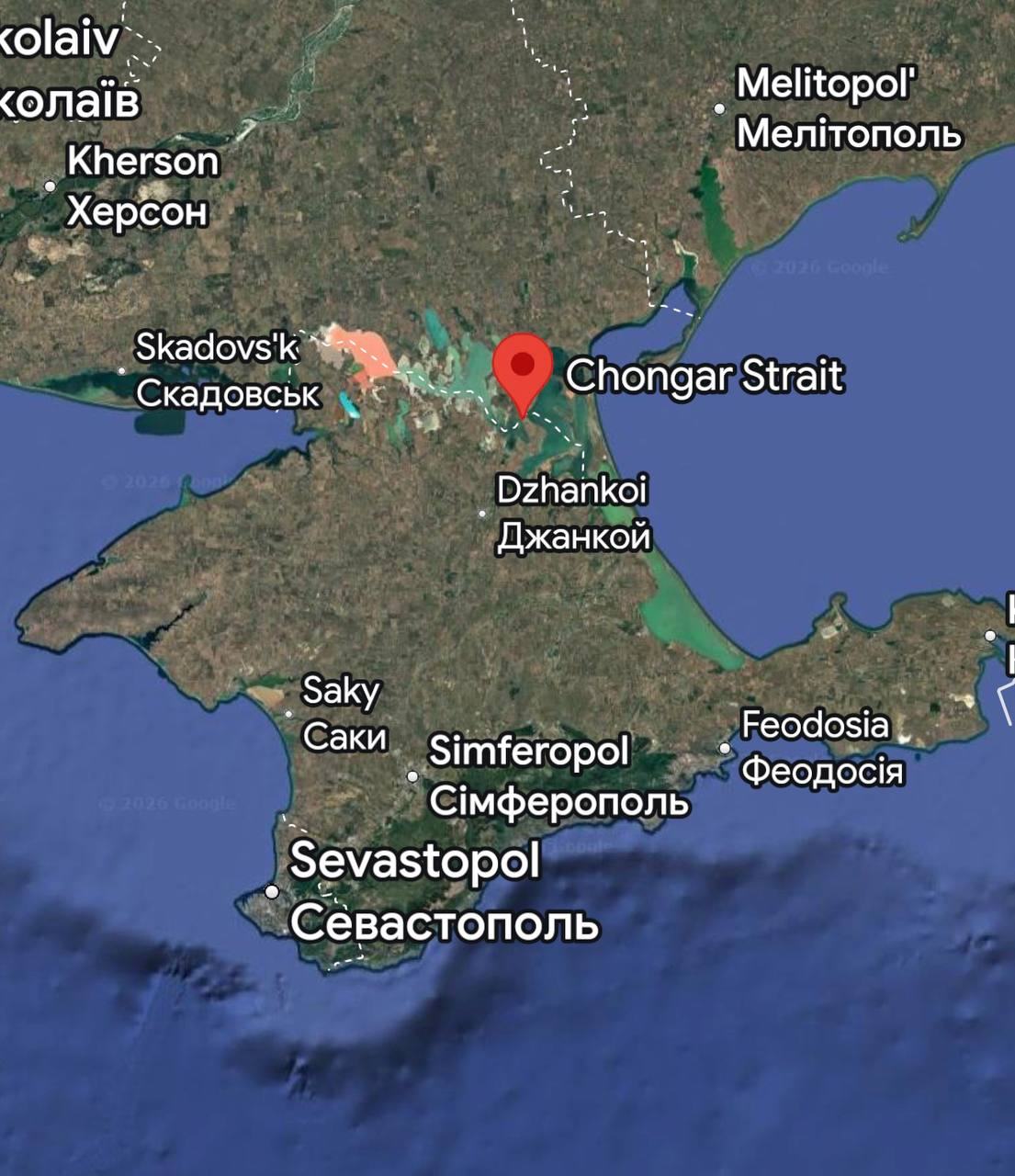
Where is the Chonhar Bridge located on the map (photo: google.com/maps)
After the strikes on Chonhar, the Russian troops are forced to move further west — through Perekop. However, according to Musiienko, this makes their logistics even more exposed and vulnerable to the Defense Forces. The Kerch Bridge, which has already been attacked several times, is also avoided by the enemy for large cargo shipments.
"Cutting off Crimea from the mainland part of Ukraine will make life much more difficult for Russian forces in the Zaporizhzhia direction, as well as in parts of the temporarily occupied Donetsk and Kherson regions. To put it mildly," Kovalenko added.
Disruption of Russia’s offensive and enemy panic
The destruction of logistics prevents Russia from accumulating forces for intensifying its offensive in the south. It also creates serious problems for the enemy on the left bank of the Kherson region, Musiienko told RBC-Ukraine.
The enemy may try to build pontoon crossings, but these are even more vulnerable targets than permanent bridges.
Satellite images of the Chonhar Bridge have emerged, showing that Ukrainian forces have completely put it out of action pic.twitter.com/wcS3MWiyOY
— RBC-Ukraine (@NewsUkraineRBC) June 10, 2026
As Musiienko noted, the Ukrainian army is currently in an "active defense" posture, and when possible, the Defense Forces will seize the initiative.
"Therefore, whenever we have opportunities, nothing can be ruled out. So I will put it cautiously: the panic and fears currently being echoed in enemy resources about possible amphibious landings or other actions toward Crimea are, let’s say, not entirely unfounded," he concluded.
Read also: