Why Putin refuses to cut war spending despite Russia's economic slowdown

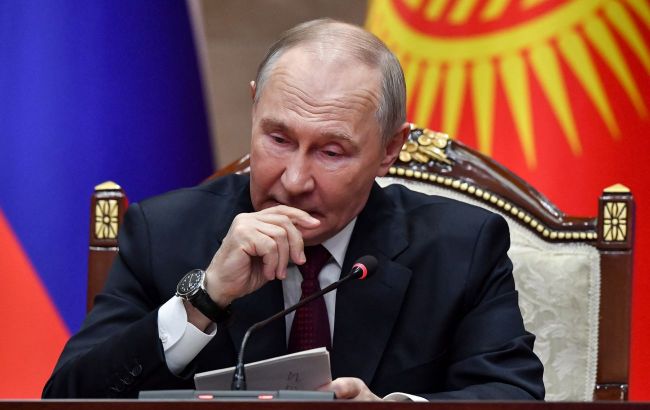 Photo: Russian President Vladimir Putin (Getty Images)
Despite problems in Russia’s economy, the Kremlin is not reducing its military spending. Analysts have explained the motives of Russian leader Vladimir Putin, according to the Institute for the Study of War (ISW).
According to analysts, Putin continues to fund the war against Ukraine at the current level because he believes he can achieve his goals through military means in the near or medium term.
The ISW noted that Putin is ignoring mounting warnings from Russian economic officials about the severe strain that military spending is placing on the country's economy.
Why Putin is not changing course
According to experts, this position may be linked to Putin’s distorted perception of the situation on the battlefield.
Analysts recalled that they previously concluded Putin is likely receiving exaggerated reports from Russia’s military leadership about the army’s successes in Ukraine. As a result, he may mistakenly believe that Russia is approaching victory.
"Putin’s misunderstanding of the battlefield situation is likely contributing to his insistence that war spending remain high and to his commitment to continuing the war to achieve his goals militarily," the Institute for the Study of War explained.
At the same time, analysts noted that reducing defense spending also carries risks for Russia.
In their view, cutting military funding could weaken certain parts of the front amid Ukrainian strikes on military infrastructure in the rear and counteroffensives by Ukraine’s Defense Forces.
In such a scenario, Ukrainian troops could build upon their recent gains, further complicating the position of the Russian army on the battlefield.
Earlier, Reuters reported that Russia’s economy is slowing amid the war, sanctions, and Ukrainian drone strikes on key infrastructure facilities. According to forecasts, Russia’s GDP growth this year will be just 0.4%.
At the same time, some Russian business sources told the agency that the most effective way to support the economy would be to end the war and resume negotiations with the West.