Von der Leyen sets 2026 priorities: Backing Ukraine’s EU bid and confronting Russia

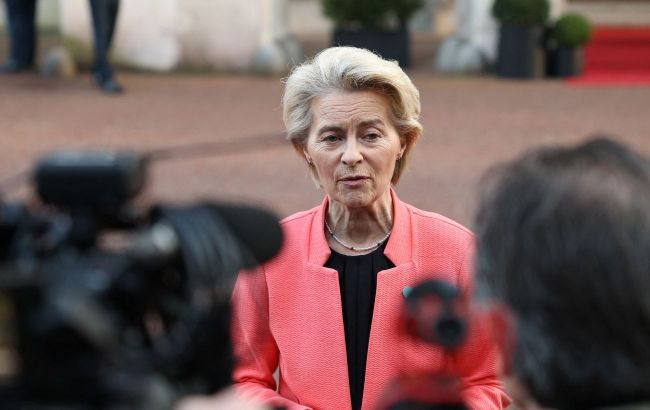 European Commission President Ursula von der Leyen (Photo: Getty Images)
On the eve of the meeting between the leaders of the US and Ukraine, European Commission President Ursula von der Leyen expressed the EU’s support for Ukraine and outlined the plan for 2026. Key points of the plan include maintaining pressure on the Kremlin and supporting Ukraine on its path to EU membership, according to a post by von der Leyen on X.
According to von der Leyen, the European Commission contacted several European leaders ahead of the meeting between US President Donald Trump and Ukrainian President Volodymyr Zelenskyy.
Ultimately, EU leaders agreed to continue supporting Ukraine on the path toward a just peace and strengthening its defense capabilities, as an integral part of European security.
“We welcome all efforts leading to our shared objective - a just and lasting peace that preserves Ukraine’s sovereignty and territorial integrity. And that strengthens the country’s security and defence capabilities, as an integral part of the security of our continent,” wrote the European Commission president.
She added that Europe will continue to pressure Russia and work to support Ukraine on its path to EU membership.
“In 2026, the EU_Commission will continue to keep up the pressure on the Kremlin, sustain our support to Ukraine, and work intensely to accompany Ukraine on its path toward EU membership,” von der Leyen stated.
Peace negotiations and Europe’s role in the process
Last month, the US presented a so-called peace plan consisting of 28 points, which primarily favored Moscow. Media reports stated that the plan was drafted by US President’s special envoy Steve Witkoff and the Russian envoy Kirill Dmitriev.
Among the points of the pro-Russian plan were significant territorial concessions to the aggressor, a veto on Ukraine’s NATO membership, a reduction in the size of the Ukrainian army, and a ban on long-range weapons, among others.
Subsequently, Ukraine, with the help of European partners and the US, revised the plan over the course of a month. The current peace plan now contains 20 points.
Regarding Europe’s role in updating the plan, its representatives began working on it during the negotiations in Geneva.
Notably, Moscow contacted the US for peace talks for the first time in a long while: on December 2, an American delegation traveled to Russia for negotiations. However, the Kremlin openly stated that no compromise had been reached regarding the peace plan.
Territorial issues and the Zaporizhzhia Nuclear Power Plant remain contentious. These points, among others, will be discussed by President Volodymyr Zelenskyy during his meeting with Donald Trump on December 28.
Kyiv has reported progress regarding security guarantees, which will take effect once peace is established. Ukraine has preliminarily secured commitments for security guarantees from both European countries and the United States. More details on the security guarantees can be found in the RBC-Ukraine report.