Ukrainians ready to make compromises to end war? What sociological data shows


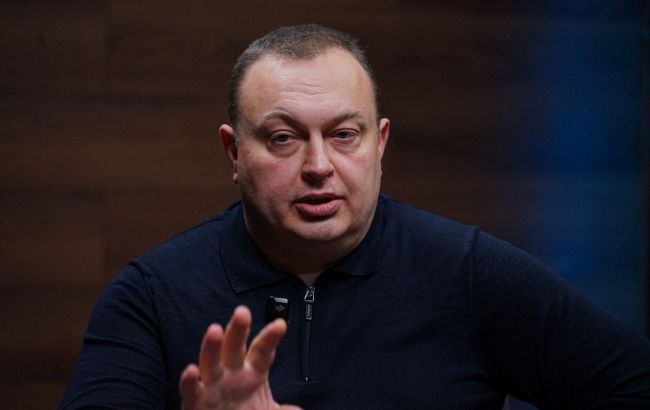 Photo: Oleksii Antypovych, sociologist (Ihor Kuznietsov / RBC-Ukraine)
Ukrainians' willingness to make compromises to end the war, including territorial ones, varies by region. From east to west, the share of people who categorically oppose any concessions steadily increases, says Oleksii Antypovych, head of the Rating Sociological Group, in an interview with RBC-Ukraine.
Proximity to the front shapes public attitudes
"The farther west you go, the stronger the resistance to any territorial concessions; the farther east, the greater the readiness to accept them," the sociologist noted.
He explained that people in western regions live relatively farther from the front line, which is why phrases like "we will fight to the end" are more common there. In the frontline areas, by contrast, the war is felt every day.
"The closer you are to the front line, the more dangerous it is — Russians can already reach you with artillery, drones fly in, and so on," Antypovych added.
That is why, he said, the demand for stopping hostilities grows closer to the front, even if it involves difficult decisions.
"So you start saying: listen, why do we need all this — let's stop with what we have," he explained, stressing that while the differences in mood between regions are not critical, the trend itself is stable.
At the same time, looking at the country as a whole, nearly two-thirds of Ukrainians believe the war can be ended only through diplomacy. However, about a third hold a tougher position: either a full restoration of the 1991 borders, or at least a return to the borders as of 2022.
According to the sociologist, these figures fluctuate, but overall demand for negotiations consistently exceeds support for an exclusively military scenario.
Territories as the most painful issue in potential agreements
Even higher figures emerge when Ukrainians are asked not about a desired, but about a realistic way to end the war. According to Antypovych, around 80% of citizens believe a negotiated model is the only realistic option.
"When you ask Ukrainians what the realistic path to ending the war is — not the desired one — nearly 80 percent say the only realistic path is negotiations," he said.
Those 80% include different formats of dialogue. Some Ukrainians support negotiations involving international partners, while others allow for direct talks with Russia.
"The same 60% speak about negotiations with the involvement of international partners, while 20% say there should be direct talks with the Russians," the sociologist detailed, adding that slightly more than 10% favor continuing the war until the complete liberation of all territories.
At the same time, Antypovych emphasized that support for negotiations does not automatically mean readiness for specific concessions. Ukrainians' attitudes vary depending on the issue.
"When it comes to concrete matters — NATO, the Russian language, the Russian church, territories, withdrawal from Donbas, and so on — each of these is perceived somewhat differently," he noted.
According to the sociologist, territories remain the most painful issue.
"No one wants to or will recognize the occupied territories as Russian — let alone withdraw from areas currently held by Ukrainian forces," Antypovych stressed.
At the same time, he acknowledged that in the absence of alternatives, society may have to accept difficult decisions.
"But if such a compromise is proposed, if it turns out to be the only possible configuration for these negotiations, then Ukrainians — who, again, are largely in favor of a negotiation process — will have to accept it," the sociologist concluded.
Earlier, a statement from Moscow claimed that Ukraine, the United States, and Russia have "truly come closer" to a solution to end the war.
Meanwhile, Kyrylo Budanov, head of Ukraine’s military intelligence (HUR), believes that a window for a real opportunity to reach an agreement on ending the war in Ukraine will open in February 2026. This period, he said, would be optimal for both Ukraine and Russia.