Ukraine's drone strikes nearly cripple Russia's grain exports

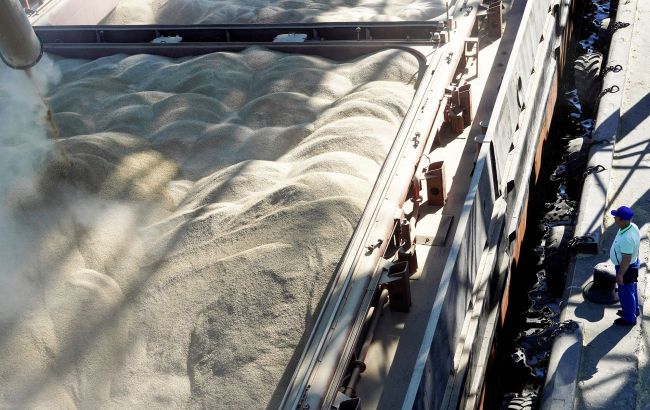 Photo: Russian grain exports (Getty Images)
Strikes on Russian ports in the Black and Azov Seas have almost completely paralyzed Russia’s grain exports. This threatens to plunge farmers into a deep crisis and cause mass bankruptcies, according to The Moscow Times.
Grain exports have brought the Russian economy around $15 billion in foreign-currency revenues annually. However, following a series of drone attacks and shipping restrictions, shipments have almost completely stopped.
At the port of Novorossiysk, all three grain terminals were shut down after drone attacks last week. They handle around 25 million tons of grain annually. At the end of July, the terminal in Taman also stopped operating, while restrictions on traffic through the Kerch Strait blocked the ports of the Sea of Azov, which accounted for 40% of shipments.
As Andrey Sizov, CEO of the SovEcon agricultural consultancy, noted, "practically all Russian grain exports through the Azov-Black Sea basin are currently at a standstill." The only port still operating is Tuapse, the smallest of the deep-water terminals.
For comparison, last season, the ports of the Azov-Black Sea basin accounted for 88% of all seaborne grain shipments from Russia, totaling 46.3 million tons. More than 29 million tons were exported via the Black Sea.
Falling prices and a disaster for farmers
The situation has become critical because the export shutdown coincides with the peak period from August to December, while the new 2026 harvest amounts to nearly 140 million tons.
Arkady Zlochevsky, president of the Russian Grain Union, stressed that there is now "no one to sell the harvest to," as exporters have stopped buying grain. Due to the lack of demand, domestic prices for Class 4 wheat have fallen from 15,000 to 12,000 rubles ($142) per ton.
"This is a catastrophic level, with enormous losses. Grain stocks are growing every day, while demand has come to a standstill and exporters have practically stopped buying grain," he said.
According to Sizov, hopes that the undelivered grain can be shipped later are overly optimistic.
"It is impossible to squeeze additional grain into an 'export pipeline' that is already operating at the limits of its capacity, especially given winter storms and the freezing of rivers and the Sea of Azov," the expert said, adding that "many will not survive the current season."
In addition, farmers risk being left without enough funds to plant winter crops for the next season. Zlochevsky stressed that there is nowhere to get the money, credit resources are unavailable, and no advance payments are being made.
"If we do not receive sufficient financing, the winter crop sowing campaign will fail," he concluded.
Earlier, Russia’s state-owned Vnesheconombank said that Russia would not be able to win its economic confrontation with the West as long as Western countries continued to support Ukraine.
In addition, regular Ukrainian strikes on rear targets in Russia have significantly worsened the situation in the energy and financial sectors. Russia’s largest state-owned banks, Sberbank and VTB, are reporting a deterioration in the quality of their loan portfolios.