Ukraine repels large-scale Russian strike, intercepting hundreds of drones and missiles

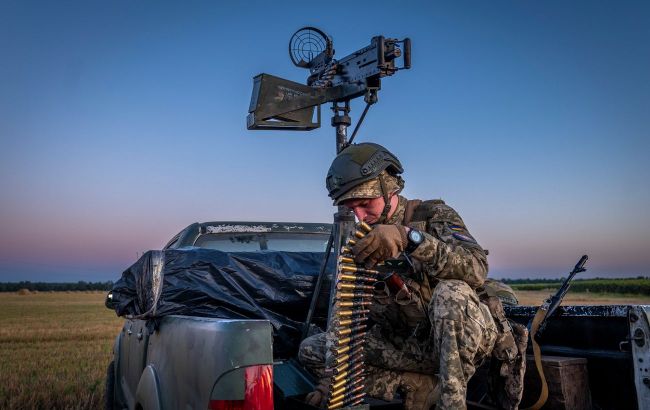 Photo: Ukraine’s air defense has neutralized hundreds of enemy drones (Getty Images)
On the night and morning of April 3, Russia carried out one of the largest combined strikes across Ukraine, with more than 579 munitions simultaneously targeting different regions of the country, according to the Air Force of the Armed Forces of Ukraine.
Air defense shot down or suppressed 541 targets — 26 missiles and 515 unmanned aerial vehicles of various types.
What Russia launched on April 3
In total, 579 aerial attack assets were recorded:
- 10 Iskander-M ballistic missiles (launched from Russia’s Kursk and Rostov regions);
- 25 Kh-101 cruise missiles (launched from Russian airspace over the Samara region);
- 2 Iskander-K cruise missiles (Rostov region, Russia);
- 542 strike drones of the Shahed, Gerbera, Italmas, and other types — launched from directions including Bryansk, Kursk, Orel, Shatalovo, Millerovo, Primorsko-Akhtarsk, as well as from occupied Crimea.
As of preliminary data at 2:00 PM Kyiv time, the following were shot down or suppressed:
- 24 Kh-101 cruise missiles;
- 2 Iskander-K cruise missiles;
- 515 unmanned aerial vehicles of various types.
A total of 11 missiles and 27 drones were recorded hitting 20 locations. Debris from downed drones fell at an additional 22 locations.
Air Force aviation, anti-aircraft missile units, electronic warfare systems, Unmanned Systems units, and mobile fire groups of the Defense Forces of Ukraine were involved in repelling the attack.
As reported by RBC-Ukraine, several regions were affected by the overnight and morning strike. In the Kyiv region, a drone hit a residential building in Obukhiv, trapping people under the rubble. In Fastiv, a veterinary clinic was attacked, where around 20 animals were killed.
RBC-Ukraine also reported a strike on a shopping center in the center of Sumy. Four people were injured, including a minibus driver who was caught in the blast wave near the impact site.
Andriy Kovalenko, head of the Center for Countering Disinformation, noted that the main goal of such daytime attacks is to maximize civilian casualties. That is why Russia uses a large number of drones and missiles simultaneously.