Ukraine regains nearly 400 sq km after Russia loses Starlink access

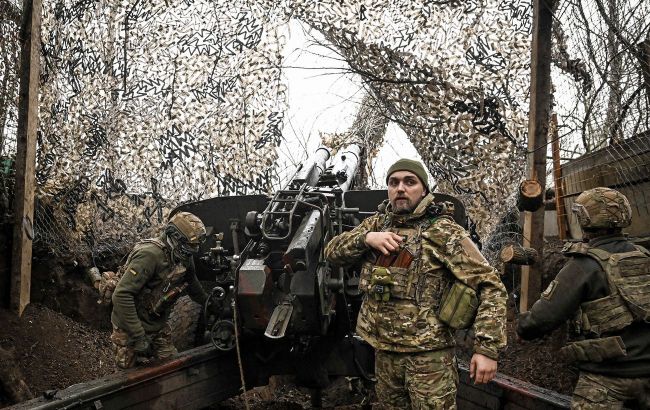 Photo: Ukrainian forces regained nearly 400 sq km after Russians lost Starlink access (Getty Images)
Ukrainian troops achieved their biggest territorial gains in more than two years after Russian forces lost access to the Starlink satellite internet system, according to The Wall Street Journal.
In February, SpaceX, owned by Elon Musk, restricted access to Starlink via a “whitelist” system: Ukrainian forces retained verified access, while Russian troops lost it.
This immediately affected the battlefield situation.
“Without Starlink, they were basically pushed back to Cold War-era communications,” said a Ukrainian soldier with the call sign Konosh.
According to analysts, Ukraine subsequently regained about 380 square kilometers in the Zaporizhzhia and Dnipropetrovsk regions.
The loss of connectivity sharply reduced the effectiveness of Russian drones.
“Before, if the enemy spotted our group, even a single soldier, they wouldn’t let him go. They would throw everything at him,” said Oleksiy Serdiuk, the commander of the Brotherhood unit of the Timur Special Forces Unit.
Due to the lack of rapid coordination, Russian forces could not efficiently transmit target coordinates between units.
Chaos in the Russian army
It is noted that after losing Starlink, Russian forces were forced to switch to radio communications, which Ukrainian troops began actively intercepting.
“We started hearing direct instructions in the radio traffic… Sometimes we heard a day ahead,” said a signals intelligence specialist.
Ukrainian forces used this to launch counterattacks, including small group operations behind enemy lines.
“It gave us a real advantage—we were able to exploit weaknesses at a moment when their system of control was destabilized,” said a commander with the call sign Luna.
Loss of control over troops
Starlink also played a key role in internal control within Russian units.
A soldier with the call sign Sivir said Russia had tightly controlled its units using Starlink, but that control has now disappeared.
According to him, Russian soldiers often acted in isolation and lacked situational awareness.
After losing access, Russian forces have been trying to restore communications by:
-
laying cables between positions;
-
using local wireless networks;
-
turning to other satellite services.
However, the effectiveness of these solutions is significantly lower.
“Starlink was a cheap and effective solution,” said analyst Michael Kofman.
According to Ukrainian estimates, Russian coordination has recovered to only about 60%.
Additional problems stem from internal disputes over communication systems. The Kremlin is restricting the use of Telegram while promoting the state-backed system Max, which troops reportedly do not trust.
“Problems will arise in coordinating work between groups, coordinating operations at the lowest tactical levels—platoon, company, battalion,” said Ukrainian Defense Ministry adviser Serhiy Beskrestnov.
Despite Russia’s numerical advantage, Ukraine’s recent gains mark a significant breakthrough after a prolonged period of frontline stagnation.
Russia blocked from Starlink
It should be recalled that after Russian forces began using drones connected via Starlink, Ukraine appealed to Elon Musk to restrict their access.
Access for Russian troops was subsequently blocked, leading to widespread communication disruptions and significantly complicating command and control.
Attempts by Russian forces to switch to alternative communication systems have proven less effective, creating additional challenges on the battlefield.
It was also previously reported that Russian forces are seeking alternatives to Starlink for drone operations, including the use of low-cost UAVs like Molniya and changes in strike tactics.