'No mission worth senseless loss of lives': Ukrainian assault unit on drones and cost of victory


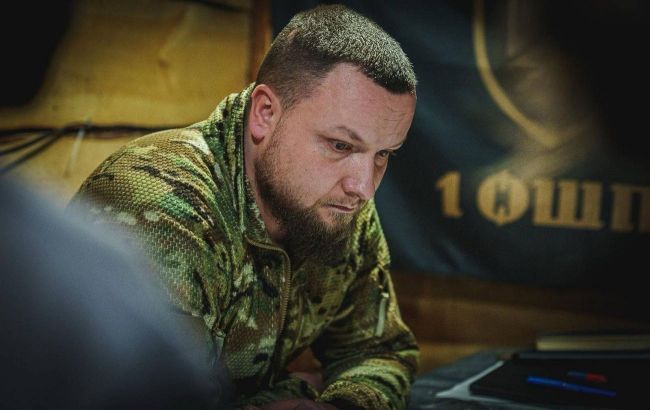 Officer of 1st Separate Assault Regiment with call sign Pyrotechnician (photo: provided by soldiers of 1st Separate Assault Regiment)
Modern war is no longer only about infantry and artillery. Even assault units cannot carry out any important mission today without aerial drone support (unmanned aerial vehicles used for reconnaissance and strikes). Often, every movement of enemy forces is visible in real time. However, the enemy also monitors our movements using drones.
About choosing between mission objectives and safety, recruitment, the role of drones on the frontline, and the philosophy of preserving personnel, RBC-Ukraine spoke with an officer of the 1st Separate Assault Regiment (Ukrainian assault unit) with the call sign Pyrotechnician and a sergeant with the call sign IT Specialist.
Key points:
- War of systems: Old battlefield technologies have been replaced by a reality where one soldier with a drone can be more effective than a professionally trained sniper.
- Transparent frontline: With drones, it is impossible to conceal movement. Victory goes to those who adapt faster, act smarter, and remain less visible to the enemy.
- Value of life: The main goal of a commander is to complete the mission and bring people back. No objective is worth senseless losses if there is an alternative.
- Safe recruitment: In the 1st Separate Assault Regiment (Ukrainian assault unit), no one is sent directly to the zero line (frontline combat zone). Recruits undergo 70 days of training and are gradually integrated into operations alongside experienced drone pilots.
- Responsibility instead of fear: Discipline in the unit is based on trust and the value of each specialist, not on formal military coercion.
- Destruction as routine: The first successful drone strike (dropping explosives from a drone) brings an emotional surge due to saving fellow soldiers, but over time, combat work becomes a routine.
"The emergence of drones has made the battlefield transparent. Everyone sees everything."
The commander with the call sign Pyrotechnician has had a long combat path since 2016, rising from a machine gunner to a platoon commander. He also served as an instructor and commander of a reconnaissance unit. In 2025, he served as a company commander in a strike drone unit (specializing in attacking unmanned aerial systems) and later received the rank of junior lieutenant.
After the expansion of the unit, the Da Vinci battalion (well-known Ukrainian volunteer unit) was reorganized into the 1st Separate Assault Regiment, where Pyrotechnician continued service in an officer position. During his service, he was awarded the Steel Cross (Ukrainian military award).
The call sign Pyrotechnician appeared in the defender's life long before he put on a military uniform. The name has a completely civilian, though "explosive," origin. Today, the soldier recalls it with a smile.
Back in 2013, at home, he was assembling what he describes as various devices (improvised items, likely involving pyrotechnics). One of them exploded, and he was hospitalized. As it turned out, the incident caused quite a stir and drew attention from multiple authorities.
"I was lying there, coming out of anesthesia, and my hand was injured. The door in the room creaked — I opened it, and the sound echoed down the corridor. I look, and another door down the hall opens, and there are about five people. They all look at me — and suddenly shut the door. I was surprised, thinking: what is going on? Later, I met them, and we talked. They started asking what had happened, what had exploded, because they said they had brought a pyrotechnician to the hospital. Apparently, there was a lot of commotion, police and various agencies involved, and they brought in a pyrotechnician — me. That is how I became a Pyrotechnician," the soldier explains.
Comparing the war with Russia before 2022 and the current full-scale invasion, Pyrotechnician notes a massive technological gap between these stages. Before 2022, it was largely a war of artillery and infantry, whereas now it has become a technology-driven war.
"We are now in an era where a forty-kilogram soldier can destroy more enemy forces than a sniper trained for years. This is a war of systems: either you build structure and logic, or you are simply ineffective and lose ground. The emergence of drones has made the battlefield transparent. Everyone sees everything. Now it is not enough to be brave — it is important to be smarter, faster, and less visible," explains Pyrotechnician.
With the change in tactics, his role has also changed. The transition to command became a test of responsibility, where the success of the entire unit became the top priority.
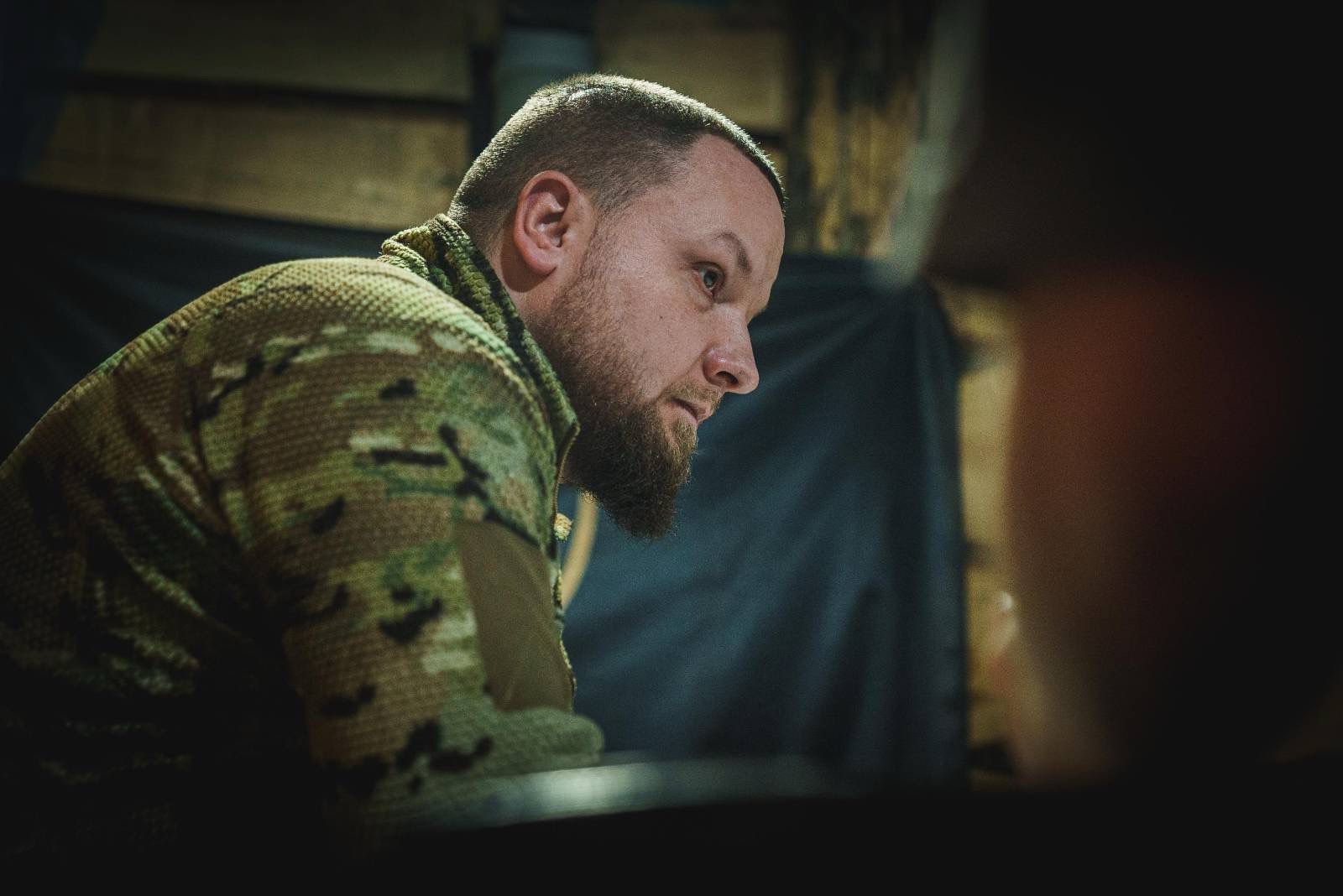 Modern war requires intellectual flexibility from a soldier, Pyrotechnician believes (photo: provided by soldiers of 1st Separate Assault Regiment)
"I am no longer just an executor or an ordinary soldier. You stop thinking, 'how do I survive,' and start thinking, 'how do I make sure everyone returns, and the mission is completed?' It is a completely different level of responsibility — both moral and professional. I always follow a simple principle: no mission is worth the senseless loss of lives. If there is another way, we look for it. Solutions that allow us to complete the task while ensuring maximum safety of personnel," he explains his principles.
"No technology has ever worked without people"
He considers the most difficult moments on the frontline to be situations where one has to choose between mission objectives and the safety of personnel.
"One example of the hardest command decision is when you have to stop an operation even though the mission is almost complete, but the risk to people becomes too high. A commander must be able to say 'stop,' even if it looks like a step back. What period was the most difficult? When the unit is growing, tasks are multiplying, and there is no time for mistakes at all. What stays with you is not a single operation, but the accumulation of decisions, each of which can come at a very high cost," the defender admits.
In his view, modern war primarily requires intellectual flexibility, as the main challenges today lie in rapid adaptation.
"The main challenge now is the pace of change. Equipment can be purchased, people can be trained, but adapting mindset to constant change is the hardest part, especially for personnel. What qualities are more important today than physical endurance? A clear head, discipline, and the ability to learn and relearn."
He also emphasizes the importance of supporting those who have been in service since the first days of the full-scale war.
"How do you approach those who have been fighting since 2022 and are exhausted? Speak honestly. Give leave when possible, and most importantly, show that their experience is valuable, not a used-up resource."
His vision of the end of this struggle is clear — it is a guarantee of security for future generations.
"Victory is when Ukraine no longer fights for its right to exist. When our people return home, and the enemy understands that it will not come here again. As for advice to myself, I would say: always look one step ahead and do not become attached to a specific tactic or a single effective tool. Technology will be decisive, but those who win will still be those who can think, adapt, and take responsibility. Those who adapt faster live longer. No technology has ever worked without people."
On honesty with people and myths about being "sent to zero line"
Mykhailo has the call sign IT Specialist on the frontline — not because of his profession, but due to his interest in technology noticed by fellow soldiers. He joined the military in 2025 after mobilization: he started as a drone pilot, later became a team leader, received the rank of sergeant, and is now involved in unit development, recruitment, and communications.
For him, the path in the Armed Forces began with breaking old stereotypes that had been shaped for years by mass culture and stories from older generations.
"My perception of the army was formed by stories from people who had previously completed conscript service, with tales about hazing and elephants (slang term for inexperienced recruits - ed.), and so on. Films and television series also had a strong influence, often negatively portraying the army as corrupt and unprofessional," an IT Specialist admits.
But then, he says, his perception changed dramatically in almost every aspect: both in how soldiers are treated as individuals and in the tasks themselves.
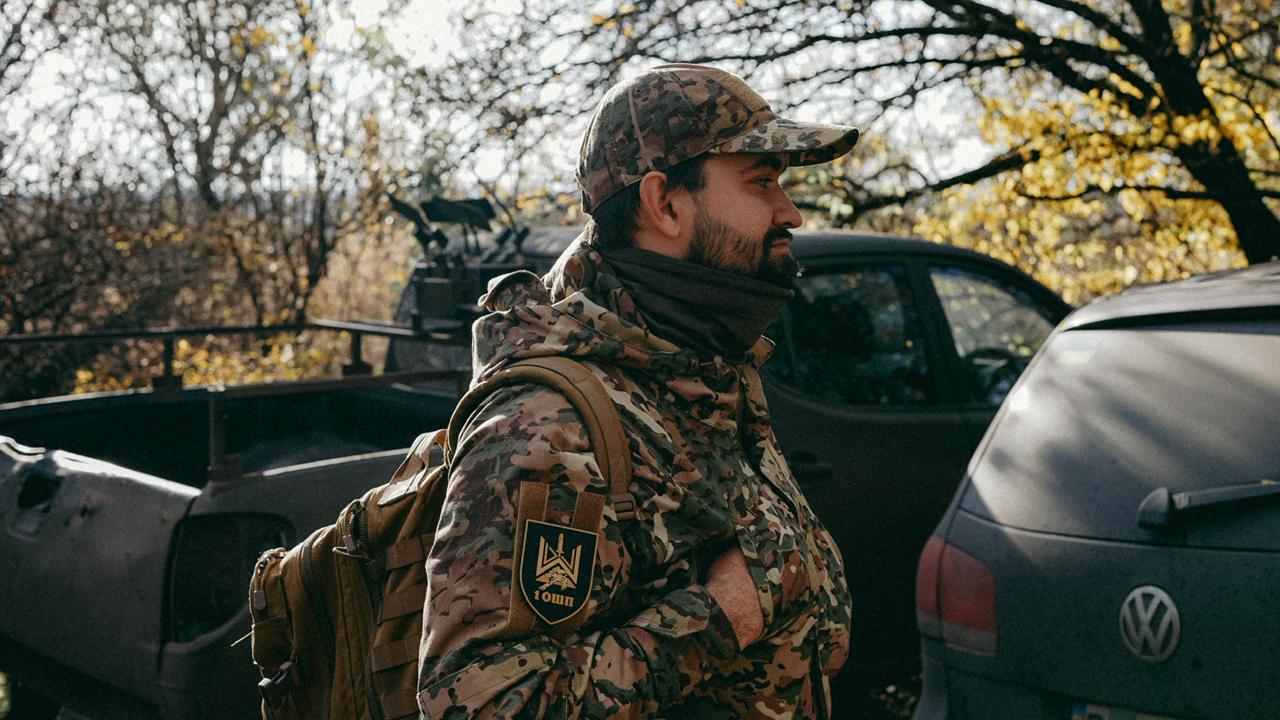 "Our crews operate 7–12 kilometers from the line of combat contact," says IT Specialist (photo: provided by soldiers of 1st Separate Assault Regiment)
"We were not rolling square objects or carrying round ones (doing meaningless tasks - ed.). At first glance, of course, some downsides appear over time, but overall, for a soldier who has just joined, the difference between expectations and reality is very noticeable," he recalls his first impressions of service.
Today, an IT Specialist is involved in building the unit. Working with recruits, he faces psychological barriers every day that prevent people from taking a step toward military service.
Fear among recruits manifests in different ways: "they will send me straight to the zero line" (frontline combat zone - ed.), "I will never return home," "I do not know anything, what will I do here," and so on. Together with his comrades, he explains to each of them that these are myths.
No one is sent to the zero line immediately. First comes basic military training (initial training program), followed by specialized training, the defender explains.
"In terms of time, it is 56 days of basic training and 14 days of additional preparation. After that, we gradually integrate people into teams, and they go to positions together with experienced drone pilots. We need effective and motivated crews. Our crews operate 7 to 12 kilometers from the line of combat contact. We do not hide that risk is always present. We are honest with people, because this is the key feature of an effective unit. Everyone else drops out along the way," he describes the training system in detail.
An IT Specialist also emphasizes the specific approach of his unit.
"In the 1st Separate Assault Regiment, the focus is on results and preserving personnel. Decisions are made with real risks in mind. The regiment actively uses drones as a key element of combat operations. We value people and their skills, and we try to make the most of each person's strengths to achieve results," he says.
According to him, discipline is based on responsibility and trust, not fear.
"We do not tell fairy tales: we work in the most difficult sectors of the frontline and deliver results. We are always honest with people — this is the foundation of trust," he explains the unit's internal philosophy.
On emotions after the first enemy kill using a drone drop
Working with drones provides a unique, somewhat detached, yet very intense experience of contact with the enemy. IT Specialist recalls how his perception changed during combat missions.
"I remember when, during reconnaissance, I first saw the enemy through a drone camera. There were almost no emotions — it was simply tracking the enemy for targeting by other drones. But when I destroyed an enemy for the first time using a drop, it was hard to describe the feeling. It was a mix of fear, the realization that you had killed an enemy, and a certain sense of relief that you had stopped an infantry soldier who could have killed our guys in positions. Over time, these emotions disappeared — it became routine," the soldier shares openly.
In addition to moral motivation, the unit also has a system for recording and rewarding combat results, based on verification rules.
"There are rewards for destroyed targets, ePoints (internal reward system - ed.), which must be confirmed with video of the strikes. The regiment has a separate unit responsible for verification. After confirmation, these points can be used to procure necessary equipment," he explains.
The technical nature of a drone pilot's work does not make it safe — on the frontline, it is always a risk, and conditions change every minute. IT Specialist recalls situations that have become part of his professional experience, although from the outside they may look like extreme challenges.
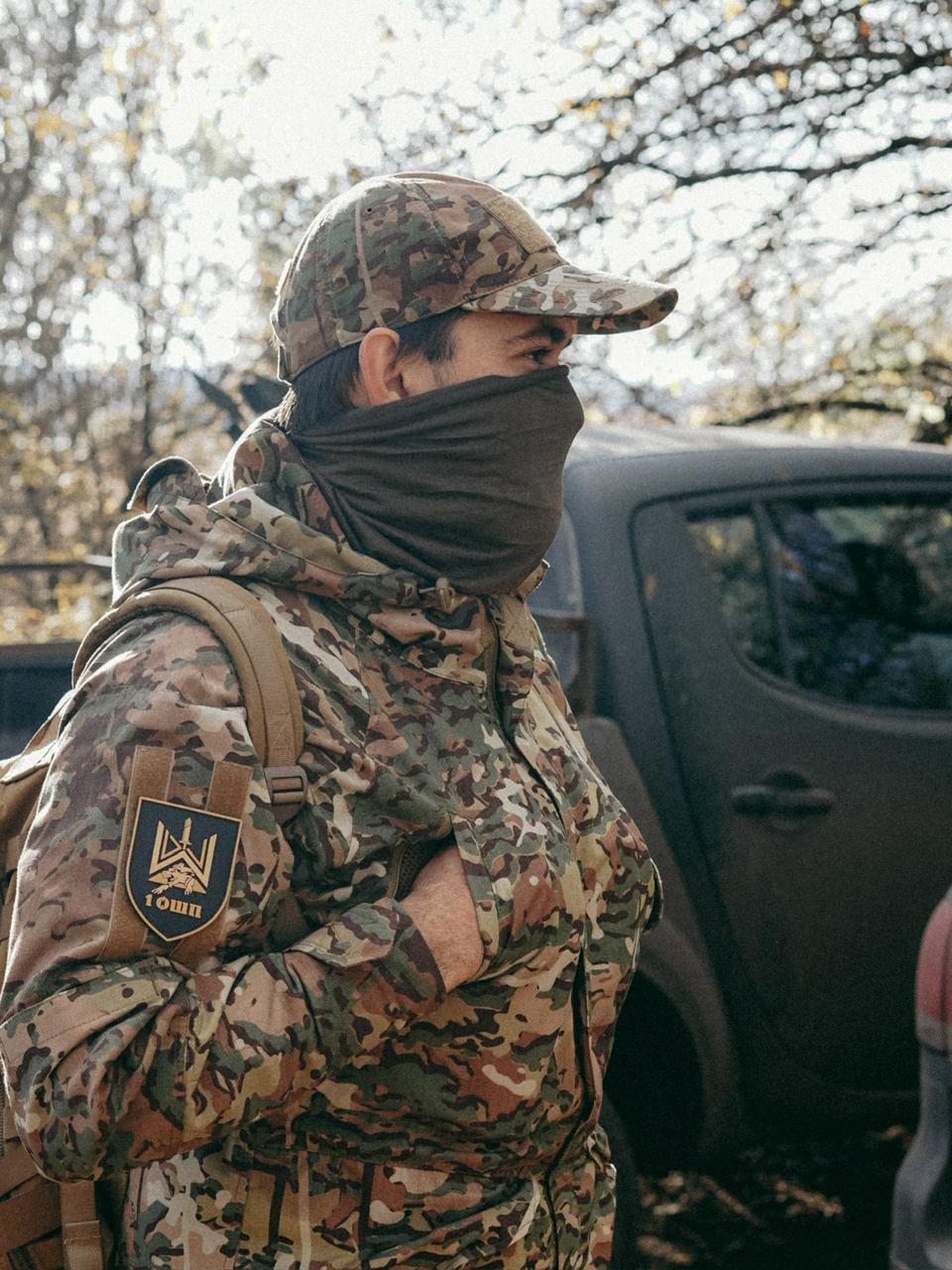 "We do not tell fairy tales: we operate in the most difficult sectors of the frontline and deliver results," says IT Specialist (photo: provided by soldiers of 1st Separate Assault Regiment)
Due to his experience, it is now difficult for him to say whether anything felt particularly difficult or dangerous. He simply gives a couple of examples.
"Once we were sitting in a position when artillery shelling started, but our drone was still in the air. When incoming fire began, it was returning home from a reconnaissance zone. We could no longer land it at the usual entry point, so I redirected it and landed it farther from the position — in a trench between protective cover. There were also situations when a drone starts to lose altitude due to payload weight (specifically a bomber drone — a drone used to drop explosives - ed.). In such cases, you have to improvise: drop one or two munitions to save the drone," he explains.
In addition to enemy attacks, danger can come from unexpected sources — technical failures or accidents under constant stress. One such episode he witnessed firsthand during a shift on position. He and his comrades had just arrived at the position. He was the team leader, with three others alongside him.
He had been flying missions all day and asked the others to take the controls so he could rest for a while.
"Before that, the commander said: 'Take care of the drones, we have a supply delivery landing coming.' At the position, we had two drones: one fully operational, the other 300 (damaged, with a partially broken arm - ed.). I settled down to rest. The guys were busy working, and I almost fell asleep — then suddenly I heard a blast. I open my eyes, look at my comrade and the controller, and see that the drone is not connected to it. For a moment, I hoped it was a strike on target. I ask: 'Where is the drone?' He says: 'It is gone…' In short, they accidentally blew up the drone on takeoff. More precisely, the ammunition detonated. Everyone was unharmed, but it was completely unexpected," IT Specialist recalls.
When the line between heroism and routine disappears
A combination of advanced technology and safety becomes a decisive factor for those choosing where to serve. When it comes to recruitment, the soldier places primary importance on how individuals are treated.
"I believe the main argument is treating a person as a value that must be protected and developed, not lost. In the unit, professionalism, training, and use of modern technologies matter — not a formal 'just to have it' approach. Here, everyone understands why they are fighting, what role they play, and how their work affects the outcome. That is what gives motivation to stay and grow within the unit," says the IT Specialist.
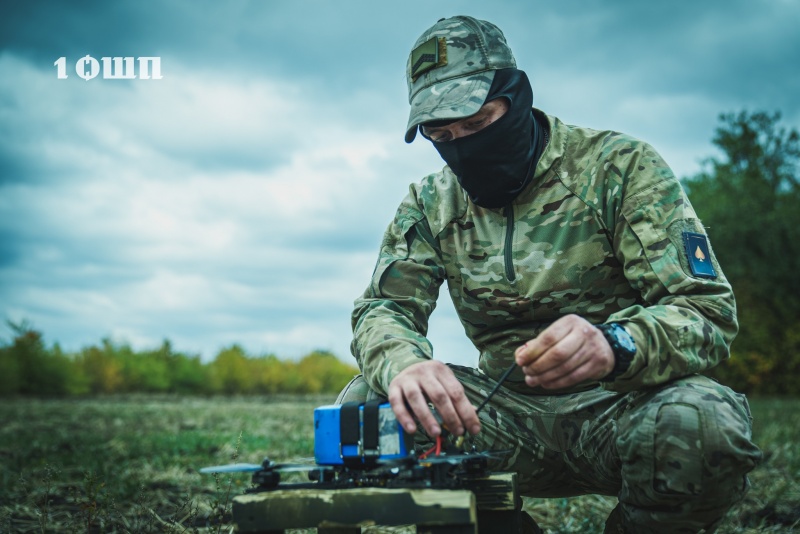
Unmanned Systems Battalion of 1st Separate Assault Regiment (photo: facebook.com/davinci.army)
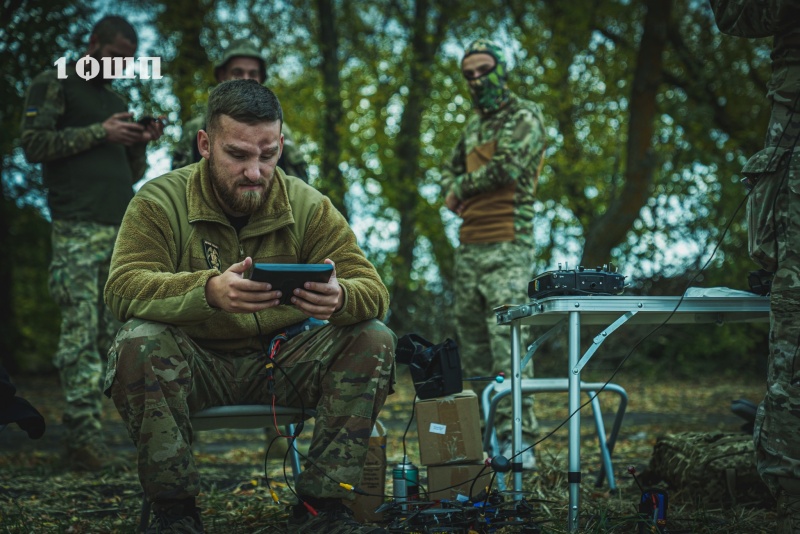
Unmanned Systems Battalion of 1st Separate Assault Regiment (photo: facebook.com/davinci.army)
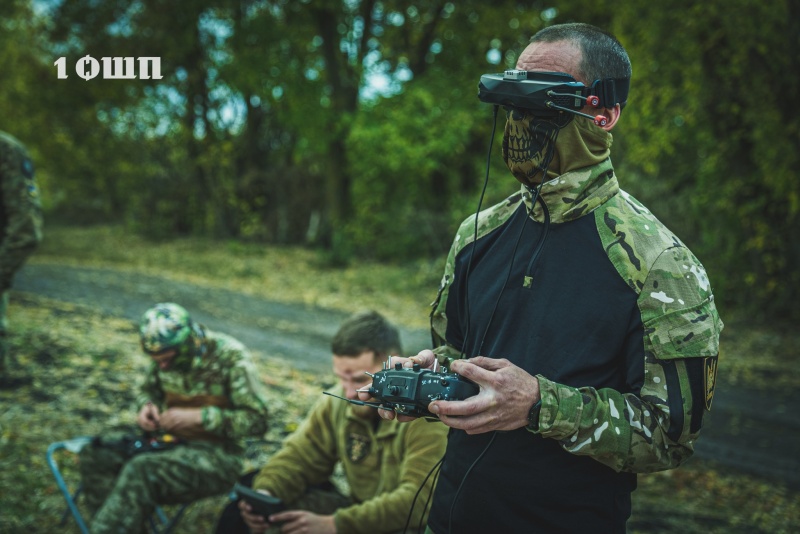
Unmanned Systems Battalion of 1st Separate Assault Regiment (photo: facebook.com/davinci.army)
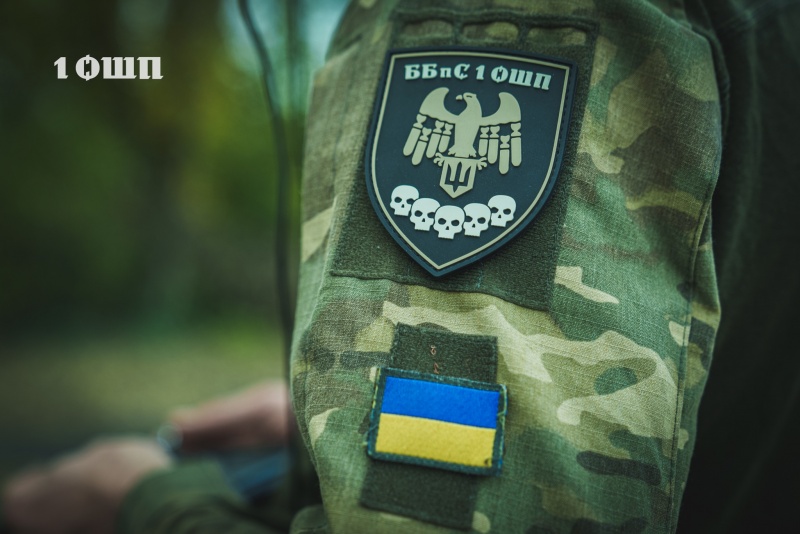
Unmanned Systems Battalion of 1st Separate Assault Regiment (photo: facebook.com/davinci.army)
Daily service in the most difficult sectors erases the line between extraordinary heroism and ordinary work. What may seem like incredible bravery to civilians becomes part of everyday life for soldiers.
"In reality, many different situations happened, depending on the direction we were deployed in. Over time, it becomes hard to distinguish what is bravery and what is just routine. Moving out of position between shelling, relocating, and waiting it out, and once things calm down, digging your belongings out from under debris. Or getting lost in Pokrovsk (a frontline city in eastern Ukraine - ed.) under enemy FPV drones (first-person view drones used for direct strikes - ed.), getting stuck, and pulling the vehicle out. I cannot recall any specific story right now," he says.
Territories for "peace"? On end of war and the vision of victory
The question of his personal future after the war remains open for the soldier. Returning to civilian life and his previous profession is a scenario that depends on how long the war lasts, he says.
"It is hard to say. Right now, I think I will be able to return, but whether that will change in a year or two, no one knows. No one knows when the war will end," the soldier admits.
However, he is certain about his vision of how the war should end. An IT Specialist believes that Russia must completely withdraw from Ukrainian territory and take with it those it has brought here, as well as those who chose to align with it.
"No one agrees to give up territory for 'peace' (a forced settlement involving territorial concessions)," the soldier says. "You would not give up a room in your own apartment if relatives living next door decided during renovations that they could 'merge' the apartments by breaking a door into your space. Because eventually, it would turn into some distant relative moving in — someone you owe nothing — while they tell you: 'We will take this room, and you can keep the kitchen and hallway.'"
In his view, any scenario other than full victory would amount to capitulation of democratic values in the face of brute force, and anything else cannot be called a victory.
"It would show that democracy by itself is powerless, and that all existing alliances are unable to resist aggression — they are only "deeply concerned" (a common diplomatic phrase used to express concern without taking concrete action - ed.). 'If an aggressor is not stopped, it will want more and more, and it will not end. Such a scenario would only send a signal that nothing is impossible, and it will happen again later — but with even greater force," he concludes.