Ukraine exposes technology behind Russia's new jet-powered Shahed drone

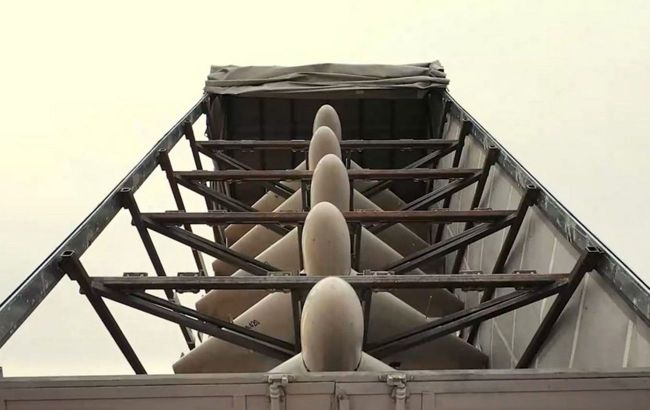 Photo: Russia has deployed a new jet drone against Ukrainian interceptors (defence-ua.com)
Since May 2026, Russia has been using a new jet-powered strike drone against Ukraine, the Geran-4. It is faster than previous versions, more maneuverable, and significantly more dangerous, according to the Defense Intelligence of Ukraine (HUR).
Why new drone was developed
Russia had previously built jet-powered versions of the Geran-3 using the airframe from the standard gasoline-powered Geran-2. However, that airframe proved insufficiently sturdy for high-speed flight and aggressive maneuvering.
Because of this, the Russians developed a completely new airframe with a reinforced structure and improved aerodynamics. The Geran-4 was developed in response to the effectiveness of Ukrainian interceptor drones.
What changed in design
The new drone features several key differences from previous versions:
- Wings are now fixed to the central fuselage
- Fewer access hatches on the fuselage to reduce air resistance
- Dimensions remain standard: 3.5 meters in length and 3 meters in width (wingspan).
Chinese engines are foundation of thrust
Two types of Chinese-made turbojet engines were identified in the Geran-4:
- Telefly LX-WP-160—160 kg of thrust, but already discontinued
- Telefly TF-TJ2000A – 200 kg of thrust; this engine was previously used on the Geran-5.
Speed and range are main threats
The new design allows the drone to:
- Maneuver at speeds ranging from 300 to 400 km/h
- Accelerate to 500 km/h
- Climb to an altitude of up to 5,000 meters
- Fly a distance of up to 450 kilometers.
What explosives does it carry
The Geran-4 can carry one of the following warhead variants:
- 50-kg fragmentation-high-explosive or thermobaric warhead (OFZBCh-50 or TBBCh-50M)
- Enhanced 90-kg thermobaric warhead (TBBCh-90).
Previously, elevated radiation levels were detected in the debris of a Russian R-60 missile found in the Chernihiv region due to depleted uranium components.
Meanwhile, four leading US technology companies are seeking to have lawsuits filed by five Ukrainian citizens dismissed. As reported by RBC-Ukraine, the plaintiffs claim that these companies’ microchips and processors were used in Russian missiles that killed people.