Ukraine cannot track Oreshnik missile launches on its own, expert says


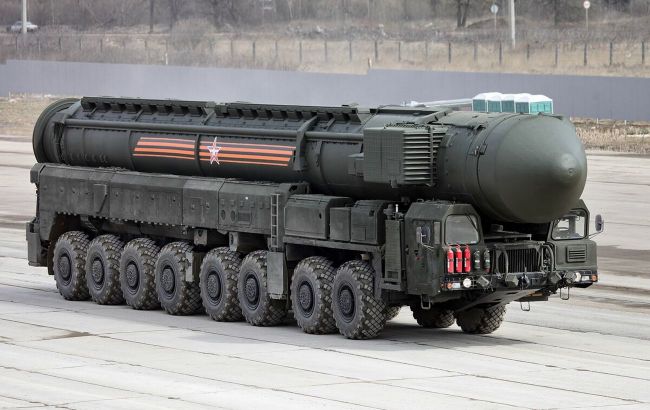 How Ukraine detects Oreshnik missile launches (photo: Russian media)
Ukraine currently lacks the technical capability to independently track launches of Russia's Oreshnik missile, but its military is still warned of potential threats, Anton Zemlianyi, a senior analyst at the Ukrainian Security and Cooperation Centre (USCC), told RBC-Ukraine.
Key points:
- Technical limitations: Ukraine cannot track the flight of the Oreshnik missile because existing radars can detect the target only during the final stage of its flight.
- Launch warnings: Information about preparations for ballistic missile strikes is provided in advance by Western partners and Ukrainian human intelligence sources.
- Information hygiene: Only official sources should be trusted, as monitoring Telegram channels often makes mistakes by misinterpreting data.
Why Ukraine cannot track the Oreshnik
According to the analyst, the main problem is the lack of detection systems capable of tracking ballistic missiles at such altitudes and ranges. Existing AN/MPQ-65 radars can detect a target at a distance of 160-180 kilometers and an altitude of 30-36 kilometers.
Since an intermediate-range ballistic missile flies much higher, it can only be detected once it enters the coverage area of radar stations.
"However, this is essentially the final part of its flight," Zemlianyi noted.
How the military learns about launches
Ukraine promptly receives information about preparations for Oreshnik and other ballistic missile launches from Western partners through their intelligence systems.
"This allows the Ukrainian Air Force to inform the public and the military even before the missile enters the country's airspace or crosses the front line," Zemlianyi explained.
In addition, Ukrainian human intelligence is operating, so the military and political leadership knows about the enemy's plans in advance.
"However, on a technical level, we currently cannot track the missile itself," the expert added.
Who to trust during an air raid alert
Zemlianyi urged people to rely exclusively on official statements from the Ukrainian Air Force, Ukrainian authorities, and foreign partners. Monitoring Telegram channels often makes mistakes by incorrectly interpreting the information they receive.
"In fact, yesterday the Air Force reported a ballistic missile threat without specifying the type. It seems that enemy ballistic systems from S-400 complexes were being used. But monitoring channels immediately started writing about the Oreshnik," Zemlianyi said, citing an example.
Read more about whether Russia's Oreshnik is really as dangerous as the Kremlin portrays it in a separate RBC-Ukraine article.