Trump doesn’t want to extend old 'nuclear deal' with Russia: Here’s what he proposes instead

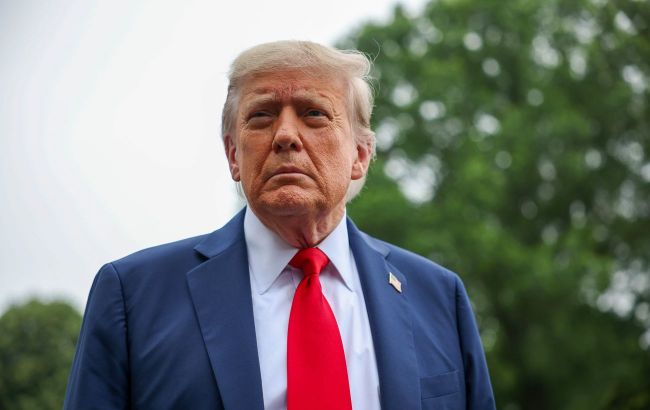 Photo: US President Donald Trump (Getty Images)
US President Donald Trump said that Russia and the United States should conclude a "new deal" instead of the Strategic Arms Reduction Treaty (New START), according to Trump’s post on Truth Social.
Trump suggested that instead of extending "New START" — which, in the US president’s view, is "a badly negotiated deal by the United States that, aside from everything else, is being grossly violated" — it would be better to conclude a new nuclear agreement with Russia.
"We should have our Nuclear Experts work on a new, improved, and modernized Treaty that can last long into the future," he wrote.
New START Treaty: What it is
The Strategic Arms Reduction Treaty (New START) was signed in 2010 by the United States and Russia and became a continuation of a series of similar agreements (more specifically, the seventh since 1972). It served as a limiting mechanism for the nuclear arsenals of the US and Russia.
Under the treaty, throughout its entire term, the parties committed not to exceed the following limits on deployed nuclear weapons:
-
700 units of intercontinental ballistic missiles (ICBMs), submarine-launched ballistic missiles, and heavy bombers;
-
1,550 nuclear warheads;
-
800 units for deployed and non-deployed launchers.
In 2021, despite a series of threatening statements, the 46th US President Joseph Biden and Russian President Vladimir Putin agreed to extend the treaty until February 5, 2026.
Can New START be extended again
On February 5, the treaty limiting the nuclear arsenals of the United States and Russia officially expired. Notably, Putin had earlier proposed voluntarily adhering to the limits for another year. However, Trump said he would prefer a new agreement that would also include China.
Overall, even during his first term, Trump called New START a "bad deal" because it does not take China’s nuclear arsenal into account. Meanwhile, China is actively expanding its nuclear capabilities. According to media reports and experts, Beijing is determined to have at least 1,000 warheads by 2030.
Still, despite disagreements between the parties, talks on the possibility of a nuclear agreement are ongoing. In particular, there are reports that an arrangement referred to as New START was discussed in Abu Dhabi by Trump’s special envoys and representatives of the Russian delegation.
For more details on the risks of New START’s expiration and the goals of Trump and Russia, see the RBC-Ukraine material World without limits: How Trump and Putin open nuclear arsenals of US and Russia.