Türkiye ramps up diplomacy to reopen Black Sea grain corridor

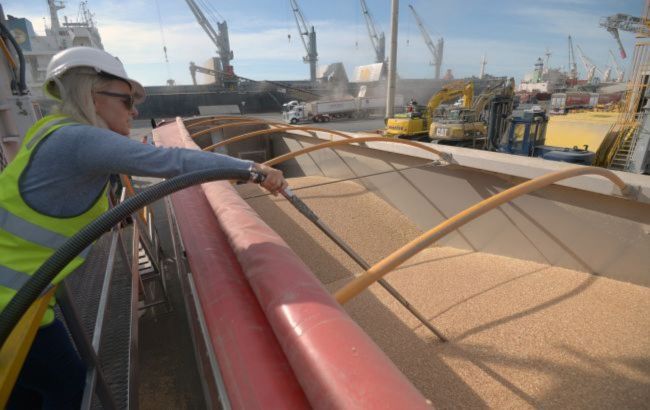 Türkiye seeks to restore exports (photo: Getty Images)
Türkiye has stepped up talks with Ukraine and Russia to establish a new security mechanism in the Black Sea. Ankara aims to restore food exports and prevent a spike in global food prices, according to Ekonomim.
Global market under threat
The outlet says civilian shipping in the Black Sea has effectively come to a standstill due to attacks on commercial vessels.
This has led to a major grain storage crisis in both countries:
- In Ukraine, between 30 million and 35 million tons of grain and oilseeds are stuck in silos and temporary storage facilities
- In Russia, nearly 60 million tons have accumulated at port elevators due to record harvests and export restrictions.
In total, nearly 100 million tons of food cannot reach the market, causing products to begin spoiling. Grain prices have already risen by 4–4.5%.
"The process of establishing a grain corridor in the Black Sea has been completely disrupted. No products from either Ukraine or Russia are currently reaching Türkiye. If the problem is not resolved within two months, the price increase could exceed 10%," said Kazim Tayci, president of the Istanbul Cereals, Pulses, Oil Seeds, and Products Exporters Association (İHBİR).
Consultations continue around the clock
Türkiye's Ministry of Transport and Infrastructure and Ministry of Foreign Affairs are maintaining continuous contacts with Kyiv and Moscow.
As Turkish Deputy Transport Minister Durmuş Ünüvar said during a meeting with the Chamber of Shipping, diplomatic channels are operating around the clock, but there is still no clear timeline for reaching an agreement.
If a new security mechanism can be agreed upon, it would protect commercial vessels and ease pressure on global food markets.
Risks to Turkish exports
The blockade of supplies also poses risks for Ankara. Although Türkiye's domestic market is fully supplied with food, its processing exports are under threat.
The country buys raw materials from Ukraine and Russia, processes them and exports the finished products.
This sector generated $13 billion for Türkiye last year. A prolonged shutdown of the corridor could cause irreversible damage to Turkish exports.
Black Sea crisis, threat to harvest
As previously reported, amid the blockade of Black Sea ports and attacks on shipping, global markets are already preparing for the worst-case scenario.
Due to renewed logistical risks, the global wheat price has risen to a three-year high, up 18%.
At the same time, major storage problems have emerged within the country.
Due to a lack of silo capacity and a shortage of working capital among farmers, Ukraine risks reducing the area planted for the next harvest by 5 to 7 million hectares, nearly one-third of the country's total cultivated area.