Switzerland elects new president: Who took role

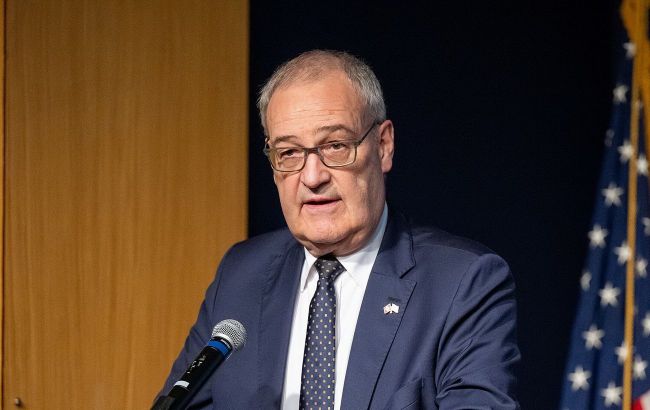 Photo: Guy Parmelin, newly elected president of Switzerland (NASA/Keegan Barber)
The Swiss parliament has elected Economy Minister Guy Parmelin as the country’s president for 2026, replacing Finance Minister Karin Keller-Sutter in the role, Bloomberg reports.
Although the presidential role is largely ceremonial, it drew attention due to trade negotiations with the US. Last year, Keller-Sutter was directly involved in contacts with the White House regarding tariffs.
After her April call with US President Donald Trump, he paused part of the trade measures against Switzerland. Other negotiation attempts in July were unsuccessful.
As Economy Minister, the 66-year-old Parmelin oversees trade, and under his leadership, Switzerland signed an agreement with the US in mid-November. The new tariffs - 15% on most goods versus 39% previously - have not yet taken effect.
Parmelin is from the French-speaking part of Switzerland. He is the longest-serving member of the Federal Council and previously held the presidency in 2021. A member of the right-wing Swiss People's Party, he has a background in viticulture.
As president, Parmelin will deliver the opening address at the World Economic Forum in Davos in January, which will see Donald Trump attend for the first time since 2020.
In Switzerland, the presidency rotates annually among the seven members of the Federal Council. While mainly ceremonial, the role can influence international negotiations, as Keller-Sutter's experience with the US demonstrated.
The trade agreement with the US was significant for Switzerland, reducing tariffs and protecting the country’s economic interests.
Parmelin’s return to the presidency underscores stability and experience in leading Switzerland, particularly on the international stage.
Switzerland's aid to Ukraine
Earlier reports noted that Swiss businesses plan to allocate over $100 million for Ukraine's recovery and development. Projects will cover energy, infrastructure, housing, healthcare, education, and humanitarian demining, including in frontline and recently liberated areas.
Additionally, the Swiss government has allocated 5 billion Swiss francs (approximately $6.3 billion) to support Ukraine. The funding will be provided over the coming years for comprehensive reconstruction.
Earlier, Swiss company PFIFFNER-Group pledged to deliver energy equipment to Ukraine valued at 100,000 Swiss francs (about $126,000).