Strategic mistakes and diplomatic blow for Moscow: Why Trump and Putin gained little in China


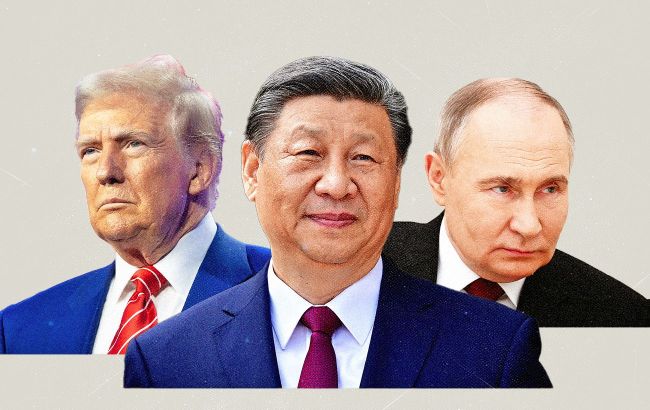 Photo: Why Trump and Putin left China with almost nothing (RBC-Ukraine collage)
Over the past few days, Beijing has turned into the center of global politics. China’s capital was visited first by US President Donald Trump and then by Russian leader Vladimir Putin.
RBC-Ukraine explains what they achieved during their trips and who benefited the most from the talks.
Key points:
Diplomatic marathon: Beijing hosted the leaders of the US and Russia within two weeks, demonstrating that major global decisions can no longer be made without China.
Economic payoff: Trump’s talks on Iran and tariffs failed, but the US secured contracts for 200 Boeing aircraft and $17 billion in annual agricultural imports.
Weapons freeze: Trump paused an $11 billion defense package for Taiwan, openly calling aid to the ally a bargaining chip in talks with Xi.
Moscow’s secondary status: Putin’s visit confirmed that Russia remains China’s junior partner, assigned the role of a raw-material appendage.
Results for Trump
During the visit, Trump planned to resolve a wide range of issues — from Iran and Taiwan to trade and investment — but China showed from the outset that it would not bend to his pressure.
The White House attempted to pressure Beijing with its favorite tool — threatening new tariffs and sanctions against China’s tech sector. However, the Chinese leadership made it clear that blackmail no longer works and that the country is prepared for a prolonged economic confrontation.
At the same time, Trump’s position was weakened by domestic and foreign policy setbacks: the US Supreme Court recently blocked his previous tariff initiatives, while his strategy on Iran reached a dead end.
As a result, talks on most international issues failed. Officially, both sides made only vague statements about a “desire for stability.”
The only notable episode was that, according to the Financial Times, Xi Jinping told Trump that Putin could eventually regret launching the full-scale war against Ukraine. However, Trump later told reporters that Xi had not said that.
At the same time, in practical and economic terms, the sides did manage to reach several major agreements. China officially confirmed the purchase of 200 Boeing passenger aircraft. In return, the US committed to ensuring uninterrupted supplies of civilian aviation spare parts to China.
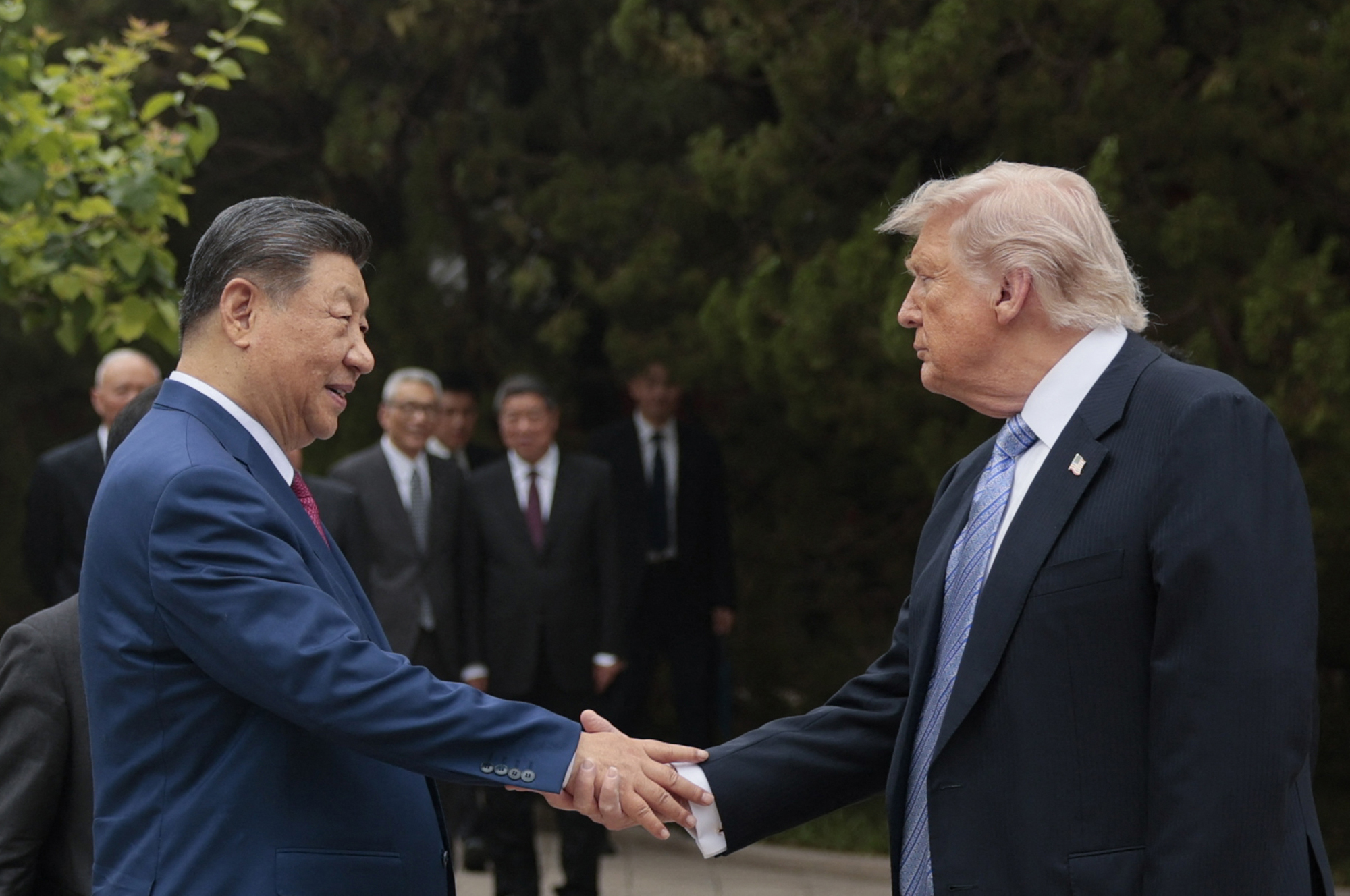
Photo: Xi Jinping and Donald Trump (Getty Images)
Beijing also pledged to purchase $17 billion worth of American agricultural products annually over the next three years. In addition, China is restoring licenses for more than 400 US beef producers that had been frozen last year.
In return, the US promised to remove non-tariff barriers for Chinese agricultural exports, simplifying imports of seafood and dairy products.
The Taiwan issue
Trump’s remarks about Taiwan — the island state China considers part of its territory — caused a stir.
According to Reuters, Beijing’s main goal at the summit was to push Trump to freeze or completely cancel the record $11 billion military aid package for Taiwan approved by Congress late last year.
On the flight back to the US, Trump openly admitted that he had “put aside for now” the decision on weapons deliveries to Taiwan. He called the aid package “a very good tool for trade” with Beijing, adding that the final decision “depends on China’s behavior.”
Trump’s statement about discussing arms supplies with Xi Jinping directly violates the US “Six Assurances” of 1982 regarding Taiwan. Under those assurances, the US pledged never to coordinate defense assistance to Taipei with Beijing.
The move sparked criticism in Congress from both opposition Democrats and members of Trump’s own Republican camp. However, Secretary of State Marco Rubio later rushed to assure that official US defense policy toward Taiwan remains unchanged and that weapons deliveries were never part of negotiations.
“The People’s Republic of China interpreted this as weakness on the part of the United States. That is why they are not agreeing to divide the world on American terms. They view Taiwan as an issue they will eventually resolve to their own advantage,” Dmytro Levus, an expert at the United Ukraine analytical center, told RBC-Ukraine.
After securing its position vis-à-vis the US, Beijing moved on to the second round — this time with Moscow.
Results for Putin
Like Trump, Putin was welcomed in China at the highest level. However, several telling protocol details showed that the attitude toward the Russian dictator was different. Trump was greeted on the runway by Chinese Vice President Han Zheng, while Putin was met by Foreign Minister Wang Yi.
The sequence of visits clearly demonstrated who is who in the world order. In effect, Xi first agreed on the framework of the global game with Trump, and only afterward summoned Putin to present him with new directives.
For the Kremlin, the visit immediately after Trump’s trip became a serious image blow that cast Putin as a petitioner waiting for decisions from larger powers.
Instead of strategic agreements, the leaders signed only a package of framework memorandums on expanding trade in Chinese yuan and increasing supplies of gas, oil, agricultural products, and timber from Russia. However, the key issue for the Kremlin — the Power of Siberia 2 gas pipeline — remains unresolved by China.
For the Kremlin, this is a strategic project meant to compensate for the loss of the European gas market. But during Putin’s visit, a full agreement once again was not signed.
Putin spokesperson Dmitry Peskov admitted that Russia and China had only “reached an understanding on the main parameters,” adding that “there is still no clear vision of the project’s implementation timeline.” The Kremlin has repeated this line after nearly every contact with China for several years.
“In my opinion, no breakthrough happened either for Putin or for the People’s Republic of China. Russia has once again simply confirmed its secondary position in relation to China,” Dmytro Levus told RBC-Ukraine.
Officially, Beijing also did not change its vague rhetoric regarding the Russia-Ukraine war, once again repeating abstract calls for a “political settlement.”

Photo: Vladimir Putin and Xi Jinping (Getty Images)
At the same time, in practice, China continues to balance. On one hand, Beijing does not express direct support for Russia’s actions, but on the other, it does not block channels supplying dual-use goods to Russia for military production.
Overall, the outcome of the two visits clearly demonstrated that no serious global problem can be resolved without China. The only question is that China itself is not eager to solve all of those problems.
It appears Beijing prefers to follow the classic Chinese proverb: “Sit on the mountain and watch the tigers fight,” while Putin’s mistakes and Trump’s shortsightedness gradually weaken both sides.
Quick Q&A
– What economic agreements did the US and China sign during the May summit in Beijing?
China officially confirmed the purchase of 200 Boeing passenger aircraft and pledged to buy $17 billion worth of American agricultural products annually for three years.
Beijing also restored licenses for more than 400 US beef producers. In return, the US simplified conditions for importing Chinese seafood and dairy products.
– Why did Donald Trump’s statements on Taiwan spark criticism in Congress?
Donald Trump suspended approval of an $11 billion military aid package for Taiwan, calling it a bargaining tool in talks with China. This directly violates the US “Six Assurances” of 1982, which prohibit Washington from coordinating Taipei’s defense support with Beijing.
As a result, the president’s position was criticized by both opposition Democrats and part of the ruling Republicans.
– Did Russia and China sign a contract for the Power of Siberia 2 gas pipeline?
No. During Vladimir Putin’s May visit to Beijing, the sides once again failed to sign a full commercial agreement. Instead, they limited themselves to framework memorandums on expanding trade in yuan and increasing raw material supplies.
The Kremlin admitted that only a general understanding of the project’s parameters had been reached, while no clear implementation timeline exists due to China’s tough demands for lower gas prices.
– What position is China taking on the Russia-Ukraine war in May 2026?
Beijing continues to pursue a balancing policy and vague rhetoric, limiting itself to general calls for a “political settlement.” Chinese authorities officially do not express direct military support for the Kremlin’s actions.
At the same time, China has not blocked channels supplying dual-use goods to Russia that are used in military production.