Putin and Xi’s 'friendship without limits' faces new reality in Beijing

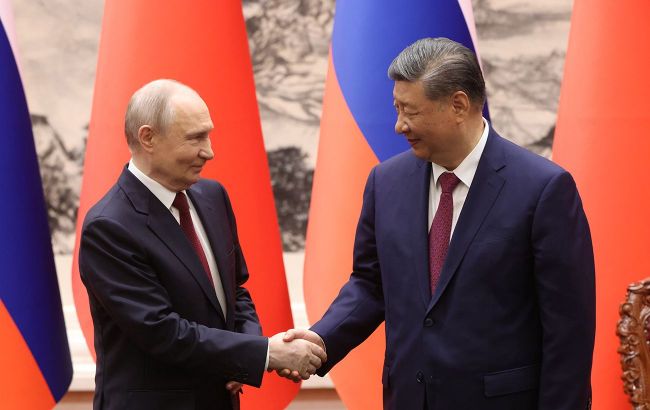 Photo: Russian leader Vladimir Putin and Chinese leader Xi Jinping during their meeting on May 20 (Getty Images)
Russian President Vladimir Putin’s visit to China has once again brought into focus his long-running “friendship” with Chinese leader Xi Jinping — a relationship built over dozens of meetings, personal rituals, and strategic agreements. But the current talks in Beijing are taking place in a completely different geopolitical reality.
RBC-Ukraine explains how Beijing is balancing between the United States and Russia, and what lies behind the display of the China-Russia partnership “without limits.”
Key points:
History of friendship: Xi Jinping and Putin have met more than 40 times and spent years building personal rituals together, from drinking vodka on birthdays to cooking pancakes side by side.
Xi between Trump and Putin: China is hosting the leaders of both the US and Russia back-to-back, positioning itself as the “center of global diplomacy.”
Private hints: According to the Financial Times, Xi told Trump during their meeting that Putin could “regret” invading Ukraine (China’s Foreign Ministry officially denied this).
Another pipeline failure: Putin once again appears to have failed in pushing the Power of Siberia-2 gas pipeline project — an issue that has remained unresolved for years.
40 record-setting meetings: how Xi and Putin built their “alliance”
Russia and China have strengthened relations in recent decades to counter US influence. Beijing and Moscow currently describe their ties as a “comprehensive strategic partnership,” marked by cooperation in international affairs, military coordination, and technological development.
The two countries share a 4,300-kilometer border, officially demarcated in 1991. In 2001, they signed the Treaty of Good-Neighborliness and Friendly Cooperation, which was extended for another five years in 2021.
Since May 7, 2000, Putin has made more than 20 trips to China. Xi Jinping has met the Kremlin leader more often than any other world leader — over 40 times in total.
Yet this friendship was preceded by ideological splits, border clashes, and years of military confrontation.
Personal rituals: vodka toasts and pancake-making diplomacy
The relationship between Xi Jinping and Putin is highly personalized. The Chinese leader, who rarely shows emotion publicly, once called Putin his “best and closest friend.”
Their relationship has included personal “rituals” such as private dinners, birthday celebrations, sporting events, boat rides, and tea ceremonies.
In 2013, Xi gifted Putin a birthday cake, and the two celebrated with sausage and vodka. In 2018, during a banquet, the Kremlin leader personally prepared and served Xi a popular Chinese street food known as jianbing — often described as a “Chinese pancake” or “Chinese shawarma.” Later that same year in Russia, the two leaders cooked traditional Russian pancakes with caviar together and drank vodka.
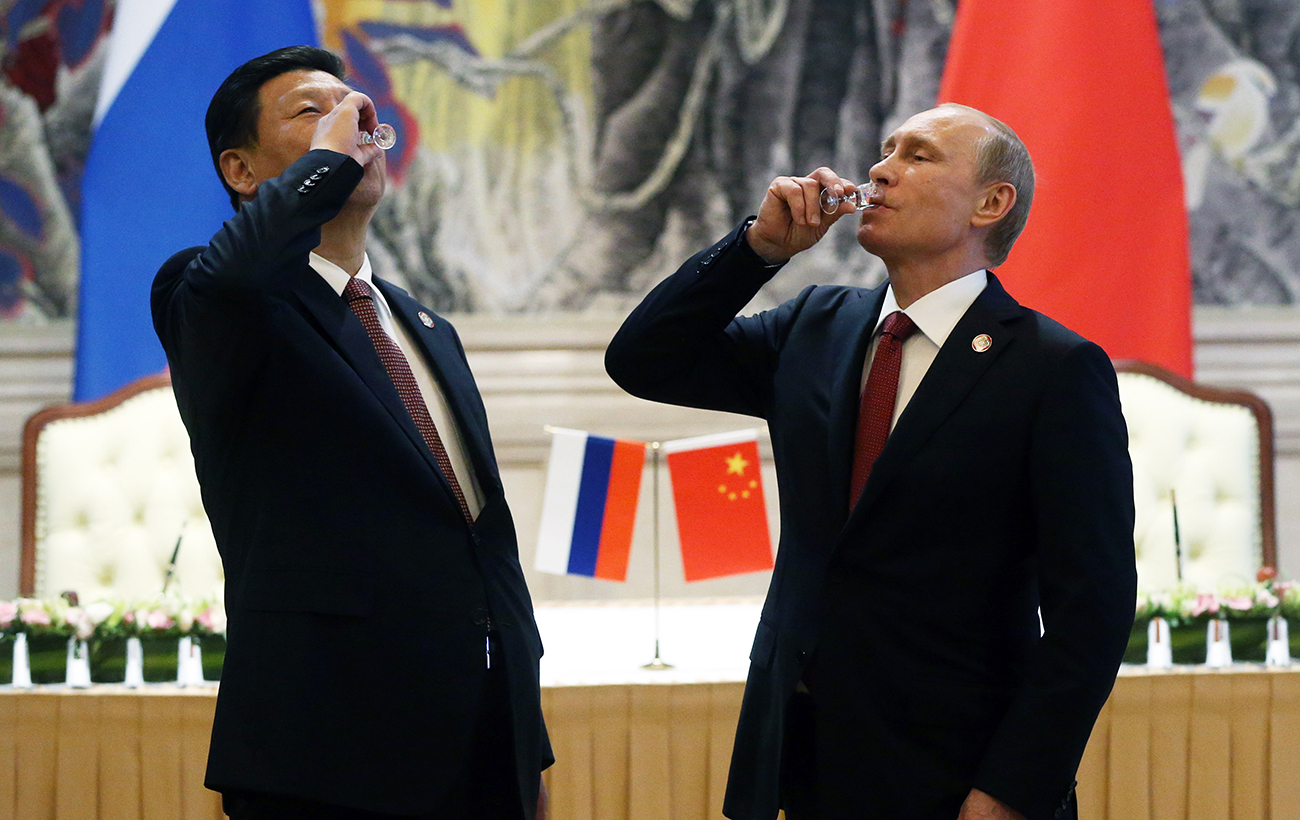
Photo: Xi Jinping and Putin drinking vodka during the Russian leader’s birthday celebration in 2013 (Getty Images)
Over time, however, the balance of power in the relationship shifted. While China once depended on Russian energy and military technologies, Moscow has now become increasingly dependent on Beijing.
On February 4, 2022, during Putin’s visit to Beijing for the Winter Olympics opening ceremony, Xi Jinping reportedly asked him not to launch a major military conflict in Ukraine during the Games, according to Bloomberg. Just 24 hours after the Olympics ended, Putin recognized the self-proclaimed “DPR” and “LPR,” and shortly afterward announced the full-scale invasion of Ukraine.
How Beijing balances — and whether Putin is actually succeeding
Putin’s current visit to China on Wednesday, May 20, comes less than a week after US President Donald Trump concluded his own visit to Beijing.
Ahead of the trip, Putin said in a video address that bilateral relations had “reached a truly unprecedented level.” By hosting the leaders of both the US and Russia almost consecutively, Beijing is presenting itself as a new center of diplomatic gravity.
With Trump, Xi seeks a tactical truce. With Putin, he showcases a “partnership without limits.” Beijing is simultaneously trying to portray itself as the “center of global diplomacy,” emphasizing that “it is extremely rare in the post-Cold War era for one country to host the leaders of both the US and Russia back-to-back.”
At the same time, the Financial Times reported that Xi told Trump during their meeting that Putin could “regret” launching the invasion of Ukraine — although China’s Foreign Ministry officially denied the claim.
The reported statement sparked intense media attention because it goes beyond China’s usual diplomatic style. Beijing typically refers to the conflict as the “Ukraine crisis” and avoids directly accusing Russia of aggression.
Moscow is also struggling to secure support for the Power of Siberia-2 gas pipeline project. Putin brought a large delegation of government officials and energy executives to Beijing to discuss the pipeline. This is already the Kremlin’s fifth attempt in four years to push the project as a way to redirect gas exports from Europe to China.
However, according to Reuters, there was once again no breakthrough. Xi stated that “energy cooperation should serve as ballast in bilateral relations,” but did not mention the pipeline itself. Analysts believe the issue remains unresolved and negotiations could drag on for years.