SpaceX rocket is about to crash into the Moon: Exact time and consequences confirmed

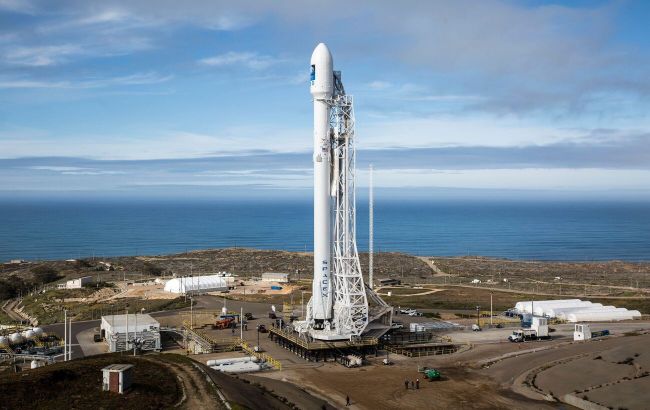 Falcon 9 upper stage to crash into the Moon's surface (Photo: Pexels)
A SpaceX Falcon 9 upper stage is set to crash into the Moon on August 5. After spending months in a highly elliptical orbit, the rocket stage will slam into Earth's natural satellite at tremendous speed, according to Gizmodo.
How did the rocket end up on a collision course with the Moon?
The uncontrolled object is the upper stage of a Falcon 9 rocket launched from NASA's Kennedy Space Center on January 15, 2025.
The mission sent two lunar landers toward the Moon:
- Blue Ghost by Firefly Aerospace
- Resilience by ispace
After successfully deploying both spacecraft, the rocket stage failed to re-enter Earth's atmosphere and burn up. Instead, it remained trapped by gravity in deep space.
Impact could create a brand-new crater
Independent orbital analyst Bill Gray, creator of the Project Pluto tracking software, used orbital simulations to predict the stage's future path.
Researchers then fed the data into a physics simulator to model the impact.
According to estimates, the rocket stage is approximately:
- 12 meters (39 feet) long
- 4 meters (13 feet) wide
- weighs nearly 4,000 kilograms (8,800 pounds)
The collision is expected to occur on August 5 at 9:44 a.m. Kyiv time, near Einstein Crater on the Moon's far eastern side.
Key details of the impact
- Impact speed: more than 8,700 km/h (5,400 mph) — about seven times the speed of sound
- Because the stage is essentially a hollow metal shell, it will be completely crushed on impact
- A new crater 20–30 meters (66–98 feet) wide is expected to form
- The collision will blast a cloud of dust and debris several kilometers into the air
Interestingly, just seconds before impact, the rocket stage will pass close to South Korea's Korean Pathfinder Lunar Orbiter.
Its instruments will attempt to collect data as the stage approaches. However, NASA's Lunar Reconnaissance Orbiter will be on the opposite side of the Moon at the time and won't be able to measure gases released by the collision.
How scientists plan to observe the crash
Astronomers will monitor the event from both Earth and lunar orbit.
Because the impact will occur on the Moon's sunlit side, ground-based observatories should be able to detect the bright flash from the collision and the rising dust plume.
The best viewing conditions will be in North and South America, where it will be nighttime during the event. Scientists recommend testing telescopes in advance to prepare for the observation.
This fully predictable, human-made impact will help researchers better understand how lunar dust behaves during asteroid-like collisions. It will also provide an opportunity to test the accuracy of trajectory calculations for future seismic experiments on the Moon.