Russian boats disabled in occupied Kherson region of Ukraine, sabotage suspected

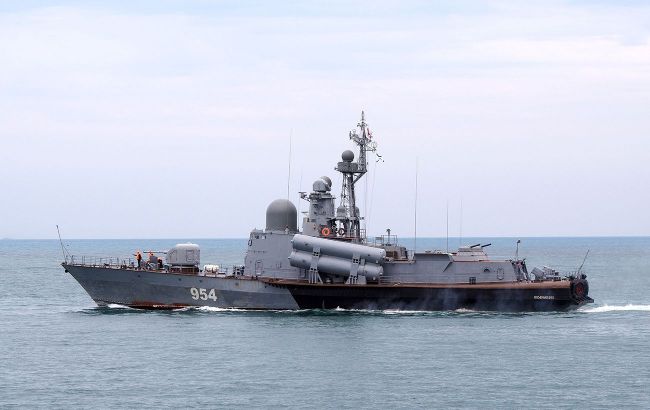 Russian Black Sea Fleet boat (illustrative photo: kchf.ru)
The command of the Russian Armed Forces suspects its own service members of deliberately damaging boats in the Kherson region, the Atesh partisan movement reports.
Agents of Atesh from among servicemen of the 92nd River Boat Brigade of the Russian Armed Forces report a critical situation at the unit's location. This unit is part of the re-established Dnipro River Flotilla and is subordinate to the Black Sea Fleet.
It is noteworthy, the partisan movement says, that the equipment fails precisely when it is most needed to enter the waters of the Dnipro River.
"Russian counterintelligence no longer believes in ordinary wear and tear and is frantically searching for those who help engines' fall asleep' and wiring 'self-ignite,'" Atesh reports.
The command suspects that crews are deliberately turning their vessels into immobile scrap metal to avoid becoming another target for Ukraine's Defense Forces.
Movement agents admit that they only observe this process and sometimes point out where the equipment is most vulnerable.
"What the occupiers consider sabotage out of fear, we call professional preparation for 'long-term repairs,'" Atesh says.
They state that the Dnipro Flotilla is gradually turning into a "flotilla of immobile objects."
Successful sabotage operations by Atesh
The Atesh movement continues to methodically destroy the enemy's communication and logistics network across Russia and in the occupied territories of Ukraine.
Thus, on January 7, it became known that an Atesh agent carried out a successful sabotage operation, destroying a communications tower in Kursk. The target was a key communications hub actively used by numerous Russian military and security units stationed in the city.
Also, Atesh partisans disrupted Russian railway logistics in the Kupiansk direction by destroying a diesel locomotive used to transport military cargo, primarily to supply the Kupiansk grouping of Russian forces.
Additionally, movement agents carried out another sabotage operation in Russia's Rostov region, paralyzing a key railway supply hub for the Russian army in the Rostov-on-Don area.