Russia strikes eco-park in Ukraine's Kharkiv, wounding lions and killing birds

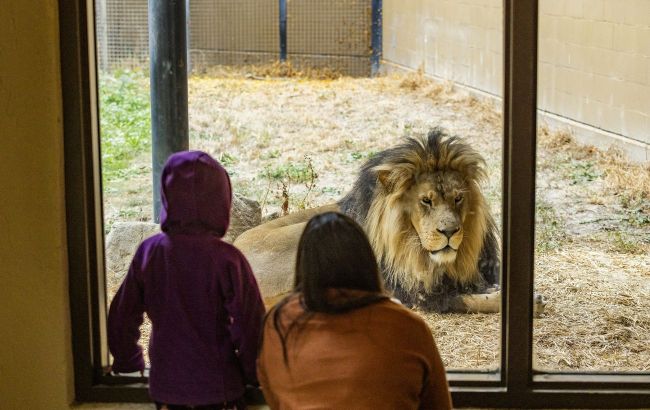 Photo: Lions injured in an eco-park as a result of an air strike on Kharkiv (Getty Images)
A volunteer was injured, and some of the facilities were severely damaged as a result of a Russian air strike on an eco-park near Kharkiv. Animals, including lions, were also injured, and most of the birds were killed, according to the founder of the eco-park and lawmaker Oleksandr Feldman.
One of the volunteers was injured by a Russian guided aerial bomb. Her condition is considered stable. He notes that she has a lacerated head, but she got into the ambulance herself and has already left.
The winter quarters for predators and birds were also destroyed. The lions were injured, and the quarters for small animals were once again buried under rubble.
Animals and birds
According to Feldman, the situation with some animals remains unclear. In particular, it is currently unknown what condition the tigers are in.
"We don't know what happened to the tigers. One ran into a three-story building, and another is sitting in a half-open enclosure. He hid in a hut," he says.
Rescuers and eco-park employees are waiting for a special tranquilizer gun to safely transfer the animals to other enclosures, as all sedatives were stored in a room that was destroyed by the Russian strike.
The birdhouse, which was directly hit by a Russian bomb, suffered the greatest losses. According to the founder of the eco-park, most of the birds were killed, including parrots, pheasants, and other elite birds that were kept in warm winter conditions.
The extent of the damage and losses at the facility is currently being assessed.
On the morning of January 1, Russia launched a guided aerial bomb strike on the suburbs of Kharkiv. The explosion was heard in the city, and the aerial bomb hit the eco-park, injuring a 40-year-old woman.
We also told the story of Feldman Ecopark near Kharkiv, where a mother tiger abandoned her newborn cubs, but they were saved by a dog who took on the role of foster mother. She cares for, feeds, and protects the cubs, and the eco-park plans to make a film about their lives against the backdrop of the park's restoration after the destruction Russia caused.