Russia secretly printing rubles to keep funding war - Intelligence

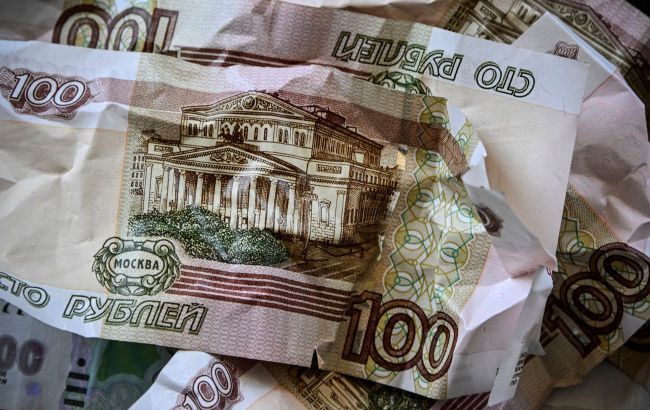 Photo: Russian rubles (Getty Images)
Russia can no longer cover its war spending through conventional means and is increasingly resorting to the covert printing of rubles, according to Ukraine's Foreign Intelligence Service (SZRU).
According to the SZRU, the Russian government can no longer raise enough money by selling government bonds under normal market conditions. As a result, state-owned banks have begun buying up the bonds, while Russia's central bank provides them with the necessary funds.
In simple terms, Russia's Finance Ministry issues new government debt, state-owned banks purchase it, and the central bank effectively supplies the money to finance those purchases.
"As a result, public debt becomes a tool for indirect money emission. The budget receives funds, but at the cost of the economy’s dependence on ruble printing and rising inflationary risks," the intelligence service said.
Russia's budget deficit is soaring
To support the scheme, Russia's Finance Ministry has registered two new bond issues worth $6.4 billion maturing in 2037 and another worth $12.8 billion maturing in 2042.
As of July 1, Russian banks held $248.1 billion in government bonds, accounting for nearly 9% of the banking sector's total assets. Since the beginning of the year, that figure has increased by another $6.5 billion.
According to the intelligence service, the main reason behind the move is the rapid growth of Russia's budget deficit. During the first six months of 2026, it nearly reached $77 billion, driven primarily by heavy war spending.
The SZRU estimates that additional military expenditures could exceed the planned level by $51.3 billion to $64.1 billion. Meanwhile, Russia's central bank expects the budget deficit to reach as much as $105.1 billion by the end of the year.
Why Russia is finding it increasingly difficult to raise money
At the same time, Russia is finding it increasingly difficult to borrow on the market. High interest rates and weak investor demand mean buyers are unwilling to purchase government bonds on the terms offered by the Russian authorities. As a result, Russia's Finance Ministry was forced to cancel at least three government bond auctions in June and July.
"The shift to forcibly raising funds from state-owned banks does not resolve the deficit problem; it merely masks it," the intelligence service said.
According to the SZRU, this model makes the Russian economy even more dependent on money printing, increasing the risk of further inflation.
Earlier, Ukraine's Foreign Intelligence Service reported that the Russian stock market has now been falling for 19 consecutive weeks.
According to the agency, against this backdrop, Russia's wealthiest citizens are moving their assets into cryptocurrencies, overseas real estate, and private investment funds.