Ukrainian intel spots 'warning sign' in Russian oligarchs' actions

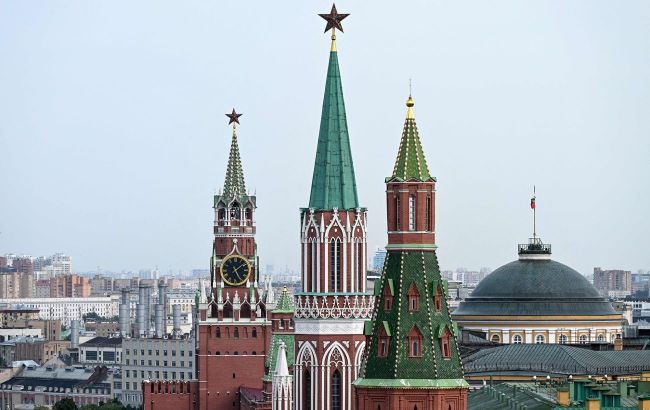 Photo: The Kremlin in Moscow, Russia (Getty Images)
According to Ukraine’s Foreign Intelligence Service (SZRU), major Russian investors are reshaping their portfolios, increasingly favouring cryptocurrencies, overseas real estate, and private investment funds.
The trend coincides with a prolonged downturn in Russia’s stock market, which has now been falling for 19 consecutive weeks.
The intelligence agency believes that the desire to offload Russian securities and move assets abroad reflects a growing lack of confidence in the prospects of the Russian economy.
Russia’s stock market slide
As of mid-July, shares of some of Russia’s largest companies had suffered significant losses. Gazprom and VTB shares fell by more than 21%, while Nornickel dropped 24%, Aeroflot 27%, and MTS 28%.
The steepest decline was recorded by Polyus, Russia’s largest gold producer. Its market value plunged by 53% in just two weeks.
Analysts estimate that since the beginning of April, the Russian stock market has lost around 30% of its total market capitalisation, falling back to levels last seen in 2016. The SZRU noted that such a prolonged decline has not been recorded since statistical tracking began in 1997.
Other signs of economic strain
The intelligence service also pointed to a long-term investment comparison. Had an investor put $1,000 into Apple shares in 2006, the investment would now be worth more than $130,000. By contrast, the same amount invested in Gazprom shares would have resulted in a loss of more than $600 over the same period.
Another sign of mounting problems, according to the SZRU, is the situation surrounding government borrowing. Russia’s Finance Ministry cancelled three federal bond auctions over the past month after receiving investor bids deemed unfavourable to the state, leaving the government unable to raise additional funds.
Earlier, Reuters reported that Russia is revising its budget projections, with federal spending and the budget deficit potentially exceeding the current plan by more than one trillion roubles.
According to the agency, the revision may be linked to rising expenditure on the war against Ukraine.
In addition, Russia’s Finance Ministry forecasts that the budget deficit will remain above planned levels for at least another two years.