Russia's Starlink rival stumbles as new satellites fail to reach orbit

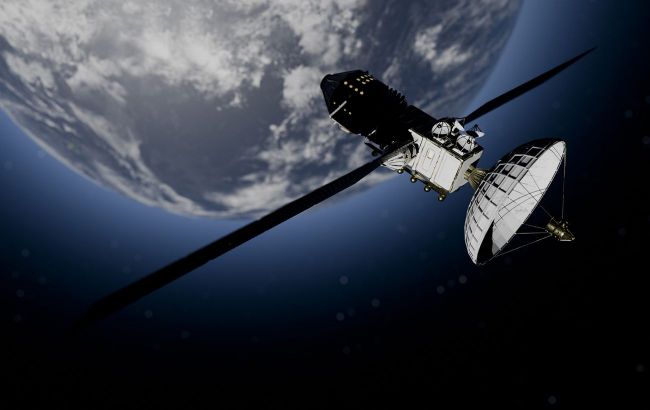 Half of the Rassvet satellites failed to withstand the challenges of space (illustrative photo: Getty Images)
The second batch of Russian Rassvet satellites failed to reach the required altitude in space. This marks another setback for Moscow in its attempts to quickly develop its own alternative to Starlink, according to a report by the Institute for the Study of War (ISW).
None of the satellites in the second batch reached the required altitude
The second batch of 16 Rassvet satellites was launched on July 19. As of August 31, none of them had reached the planned operational altitude of 550 kilometers, according to data from satellite tracker N2YO.
Most of the satellites ended up at altitudes between 300 and 400 kilometers, significantly below the planned 870 kilometers. Some satellites are already losing altitude, while at least two, according to available information, are heading toward re-entry into Earth's atmosphere.
The problem is that the lower a satellite flies, the shorter its operational lifespan. At low altitudes, atmospheric drag slows the satellite more significantly, causing it to consume fuel faster.
Of the first batch, launched on March 24, 12 of the 16 satellites reached the required altitude. As of the end of August, they were still maintaining an altitude of 550 kilometers.
These 12 satellites provide Russian forces with up to an hour and a half of communication with ground terminals twice a day over Ukraine.
Why Russia is rushing the deployment
Russia lost access to Starlink communications on February 1. That is why it turned to its own Rassvet system and likely accelerated the timeline for its development.
The failure of the second batch indicates that Moscow was not prepared for such a rapid deployment pace. Further delays should therefore be expected in the near future.
At the same time, the existing satellite constellation still poses a threat to Ukraine. It allows Russian forces to guide remotely controlled drones more accurately even during the short windows when satellite communications are available.
How many more satellites Russia needs
Aerospace company Bureau 1440, which is developing Rassvet, has announced plans to carry out dozens more launches and add hundreds of new satellites.
Russia needs at least 200 to 300 operational satellites to provide stable, round-the-clock communications over Ukraine.
Russia is unlikely to achieve this quickly. The reason is a shortage of launch vehicles:
-
Russia uses the expensive and scarce Soyuz-2.1b rocket for launches;
-
Since 2022, only six to eight launches of this rocket have taken place;
-
At this pace, Russia will be able to put no more than 128 satellites into orbit over four years;
-
As of August 2026, only 37.5% of the launched Rassvet satellites had reached stable operational altitudes.
Ukraine strikes production and launch facilities
Ukrainian forces attacked the Progress Space Rocket Center on the night of August 15. The facility produces Soyuz launch vehicles.
On August 23, Ukraine also attempted to strike the Plesetsk Cosmodrome, two days before a Soyuz-2.1b rocket carrying a GLONASS-K1 satellite for Russia's equivalent of GPS was launched from the site.
Russia launched both batches of Rassvet satellites from Plesetsk. Therefore, strikes on the facility could threaten not only rocket production but also Russia's ability to launch new satellites.
The Rassvet project, worth about $6.1 billion, is being implemented by the private company Bureau 1440, which is backed by the resources of the large X Holding and has ties to Russian intelligence services.
Under the plan, Moscow is expected to put 292 satellites into orbit by 2030 and expand the constellation to 156 satellites by the end of 2026.
Researchers have also pointed to the project's dependence on imported components. In 2025, Bureau 1440 spent nearly $68 million on purchases from abroad, with a significant share of supplies coming from China.
Russia has still not developed its own radiation-resistant microchips: tenders announced for their development received no applications.