Russia's spring offensive is losing momentum, Ukrainian military says

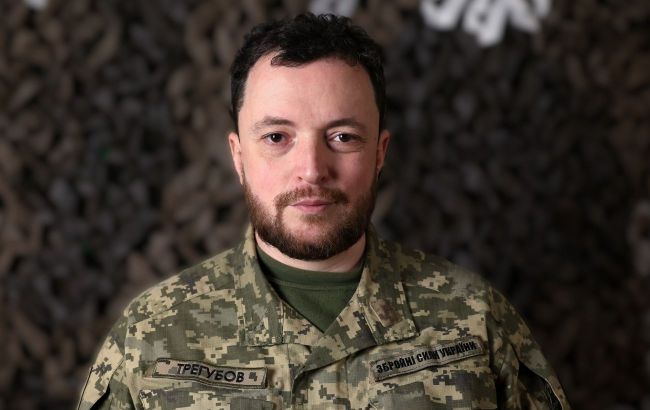 Viktor Trehubov, head of communications for the Joint Forces Grouping of the Armed Forces of Ukraine (photo: Getty Images)
The offensive capabilities of the Russian army are rapidly decreasing. Several signs point to this, said Viktor Trehubov, head of communications for the Joint Forces Grouping of the Armed Forces of Ukraine.
According to him, several signs point to a reduction in the enemy's offensive capabilities — reduced use of strike assets and a slower pace of advance despite a high number of attacks.
"If we observe the ratio between attacks and any successful actions, simply measuring them by the territories the enemy managed to occupy, then this coefficient has been falling very sharply recently. This is precisely because although the enemy is advancing in some areas, in others it is now forced to retreat. Therefore, the result may be completely different from what they are currently expecting," Trehubov said.
He added that during the spring offensive, the Russians have unsuccessfully tried to advance in the Lyman and Kupiansk directions, while in the Velykyi Burluk direction, they are already retreating.
Commenting on the situation on the left bank of the Oskil River, the spokesman said that the Defense Forces have certain problems with logistics and personnel, but the enemy has failed to create a critical situation in this section of the front.
"Overall, I would say that even though the left bank is hot right now, the critical threats that the Russians wanted to create there have still not materialized," Trehubov said.
He added that on the right bank of the Oskil River, the enemy has been pushed back and currently cannot enter Holubivka.
"Now they (Russian forces — ed.) are no longer even working on entering Kupiansk through Holubivka, but rather on at least gaining a foothold on the northern outskirts of Holubivka itself," the spokesman explained.
Answering a question about where the Russians are currently most actively probing the northern border, Trehubov said this primarily concerns the Sumy region.
"If we take the northern border, I would say that in our area of responsibility, this is more about the Sumy region on the one hand, and also quite active in the Southern-Slobozhanskyi direction. But this is no longer so much the border itself as the area around Vovchansk directly. There is constant intensity there, constant attempts at pressure. But fortunately, despite their reports, without much success," he noted.
Situation on the frontline
The Armed Forces of Ukraine are currently regaining the initiative on the frontline — in recent months, Ukrainian troops have achieved their biggest successes since the incursion into the Kursk region in August 2024.
Meanwhile, Ukrainian President Volodymyr Zelenskyy said that Ukrainian troops are achieving their set objectives in the border areas of the Sumy region.
Earlier, the Air Assault Forces reported that the Russian forces' immediate objective is to capture one of two regional centers — Sumy or Kharkiv. The Defense Forces are already recording enemy attempts to advance toward one of them.