Russia's fuel crisis deepens as drone attacks send prices to record highs

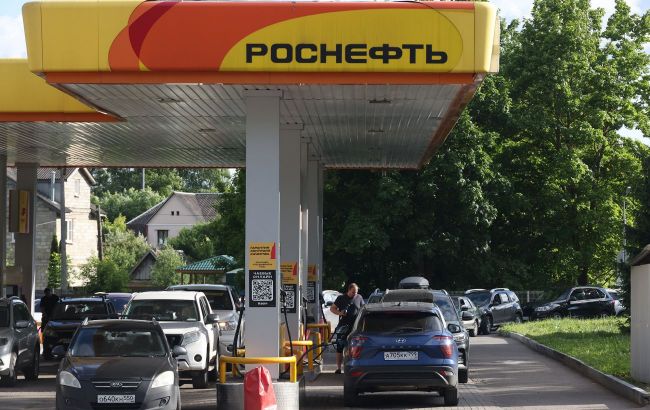 Photo: A line of cars at a Rosneft gas station in Russia (Getty Images)
Ukraine's drone attacks have deepened Russia's fuel crisis. Fuel shortages have already triggered another sharp rise in retail prices, Bloomberg reports.
According to Russia's Federal Statistics Service, the average retail price of gasoline rose by 2.3% between July 7 and July 13 compared with the previous week, reaching 75.84 rubles per liter. Diesel prices increased even more, climbing 3.2% to 91.21 rubles per liter.
Drone strikes on refineries deepen fuel shortages
Bloomberg reports that almost daily Ukrainian attacks on oil refineries have pushed Russia's oil processing volumes to their lowest level in more than 21 years.
Amid strong seasonal demand, the Russian government has almost completely banned exports of gasoline, diesel, and jet fuel. It has also introduced fuel rationing in several regions to prevent panic buying.
Fuel crisis increases pressure on the Kremlin
The fuel shortage is putting additional pressure on the Russian authorities ahead of parliamentary elections in September. At the same time, Russia's central bank has warned of rising inflation risks due to lower fuel production and the possibility of changes to monetary policy.
Since the beginning of the year, gasoline in Russia has risen in price by 16.4% and diesel fuel by 18%, while the official inflation rate stood at 4.64%
The central bank also said that higher fuel prices are already driving up the cost of other goods and services. How strong that effect becomes will depend on how long the fuel shortage lasts.
More than half of Russia's refineries have been hit
According to the International Energy Agency, Ukrainian strikes have affected more than half of Russia's oil refining capacity since early May. In June, Russian refineries processed only 3.8 million barrels of oil per day, nearly one-third less than a year earlier.
Bloomberg estimates that since May, Ukrainian forces have carried out more than 40 strikes on Russian fuel production facilities, hitting at least 23 of the country's 34 major oil refineries. This has become one of the main reasons behind the worsening fuel crisis in Russia.
Earlier, Russian leader Vladimir Putin acknowledged that Ukrainian drone strikes had caused certain problems with petroleum products in Russia. However, he assured that the situation was gradually stabilizing.
At present, Russian refineries are supplying only about 65% of the country's seasonal gasoline demand. The shortfall is the result of Ukrainian drone strikes that have knocked out several of Russia's largest oil refineries.