Russia's fuel crisis begins to ease after Ukraine shifts attack strategy

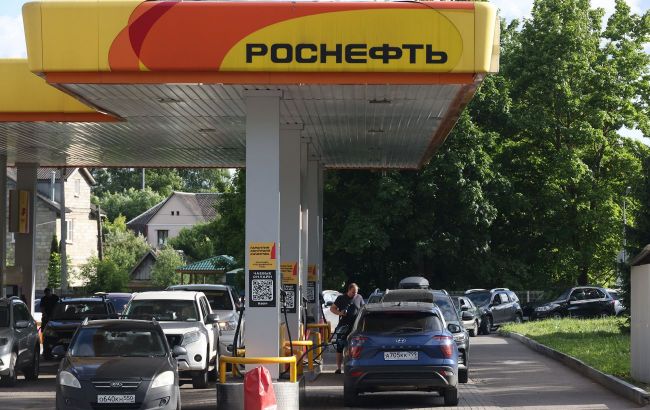 Russia's fuel crisis has begun to ease (photo: Getty Images)
Recently, Ukraine has shifted the focus of its attacks from Russia's major oil refineries to shadow fleet tankers. As a result, Russia's fuel crisis is beginning to ease, Bloomberg reports.
According to the media outlet, local authorities are informing residents about improved fuel availability and more stable supplies. Although rationing remains in place, quotas for gasoline sales per vehicle are gradually being increased in some areas.
The media outlet notes that there are no reliable independent statistics that would allow an assessment of the Russian authorities' latest claims. However, data from social media does indicate an improvement in the supply situation.
Fuel availability, however, still varies depending on the region of Russia.
As of July 22, at least one type of automotive fuel was available at 54% of gas stations in Moscow and 61% of stations in St. Petersburg. In cities such as Krasnoyarsk and Novosibirsk, however, the situation was different, with at least one type of gasoline available at only slightly more than one-fifth of all stations.
Although attacks continued over the past two weeks, their scale was smaller because they targeted smaller oil refineries and caused less severe damage, the media outlet says.
At the same time, attacks on vessels belonging to Russia's shadow fleet increased significantly. Between July 8 and July 20, at least 124 vessels, including 89 tankers, were attacked.
Ben Barry, a senior fellow at the London-based International Institute for Strategic Studies, said Ukraine is expanding the range of its targets and switching between them "to keep the enemy guessing" about what it will strike next.
This strategy makes it more difficult for Russia to position defensive assets and intercept incoming drones and missiles.
It is still too early for Russians to celebrate
The media outlet notes that although fuel supplies in Russia are recovering, the shortage is still far from over.
According to EA Analytics, Russia's oil processing is expected to average 3.511 million barrels per day in July, the lowest level since May 2002.
That is more than one-third below the country's seasonal norm, indicating that shortages of petroleum products persist and prices continue to rise.
Regional authorities across Russia are also urging residents to prepare for further difficulties.
Russia's fuel crisis
Over the past two months, Ukrainian drones have shut down up to 40% of Russia's oil refining capacity, leaving one-third of the country without fuel. The fuel crisis has affected 50 million Russian citizens.
Following massive Ukrainian strikes on Russian oil refineries, even the Russian army began experiencing a fuel crisis. Russian forces complain that they have almost no fuel left to refuel their equipment.
Russian President Vladimir Putin acknowledged problems with fuel supplies but claimed that, in his words, the situation is not critical.
At the same time, Russia has begun taking gasoline from Belarus that had been intended for Central Asian countries. However, even record volumes of such supplies are not enough to fully eliminate the shortage.