Hunt for Patriot missiles: Can Europe help Ukraine stop Russia's ballistic attacks


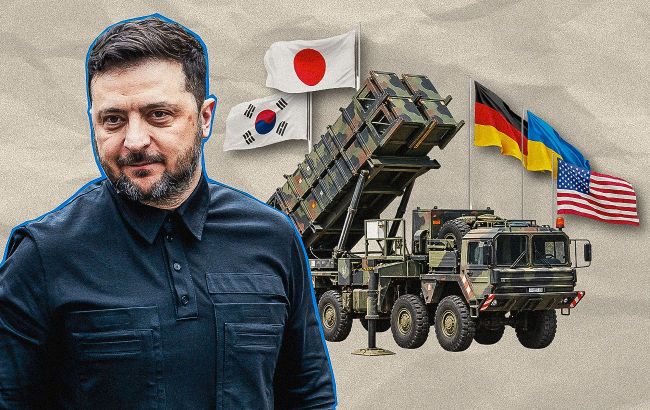 Photo: How many Patriot missiles are available and which countries have them (RBC-Ukraine collage)
Ukraine is asking its partners for a "winter package" of Patriot missiles, while a US-approved sale of 500 PAC-3 MSE missiles could take years to materialize. Meanwhile, experts and Western media have offered varying estimates of European stockpiles and identified potential sources of missiles that could reach Ukraine in the coming months.
RBC-Ukraine has compiled information from publicly available sources on Patriot missile stockpiles and spoken with aviation experts.
Key points:
-
500 PAC-3 MSE missiles: On October 30, the US State Department approved a possible sale of 500 missiles to Ukraine worth $2.1 billion, funded by European partners. However, the missiles are not expected to arrive for several years.
-
Ukraine's needs: Zelenskyy requested a "winter package" of 100 missiles per month, or 300 for the winter. Ukraine's Air Force has requested 360 missiles.
-
European stockpiles: Germany and its partners have assembled around 35 PAC-3 missiles, Poland has transferred "several," while Greece reportedly has at least 200 PAC-2 missiles that it has not yet provided to Ukraine.
-
Expert assessments: Aviation expert Anatolii Khrapchynskyi believes that only European stockpiles can help Ukraine this winter. Another expert, Kostiantyn Kryvolap, says global production needs to increase four- to fivefold.
How many missiles is Ukraine requesting, and what agreements have already been reached
The shortage of Patriot missiles capable of intercepting ballistic threats has remained the main problem for Ukraine's air defense throughout 2026.
In February, Germany promised Ukraine a batch of PAC-3 missiles, as RBC-Ukraine reported. The agreement involved 35 missiles. In April, Zelenskyy warned that, due to the situation in the Middle East, missile deliveries could be slow even when funded by European countries.
On July 13, at a meeting of the "coalition of the willing," he outlined the need for a "winter package": 100 Patriot missiles per month, or 300 for the winter. On August 23, the president clarified that the Air Force's request stood at 360 missiles, while global production of these missiles, according to him, was around 600 per year. He also announced an agreement with Chancellor Merz on 600 PAC-2 missiles for 2027-2028.
In October, Zelenskyy confirmed the severe shortage: most PAC-2 and PAC-3 missiles had been redirected to the Middle East for a long time, and Ukraine was not the number one priority.
The missiles are supplied from the United States through the PURL program, funded by Europe. According to CNN, Ukraine has once again run out of Patriot missiles, while the United States, according to the president, is supplying only 12 such missiles per month.
On October 30, the US State Department approved the possible sale of 500 PAC-3 MSE missiles to Ukraine worth $2.1 billion, with the deal funded by European partners. Politico journalist Paul McLeary noted that negotiations on the contract only begin after approval, so the missiles are likely to arrive in several years. According to media reports, this will happen after 2030.
Zelenskyy stressed that 500 missiles, at a rate of 100 per month, would be enough to protect the skies in the coming months. He proposed the following arrangement: partners would transfer missiles from their stockpiles in the winter of 2026-2027 and then replenish them using production that has been contracted and paid for. The following day, the president explained that he would try to "swap places in the queue" with individual partners: to take 10, 20 or 30 missiles from them under guarantees that they would be returned from the American package.
What is known about other countries' stockpiles from open sources
There is no complete picture of the stockpiles: open sources contain only individual figures. In January, Lockheed Martin and the Pentagon announced a framework agreement: PAC-3 MSE production is to increase from approximately 600 to more than 2,000 missiles per year over seven years.
According to The Telegraph, the US stockpile itself may amount to fewer than 1,700 interceptors. The publication also reports that Ukraine receives 95% of its Patriot missiles through a NATO-coordinated arrangement under which European countries finance purchases directly from the United States.
In Europe, according to Bloomberg, Boris Pistorius persuaded several partners, including the Netherlands, to contribute toward approximately 30 PAC-3 missiles, while Germany added another five from Bundeswehr stockpiles, bringing the total to around 35 missiles.
Poland confirmed in the summer that, at the request of the United States and NATO, it had transferred "several" interceptors to Ukraine. RBC-Ukraine also reported that Warsaw was considering transferring another batch. The same report noted that, according to Politico, European countries had largely exhausted their ability to supply Patriot systems to Ukraine.
The Telegraph identifies Greece and Spain as the main potential reserves. According to the publication, Greece has at least 200 PAC-2 missiles, whose certified 23-year service life is nearing its end.
The size of Spain's stockpiles has not been disclosed, while Madrid announced the transfer of five interceptors. Despite pressure from NATO and the EU, neither country has agreed to provide larger batches, according to The Telegraph. EU foreign policy chief Kaja Kallas pointed out during talks in Ireland that some countries have missiles whose service life is about to expire.
Read also: Trump greenlights Patriot missile production in Ukraine: Timeline and challenges
What experts say about Europe's stockpiles and capabilities
When it comes to Patriot missiles, it is important to clearly distinguish between political announcements and the physical availability of interceptors in launch canisters, emphasizes Anatolii Khrapchynskyi, an aviation expert and director of development at a defense company.
"The October decision by the US State Department to approve the sale of 500 PAC-3 MSE missiles worth $2.1 billion, funded by European partners, is a strategic matter with a delivery horizon of 2030-2033. Therefore, a paper contract for 2030 will not intercept a combined ballistic salvo this winter," Khrapchynskyi says.
The expert attributes this time gap to the fact that the US defense industry has not yet reached the production rates required for high-intensity warfare. According to him, Lockheed Martin is only scaling up its production lines to 650 missiles per year, while the order backlog is already scheduled five to seven years ahead. At the same time, after intensive missile launches in Ukraine and the Middle East, Pentagon stockpiles have fallen to a level critical for the US military — around 800 units.
In the expert's view, Russia is trying to overwhelm the Patriot systems' areas of responsibility not so much through the overall number of missiles in its stockpiles as by increasing the number of launchers used for simultaneous ballistic salvos. To do this, it combines Iskander missiles, North Korean KN-23 missiles, S-300/S-400 systems and draws on Iranian resources.
Since Ukraine cannot wait for new production cycles in the United States, the first set of solutions for this winter involves missiles from existing European stockpiles and replenishing US arsenals through a circular arrangement, Khrapchynskyi believes. He identifies Germany and Poland as the main operators with actual stockpiles, and, to a lesser extent, the Netherlands and Sweden, which have already made substantial contributions to previous aid packages.
Another potential reserve is Spain and Greece, where PAC-2 GEM-T missiles are primarily on duty. They are less effective against ballistic targets than the kinetic PAC-3 MSE missiles, but their transfer could ease the burden on air defense sectors by allowing them to engage cruise missiles and aircraft. This would make it possible to preserve scarce MSE missiles for intercepting ballistic threats, the expert explains.
"The launch of the COMLOG plant in Germany, which is set to produce 1,000 GEM-T missiles, does not solve the problem of intercepting ballistic targets because Washington still maintains a technological monopoly and does not grant Europe a license to produce PAC-3 MSE missiles," Khrapchynskyi notes.
In the expert's view, the problem also has a strategic dimension. The European defense industry still operates according to peacetime logic, while European governments are effectively buying security on credit from another economy.
When they accumulate more than $2 billion and send it to the United States expecting missiles in five years, they help scale up American factories but remain at the back of the Pentagon's queue and dependent on the political climate in Washington. Khrapchynskyi cites Switzerland as an example: its Patriot order has also been pushed back by years.
Therefore, the second parallel direction, which should develop alongside the search for Patriot missiles, should be investment of European funds in its own anti-ballistic programs, primarily in the Franco-Italian Eurosam consortium and SAMP/T NG systems with Aster 30 Block 1 NT missiles.
Deploying additional MBDA production lines and shortening the Aster 30 production cycle will require time and engineering effort.
At the same time, Khrapchynskyi suggests that Europe follow Ukraine's example: as the expert notes, Ukrainian manufacturers are launching serial radar production lines using their own working capital alongside testing, so as not to lose a single month. In his view, the European defense industry should operate according to the same wartime logic.
"Scaling up Aster 30 production and localizing it in cooperation with Ukraine's defense industry is the only way not just to protect the skies over Ukraine, but also to give Europe itself genuine technological sovereignty instead of years of waiting in the American queue," the expert explained.
In publicly available data, it is almost impossible to distinguish between missile variants: PAC-2, PAC-2 GEM-T, PAC-3, PAC-3 CRI and PAC-3 MSE, notes aviation expert Kostiantyn Kryvolap.
According to him, Patriot systems are present in almost all European countries, as well as in Japan, Indonesia, Taiwan and the Middle East. Few missiles are produced in Europe because they are used mainly for training launches. He recounts that late last summer, the heads of Lockheed Martin and Raytheon were summoned to the Pentagon: the production output was not sufficient to meet the needs of the entire world.
Initially, manufacturers were supposed to consider how to reach production of 2,000 PAC-3 missiles by 2030. After the events in Iran, they were required to deliver results faster, and they promised 750 missiles in 2026 and to reach 2,000 by 2028.
"Even if we take 2,000 missiles, that is still too few. It is not enough given the amount of weapons being produced by countries that manufacture ballistic weapons — North Korea, China, Iran and Russia. It is definitely not enough. And these quantities need to be increased four or five times," Kryvolap says.
Regarding stockpiles in Europe, Kryvolap emphasizes that Ukraine has been provided with many missiles, but the contracts do not specify how many of each type, and the types differ significantly in cost and size. According to him, a launcher can hold either four PAC-2 missiles or 16 PAC-3 missiles.
"Approximately, the number of PAC-3 missiles in Europe is somewhere around 200. But some of those 200 have already been given to us. I cannot say the exact number; I do not know. What is also more or less known, reliably, is that Greece has PAC-2 missiles, around 200 of them. There is an understanding that Spain may have roughly the same number. But this is unreliable information. The reliability of this information is around the third category," the expert explains.
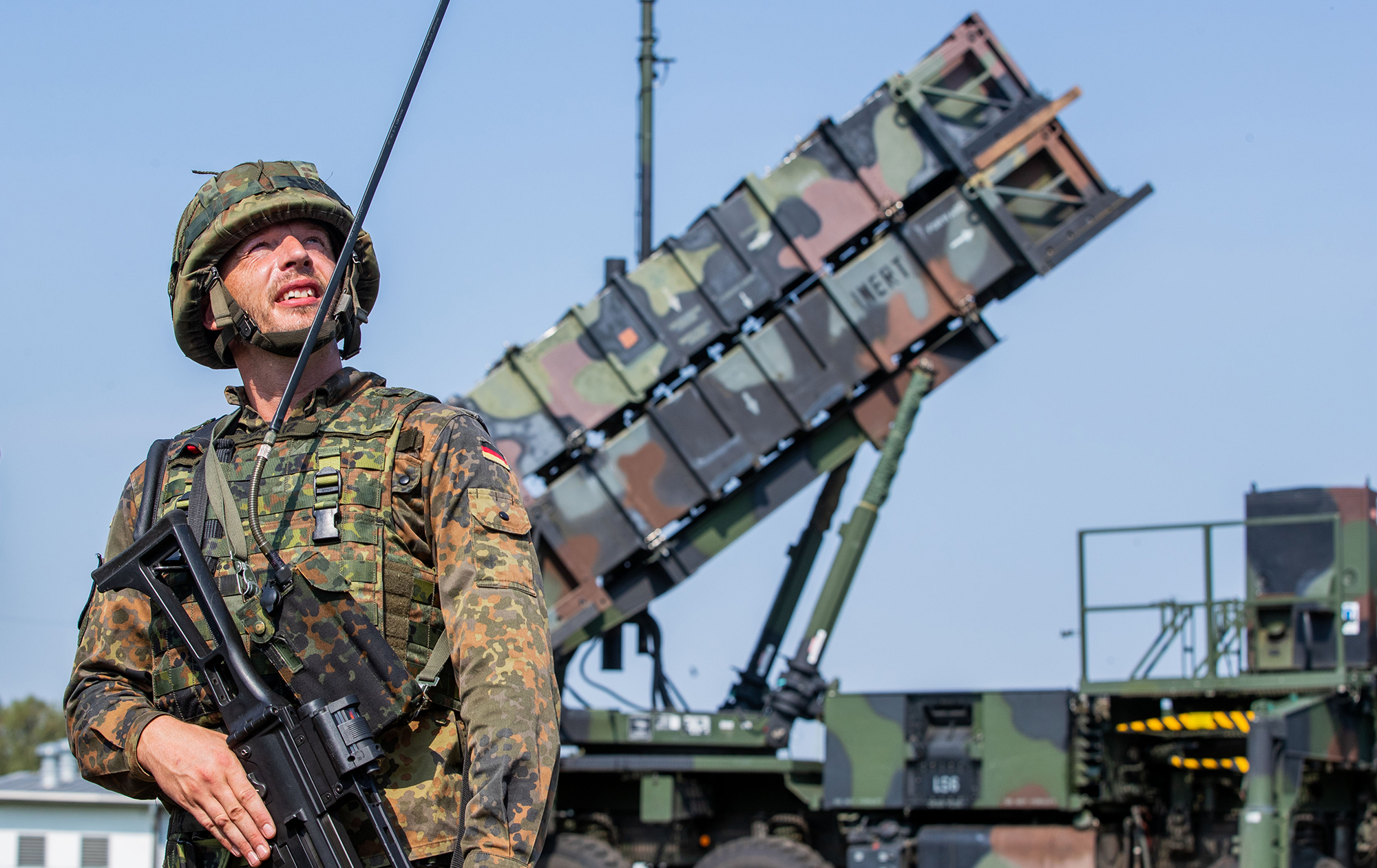
The number of PAC-3 missiles in Europe is around 200 (Photo: Getty Images)
Kryvolap also commented on the Ukrainian Defense Intelligence's statement to NV, in particular regarding Russia's production of 80 Kh-101 missiles per month. In his view, this message was aimed at several audiences: Western partners, to show that they are not responding to the threat or quickly launching the Freyja project, and the Americans, whose missile defense market could be filled by other developments, including Freyja.
According to him, the GUR figures reflect Russia's maximum production capabilities, not its actual production volumes. For example, Russia can manufacture up to 80 Kh-101 missiles per month, but that does not mean it produces them in such quantities. According to the expert's estimate, the average number of Kh-101 missiles launched at Ukraine over the past year was around 52 per month, not 80.
However, it cannot be ruled out that Russia is launching fewer weapons at Ukraine than it produces in order to accumulate them.
In Kryvolap's view, the information about the accumulation of 360 cruise missiles in stockpiles also appears questionable: even in 2022, Russia did not have such a strategic reserve. This is an assessment based on open sources, Kryvolap believes.
Open-source materials and experts' comments show how large the gap can be between political decisions and actual missile deliveries. The 500 PAC-3 MSE missiles approved by the United States, according to Politico's journalist and other media outlets, will arrive only in several years or even after 2030. Ukraine, meanwhile, requested 300-360 missiles specifically for the winter, while the United States, according to Zelenskyy, is currently supplying only 12 missiles per month.
At the same time, PAC-3 MSE production is planned to increase from approximately 600 to more than 2,000 missiles per year over seven years. But this does not solve the problem here and now. According to the president, most PAC-2 and PAC-3 missiles have been redirected to the Middle East for a long time. In addition, US stockpiles themselves may amount to fewer than 1,700 interceptors, according to The Telegraph, citing the NYT.
Therefore, in the near future, Ukraine will have to look for missiles where they are available — particularly in European stockpiles — or negotiate exchanges of places in delivery queues with partners. Zelenskyy has already spoken about such exchanges: individual countries could transfer 10-30 missiles each. But even this is still significantly less than Ukraine's need for 300-360 interceptors. Looking ahead, experts suggest increasing production, although the actual number of missiles held in European countries' stockpiles remains unknown.
Quick Q&A
– How many Patriot missiles does Ukraine need this winter?
Zelenskyy spoke about 300 missiles for the winter, based on a rate of 100 per month. According to him, the Air Force's request stands at 360 missiles. The president also said that 500 missiles would be enough to protect the skies in the coming months.
– When will Ukraine receive the 500 PAC-3 MSE missiles approved by the United States?
Not this winter. After approval by the State Department, negotiations on the contract only begin, so, according to McLeary, the missiles will arrive in several years, and according to media reports, after 2030. Khrapchynskyi estimates the delivery horizon at 2030-2033.
– Where in Europe could there be missiles that partners are able to transfer?
The available figures are fragmentary. According to The Telegraph, Greece has at least 200 PAC-2 missiles whose service life is nearing its end. The size of Spain's stockpiles has not been disclosed, while Madrid announced the transfer of five missiles. According to the publication, neither country has yet agreed to provide larger batches.
Khrapchynskyi notes that PAC-2 missiles are less effective against ballistic threats than PAC-3 MSE, but their transfer would help ease the burden on air defense by allowing it to engage cruise missiles and aircraft. Kryvolap estimates the number of PAC-3 missiles in Europe at around 200 and says that some of them have already been transferred to Ukraine.
– How does Zelenskyy propose speeding up deliveries?
Partners would transfer missiles from their stockpiles in the winter of 2026-2027 and then replenish them using production that has been contracted and paid for. The president wants to swap places in the delivery queue with individual countries: to take 10, 20 or 30 missiles from them under guarantees that they will be returned from the American package, possibly with interest.