Trump greenlights Patriot missile production in Ukraine: Timeline and challenges


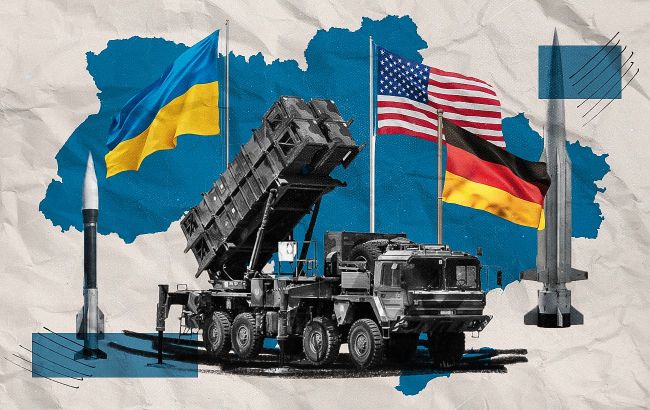 Photo: Patriot production in Ukraine (collage by RBC-Ukraine)
Donald Trump's statement that the United States will allow Ukraine to produce Patriot systems came as the country faces its most severe interceptor missile shortage since the start of the war.
Read RBC-Ukraine's report on where Patriot systems and their missiles are produced, and how long it would take Ukraine to establish domestic production.
Key points
- Ukraine is facing a critical shortage of interceptor missiles needed to shoot down Russian ballistic missiles, prompting the Defense Ministry to request urgent assistance from 40 partner countries.
- Trump said the US will allow Ukraine to produce Patriot systems. Poland is expected to play a key role in localization after receiving the status of a technology transit country.
- Estimates of the timeline vary. Poland speaks of weeks, Ukrainian experts say years, and stable serial production would take at least two to three years.
- For now, the discussion is not about producing the entire Patriot system. The process could begin with phased localization, from maintenance and repairs to assembling missiles from imported components.
Shortage of missiles for intercepting ballistic threats
Ukrainian officials have been openly discussing the critical shortage of Patriot missiles for several months. Back in May, Air Force spokesperson Yurii Ihnat said Patriot, NASAMS, and IRIS-T launchers in some units were only partially stocked, while Air Force representatives were forced to ask for five to ten missiles during every round of international negotiations.
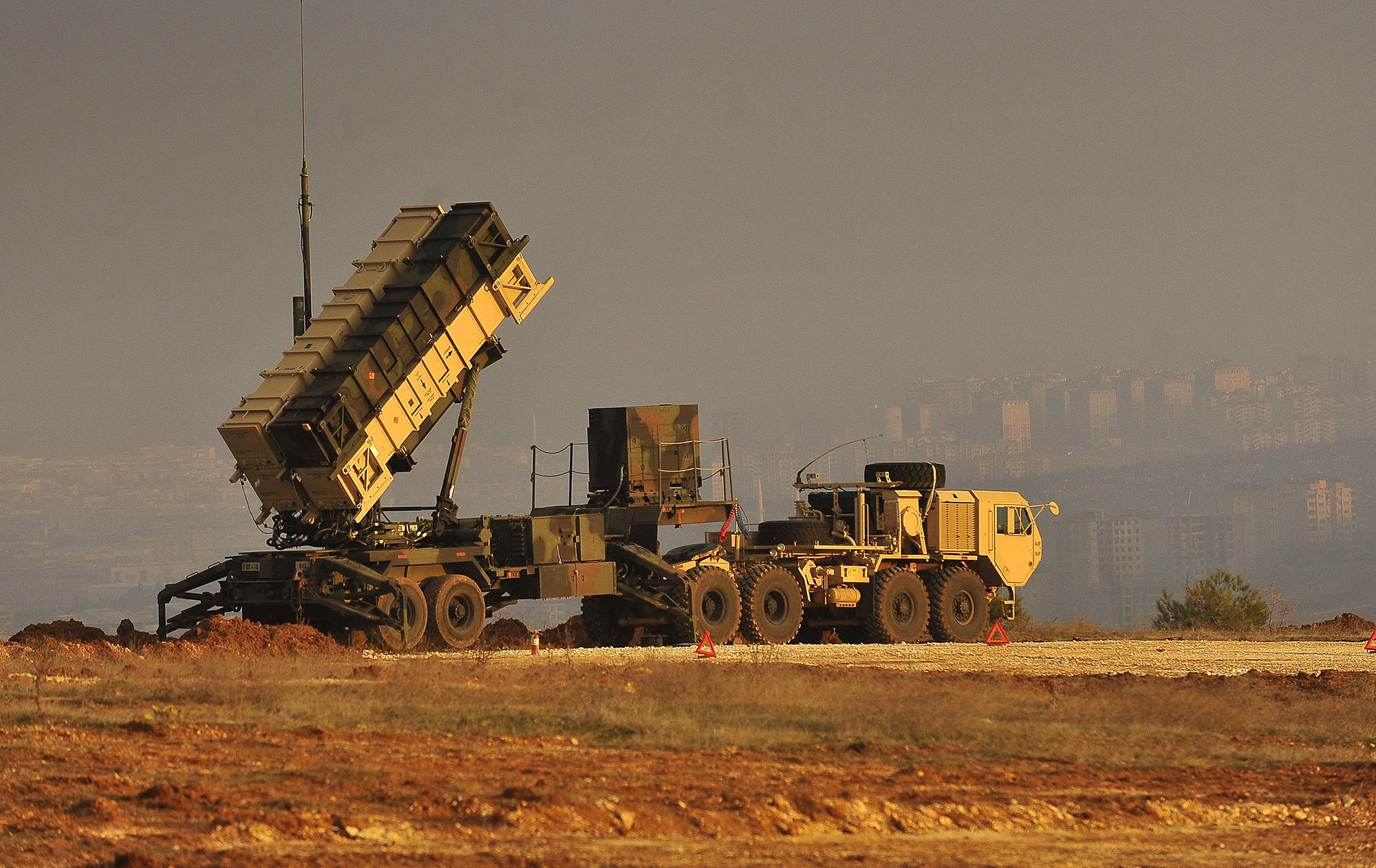
Photo: Patriot system (Wikimedia)
At the beginning of July, the situation became even more serious. Defense Minister's adviser Serhii "Flash" Beskrestnov said Ukraine virtually has no missiles capable of intercepting Russian ballistic missiles and that there is a global shortage of PAC-3 interceptors. According to him, Ukraine has already signed contracts for a large number of Patriot missiles for future delivery and is asking NATO partners to lend missiles now, with replacements to be provided later.
The partners' caution is driven not only by the global production shortage but also by their own security concerns. Beskrestnov said countries bordering Russia, including Germany, consider the Russian threat to be high and are reluctant to give up their missile stockpiles. Instead, they are trying to build reserves in case of possible aggression against Poland or the Baltic states.
The consequences of the shortage are already reflected in interception statistics. On the night Beskrestnov made his statement, Ukrainian air defense failed to intercept a single ballistic missile launched at Kyiv, while interception rates for cruise missiles and Kalibr missiles remained high.
In response, the Defense Ministry appealed to 40 partner countries at the beginning of July, requesting the urgent delivery of Patriot missiles this month in exchange for future deliveries under existing contracts.
The ministry noted that in April it signed a record contract for hundreds of PAC-2 missiles for Patriot systems with German support and also took the first step toward purchasing about 100 missiles worth $1 billion using an EU loan. However, officials acknowledged that this would still not be enough and that protecting Ukraine's skies depends directly on rapid decisions and the expansion of the PURL and JUMPSTART mechanisms.
Against this backdrop of an acute missile shortage, Trump announced plans to localize Patriot production.
Trump's statement and reactions
Donald Trump announced his intention to allow Ukraine to produce Patriot systems during a meeting with Volodymyr Zelenskyy. According to the US president, Washington will show Kyiv how to make these systems, although he acknowledged that it is a very technically complex thing. At the same time, Trump expressed confidence that Ukraine will quickly manage and will be able to deploy production facilities, where the relevant company will arrive.
Even before this statement, Foreign Minister Andrii Sybiha said that Kyiv was negotiating with international partners to obtain licenses for the production of Patriot anti-ballistic systems, while Zelenskyy described strengthening Ukraine's air defense, including the supply of Patriot systems, as one of the key topics of his meeting with Trump at the summit in Türkiye.
Poland has taken on a key role in the possible localization of production. Defense Minister Władysław Kosiniak-Kamysz said that transferring the technology to Ukraine is impossible without the direct participation of his country. Poland, together with Germany, Sweden, and the Netherlands, received the status in Ankara of countries to which technologies related to the production and maintenance of Patriot missiles can be transferred. According to him, Warsaw will cooperate with Kyiv on this issue and is ready to immediately begin operation and further activities.
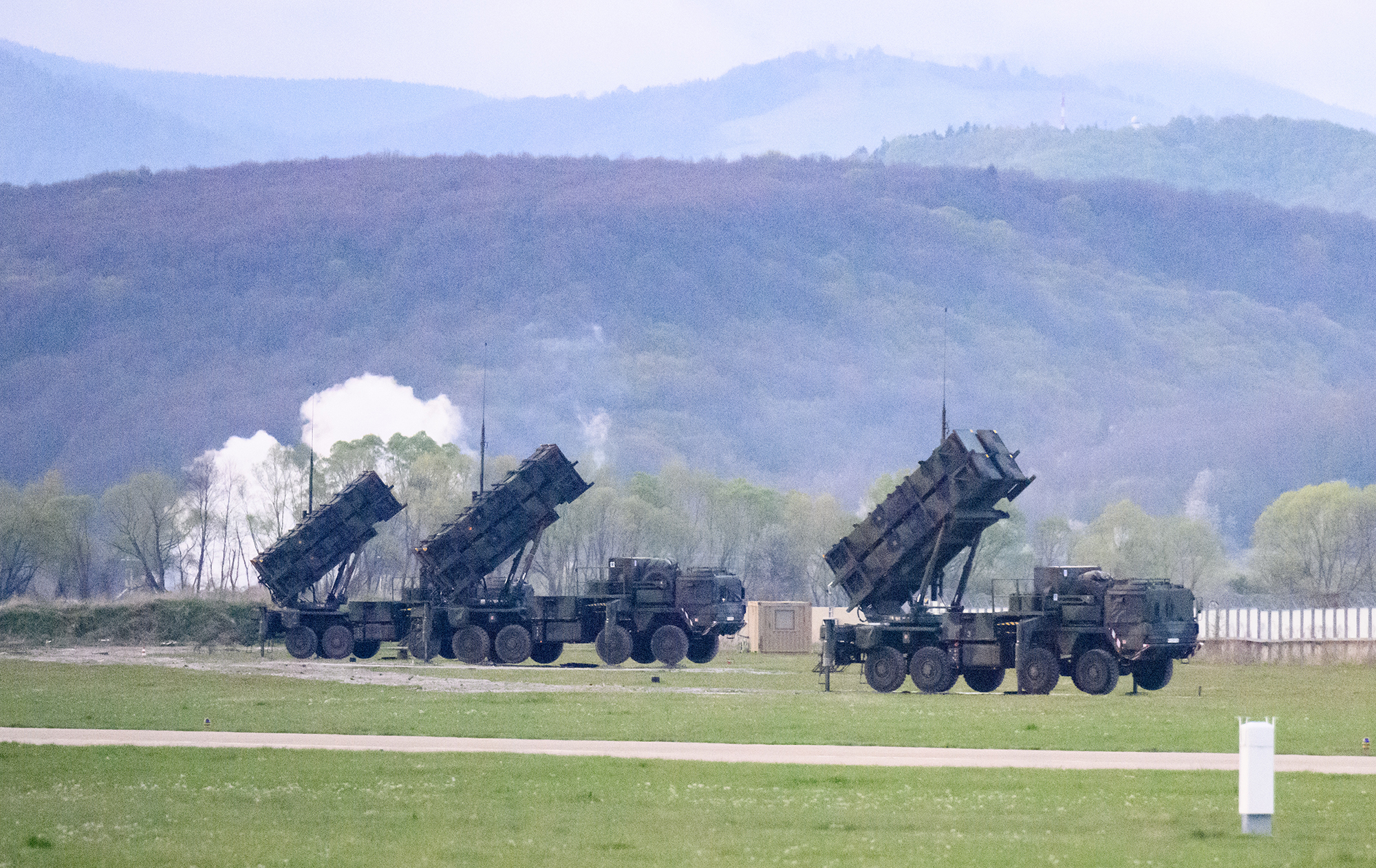
Photo: Patriot launchers (Getty Images)
Estimates of the timeline differ greatly between the parties. Kosiniak-Kamysz said that missile production in Ukraine could begin within a few weeks, stressing that even the United States—the only producer of Patriot systems on such a scale—cannot keep up with the demand from all countries in need of protection, so action must be taken very quickly. Ukrainian aviation experts interviewed by RBC-Ukraine are much more cautious and speak in terms of years rather than weeks.
Who produces Patriot missiles, where they are made, and how long it takes
The production of missiles for the Patriot air defense system is an example of large-scale international cooperation, where no single enterprise manufactures the system on its own.
Production of the most advanced PAC-3 modification (which operates on the principle of direct kinetic hit, critically important for intercepting ballistic missiles) is handled by the American company Lockheed Martin at its facilities in Arkansas.
In Germany, final assembly of the previous-generation PAC-2 missiles (or GEM-T, which destroy targets with a high-explosive fragmentation warhead) has been established, while Japan has its own licensed production lines. Critical components—precision guidance systems and onboard electronics—are supplied by an extensive network of specialized subcontractors around the world.
Aviation expert Kostiantyn Kryvolap, speaking to RBC-Ukraine, noted that Ukraine has no problems with Patriot launchers—they already exist, and some of them are manufactured by the Poles. Therefore, in his opinion, the discussion is primarily about missile production. According to his estimates, even in the best-case scenario, it would take a year just to establish the production site—construction, protecting the facilities, and installing the equipment. The production cycle for a single PAC-3 missile itself takes 23 to 25 months under the technology, or about two years. Under the most optimistic scenario, Ukraine could receive its first domestically produced missiles no earlier than 2029. Ukraine is expected to receive the contracted PAC-3 missiles directly from the United States in 2027.
Aviation expert and defense industry development director Anatolii Khrapchynskyi, speaking to RBC-Ukraine, pointed to an important nuance: it is still not known exactly which part of the production chain is being transferred to Ukraine or whether this involves genuine technological support. According to him, final assembly requires completely different production lines, and it is unlikely that the discussion concerns launchers or radar systems—most likely, it concerns only the missiles themselves.
"The positive development is that Patriot will most likely be allowed to be produced in Ukraine, but which specific part of the production process, whether it is final assembly—these details have not yet been disclosed," Khrapchynskyi said.
Ihor Fedirko, executive director of the Ukrainian Council of Defence Industry, told RBC-Ukraine that at this stage it is not worth talking about a full production cycle for the Patriot system in Ukraine.
"Patriot is not just a missile. It is a radar, command posts, launchers, communications equipment, software, and several types of interceptor missiles. Producing the entire system would require separate agreements with manufacturers, access to critical technologies, and the creation of a large number of certified production lines," Fedirko explained.
He considers a phased scenario to be more realistic:
- First—maintenance, repairs, and production of individual components, containers, and equipment;
- Then—final assembly and testing of missiles using some imported components. Only after that can gradual localization be discussed.
"PAC-2 and PAC-3 are two different production programs. Modern PAC-2 family missiles, including GEM-T, are produced by Raytheon, while the PAC-3 MSE is a Lockheed Martin product with its own complex supply chain. A license for one missile does not automatically mean the ability to produce the other," the head of the council said.
In his opinion, at the initial stage it is more realistic to talk specifically about localized assembly of one type of interceptor missile rather than simultaneously mastering PAC-2, PAC-3, and the entire system.
Regarding the timeline, Fedirko said that after the licensing decision, it will be necessary to conclude intergovernmental and industrial agreements, determine the specific missile type, audit Ukrainian enterprises, prepare equipment, train personnel, certify suppliers, and establish a quality control system.
Under the most favorable scenario, individual operations, repairs, or assembly of missiles from ready-made imported modules could begin within approximately one to two years. But reaching stable serial production would take at least two to three years, Fedirko said.
Deep localization, including the production of a significant share of components in Ukraine, could require four to seven years. Production of the entire Patriot system—if such a decision is approved at all—would be an even longer and more complex process, the expert said.
For comparison, the decision to expand GEM-T production in Germany was made in 2024. Construction of the dedicated facility took about two years, while production and the first deliveries are scheduled for late 2026 to early 2027. And this is being done by a company that has worked with Patriot for decades.
There is no reason to expect that a license will allow Ukraine to independently produce Patriot missiles within just a few months, Fedirko concluded. But if the process begins now, it will give Ukraine a long-term capability that even many NATO countries do not have today.
What risks production in Ukraine would carry
This production would become one of Russia's priority targets, Ihor Fedirko says. But that does not mean it should be abandoned. Ukraine's defense industry is already operating under constant missile attacks and, over the years of war, has learned to build a much more resilient production model.
"The risk should not be denied—it should be managed. This means there must not be one large plant whose loss would halt the entire process. The production cycle should be distributed among several sites, with duplication of critical operations, protected storage of components, and the ability to quickly restore production," the expert said.
According to him, at the initial stage, some of the most technologically sensitive components could be supplied by American or European partners, while integration, final assembly, testing, and the gradual increase of Ukraine's own share of production could be carried out in Ukraine.
There is also a certain risk for Western manufacturers due to the possibility of equipment being damaged or technology being leaked. That is why production security, protection of documentation, and access control will be among the key conditions for the American side, Fedirko concluded.
Notably, even in the United States, according to Polish Defense Minister Kosiniak-Kamysz, Patriot production volumes are insufficient to meet demand. The United States cannot provide everyone who needs these missiles. This is the key reason why localizing production—even if only partially and not within a single year—has become not merely a matter of diplomatic statements for Kyiv, but a practical necessity.
At present, it is unspecified whether this involves a full technology transfer with the construction of a plant in Ukraine or a more limited form of cooperation—for example, assembling individual components from supplied parts. Ukraine's Ministry of Defense is confident in the success of the initiative, but the final technical and legal terms of the agreement, including Poland's role as the technology transit country, have yet to be agreed upon.
Quick Q&A
Why is Ukraine short of Patriot missiles?
Because of massive Russian attacks, growing global demand for such systems due to the conflict in the Middle East, and the caution of partner countries, which are keeping their own stockpiles in reserve in case of a threat from Russia.
What exactly did Trump promise to allow?
The United States will allow Ukraine to produce Patriot systems, although it has not yet been disclosed which specific part of the production cycle will be transferred—final missile assembly or something else.
How long will it realistically take to establish production?
According to experts, individual operations or the assembly of missiles from ready-made imported modules could be possible within one to two years. Reaching stable serial production would take at least two to three years, while deep localization involving the production of components in Ukraine would require four to seven years.
Does the license mean Ukraine will produce the entire Patriot system?
No. At this stage, the discussion is more likely about localized assembly of one type of interceptor missile, since the full Patriot system includes a radar, command posts, launchers, and several types of missiles, each of which requires separate agreements and certified production lines.