Russia launches disinformation campaign after Ukraine's gains in Middle East, Ukrainian FM says

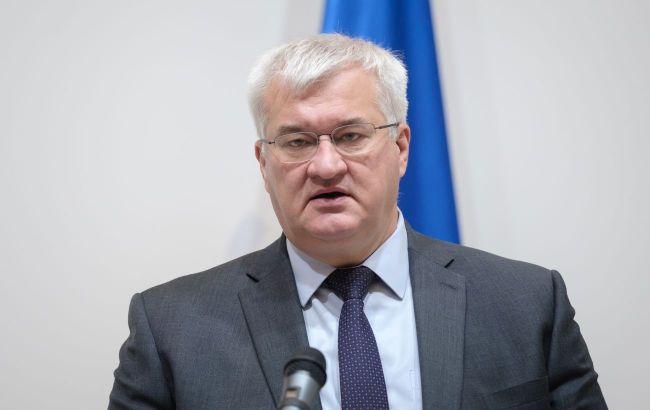 Ukrainian Foreign Minister Andrii Sybiha (photo: Vitalii Nosach, RBC-Ukraine)
Russia launched a disinformation campaign against Ukraine after cooperation between Kyiv and Gulf countries rapidly strengthened amid Iranian air attacks, according to a statement by Foreign Minister Andrii Sybiha.
Moscow is dissatisfied with Ukraine's success
In Moscow, there is concern that Kyiv has significantly strengthened its position in the Gulf region. The reason was Iranian air aggression — it was in this context that partners appreciated Ukraine's unique experience in air defense and security.
According to Sybiha, Russia decided to resort to propaganda to undermine this influence.
What Russia spreads
Moscow launched several types of fake claims at once:
- Allegedly, Ukrainian experts suffered losses or were harmed;
- Ukraine is not fulfilling its obligations to partners.
"We expect more of such nonsense in the coming weeks," the minister said.
Why the campaign will not work
Sybiha is confident that propaganda will not bring results. Gulf countries directly observe how Ukraine contributes to building modern and effective defense.
In addition, the visit of President Volodymyr Zelenskyy, according to the minister, laid the foundation for long-term mutually beneficial cooperation between the sides.
"We take this Russian disinformation campaign as proof that Moscow admits Ukraine's success and its own failure," Sybiha concluded.
Meanwhile, Russia actively uses other disinformation tools. Russian drones dropped fake banknotes in Sumy and Chernihiv regions with calls to provide coordinates of Ukrainian positions and appeals to overthrow authorities.
QR codes on banknotes also led to hostile resources.
Earlier, Russia tried to shift responsibility onto Ukraine for the pollution of the Dniester River after its own strike on the Dniester hydroelectric power plant.
Pro-Russian resources in Moldova promoted at least three versions of fake claims — about an overturned truck with fuel oil, air defense missile fuel, and allegedly hit a Ukrainian missile workshop. None of the versions was confirmed.
In addition, ahead of Hungarian elections in the city of Debrecen, fake campaign posters of the Tisza party with Ukrainian-language text appeared.
A candidate from the party has already filed an official complaint, and the name on the poster was even written with a mistake.