Round three in Geneva. Key topics of Ukraine-US-Russia talks, and why Kremlin reshuffled its team


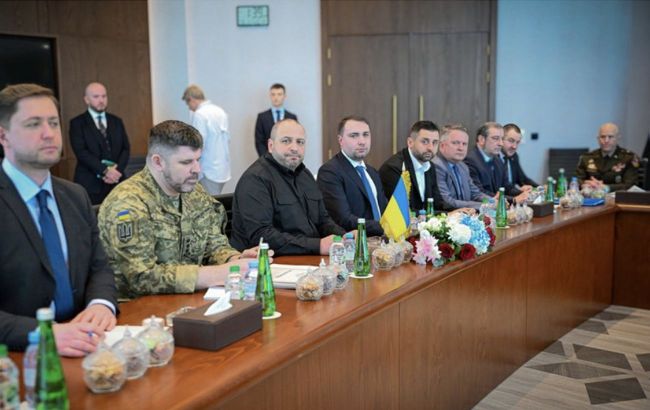 Photo: Ukrainian negotiating team (mofa.gov.ae)
Geneva is once again becoming the center of global diplomacy. The third round of negotiations between Ukraine, the United States, and Russia is marked by a change in the Russian delegation.
RBC-Ukraine explains what stands behind this decision and what topics will be on the agenda behind closed doors.
Read also: Ukrainian delegation heads to Geneva for new round of talks
Key points
- Negotiations between Ukraine, Russia, and the United States will take place in Europe, on February 17–18 in Geneva (Switzerland).
- Topics. Among those announced: an energy ceasefire, territorial issues.
- Kyiv sent a Ukrainian delegation with the president's office chief, Kyrylo Budanov.
- Russia lowered the status of its delegation, appointing “historian” Medinsky as its head. An expert sees this as an attempt to drag out the process and shift the focus.
- Russia continues energy terror and may be preparing a new strike on Ukraine amid active diplomacy.
It will already be the third round of negotiations between Ukraine, Russia, and the United States. For the first time during the period of Russia’s full-scale war against Ukraine, the meeting will take place at a European venue. Consultations were previously held in Türkiye, Saudi Arabia, and the UAE.
What will be discussed in Geneva?
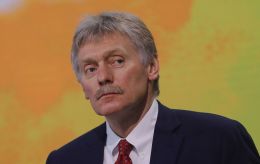
The Russian side announced that a broader range of topics would be discussed than in the previous round in Abu Dhabi. Including territorial issues, Kremlin spokesperson Dmitry Peskov said.
For its part, Ukraine plans to raise the issue of an energy ceasefire, said National Security and Defense Council Secretary Rustem Umerov. According to him, details of this topic are not being disclosed yet, but it will definitely be on the agenda.
Who is in the Ukrainian and US delegations?
President of Ukraine Volodymyr Zelenskyy determined the composition of his team, which includes:
- National Security and Defense Council Secretary Rustem Umerov;
- Head of the Office of the President of Ukraine Kyrylo Budanov;
- Deputy Head of the Defense Intelligence of Ukraine Vadym Skibitskyi;
- Deputy Head of the Office of the President Sergiy Kyslytsya;
- Chief of the General Staff General Andrii Hnatov;
- Head of the Servant of the People faction Davyd Arakhamia.
Umerov emphasized that the delegation combines military, political, and security expertise and will work on concrete decisions within the framework defined by the president. The main goal is a sustainable and lasting peace.
Who will officially represent the United States at the talks in Geneva has not yet been announced. At previous rounds in Abu Dhabi, the American side included:
- envoys of Donald Trump Steve Witkoff and Jared Kushner;
- US Secretary of the Army Daniel Driscoll;
- US General Alexus Grynkewich.
Changes in the Russian negotiating team
Unlike previous meetings, Russia lowered the status of its delegation.
It will be headed by presidential aide Vladimir Medinsky, who already took part in last year’s negotiations in Istanbul and became known as a “historian” and Putin ideologue. At that time, the Russian side refused a ceasefire and insisted on recognition of the occupied territories, as well as limiting the size of Ukraine’s Armed Forces.
As Zelenskyy mentioned, at the previous round in Abu Dhabi, the Russian delegation led by GRU chief Igor Kostyukov proved more constructive than during meetings with Medinsky.
 Photo: Russian negotiators Mikhail Galuzin, Vladimir Medinsky, Igor Kostyukov (Getty Images)
Military expert and serviceman of the Territorial Defense Forces Oleksandr Musiienko explains two key reasons why the Kremlin replaced the head of the negotiating group.
The first reason is that Russia is trying to demonstrate “seriousness” and “interest” in negotiations.
According to the expert, replacing Kostyukov with Medinsky is a formal step intended to create the impression of readiness to discuss not only military and security issues, as in Abu Dhabi, but also other points of the peace plan.
The second reason is to drag out the process. Having noticed that discussions along the military line were constructive, Moscow is trying to shift the focus of negotiations from security topics to political, social, and religious issues. In the expert’s opinion, this step allows the Kremlin to show that “everything has been resolved on security,” but “Ukraine is not yet ready for other steps.”
The issue of territories remains uncertain
The territorial issue remains unresolved, which Moscow links to the so-called Anchorage Formula. According to Western media sources, it means Russia’s control over all of Donbas and freezing the front lines in eastern and southern Ukraine.
Ahead of the new negotiations, the president of Ukraine noted that Kyiv has not changed its position on territories, and all sides must be ready for compromises. He emphasized that decisions are up to the Ukrainian people, through elections or a referendum.
Subtle mocking and expectations from the talks
Expert Musiienko mentioned a slight jab from the Ukrainian side. He drew attention to the fact that when Budanov announced the trip with the team on social media, he wrote that they would discuss the lessons of Ukrainian history, which is perceived as a jab at Medinsky.
“This is trolling of Medinsky. Because, you know, he is often called a ‘historian,’ like Putin. So, in fact, I think that those who understood appreciated it,” the expert says.
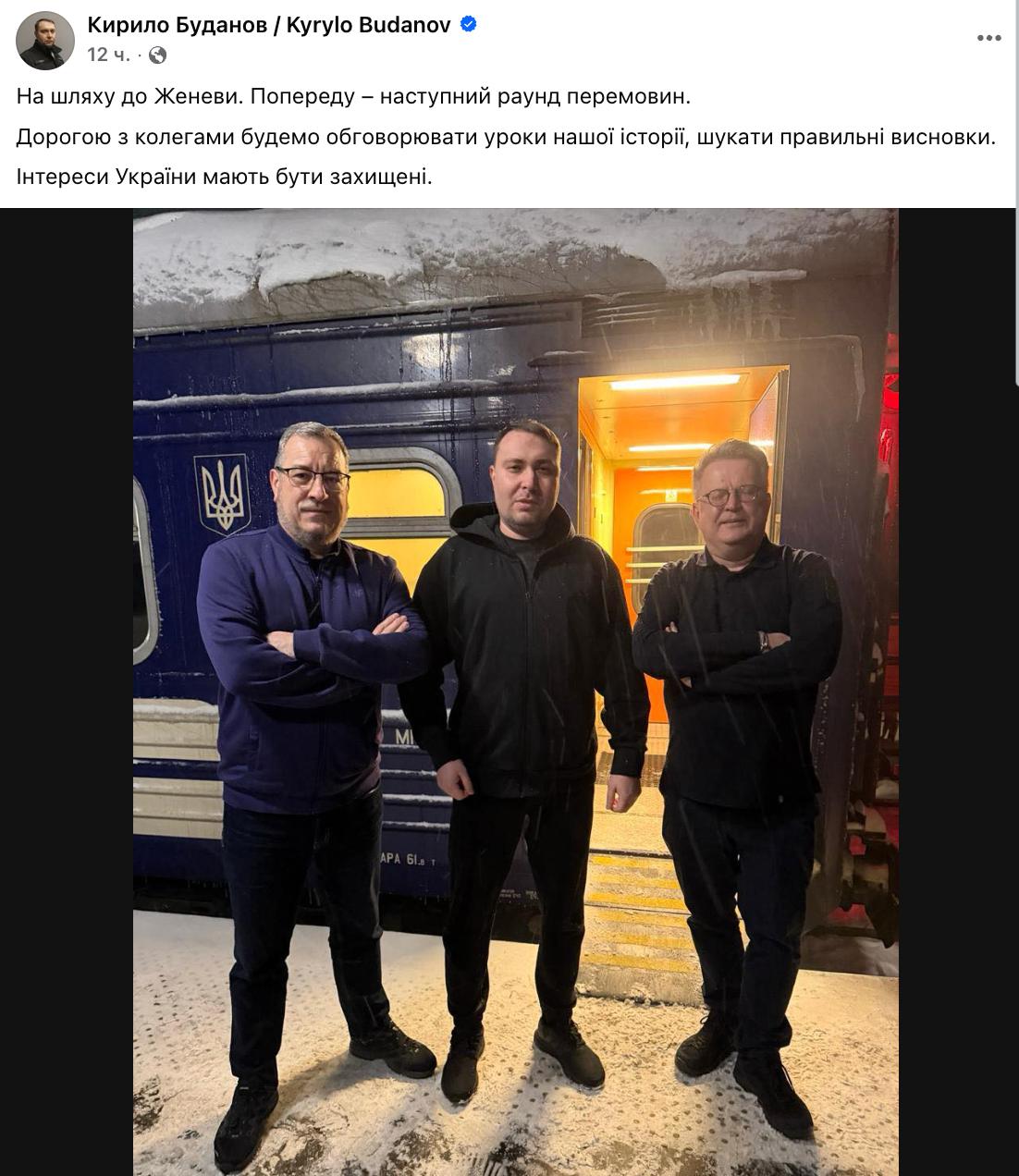 Photo: Budanov's post on Facebook (screenshot)
As for expectations from the negotiations, the expert stressed that noteworthy breakthroughs are difficult to expect, since the Kremlin does not abandon its goals, continues terrorist strikes on energy infrastructure, and exerts pressure on the front.
“So far, this is their unchanged point of view. Under such conditions, it is difficult to expect a significant breakthrough. But, again, Ukraine is open to negotiations if they are truly constructive,” Musiienko concluded.
In January and early February 2026, several rounds of negotiations between Ukraine and Russia were held in Abu Dhabi with US mediation.
No important breakthrough in ending the war was achieved, but the sides agreed on a prisoner exchange – the first in five months.
Read about the results of the second round of negotiations in Abu Dhabi in a separate RBC-Ukraine article.