Republicans move to block Trump from using force to take Greenland

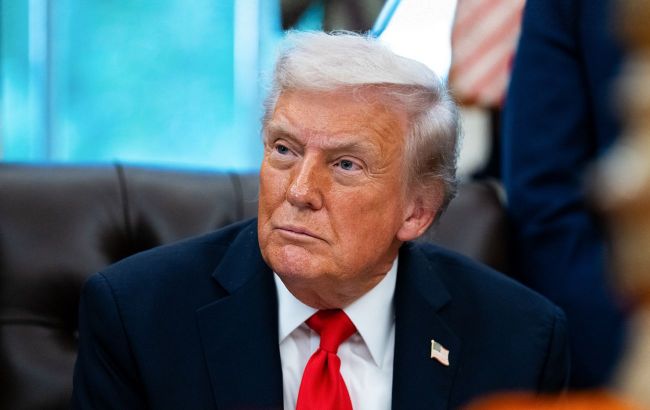 Photo: US President Donald Trump (Getty Images)
Republican lawmakers in the US are planning to adopt a resolution that would block President Donald Trump from taking military action to seize Greenland. The president’s intentions have alarmed members of his own party, according to the Financial Times.
At least one Republican has warned Trump that he could face impeachment if he attempts to take Greenland by military force. Several other Republicans have announced they are preparing a resolution.
The War Powers Resolution would prohibit Trump from deploying US troops to take control of Greenland without congressional approval. The document is expected to receive bipartisan support from a majority of lawmakers.
“But the chorus of criticism from within the party over Greenland is one of the first major signals that a growing number of Republicans are willing to push back on what they see as presidential over-reach,” the newspaper writes.
Firm opposition
According to the Financial Times, this is the first time Republican senators and representatives have shown readiness to confront Trump so openly, although their positions vary.
Republican Senator Thom Tillis said he was trying to “de-escalate” the situation around Greenland, arguing that the president was receiving “bad advice.”
“I am not critical of the president. I am critical of the bad advice he is getting on Greenland,” Tillis said.
Tillis suggested that two-thirds of the Senate (at least 60 of 100 senators) would support the resolution. His view was echoed by Republican Senator Rand Paul, who said Republicans do not support a military invasion of Greenland.
“Even the most hawkish members of our caucus have said they won’t support that,” Paul said.
Senator Lisa Murkowski said during discussions in Davos that Republicans are closely monitoring the situation. Last week, Murkowski was among the authors of a bill banning the US military from occupying or annexing NATO territory.
“Greenland needs to be viewed as our ally, not as an asset. I don’t think that the absence of Republicans [in Denmark] is because they don’t care about this issue,” she said.
Senator Don Bacon said any attempt by Trump to seize Greenland would be blocked by lawmakers and that such an invasion would mark “the end of his presidency.”
“Most Republicans know this is immoral and wrong, and we’re going to stand up against it. The off-ramp is realizing Republicans aren’t going to tolerate this, and he’s going to have to back off. [Trump] hates being told no, but in this case, I think Republicans need to be firm,” Bacon said.
Bacon also criticized Trump’s threats to impose new tariffs on European countries backing Denmark and urged Congress to reclaim all “tariff authority.”
"Most Americans disagree with the president’s heavy-handedness. He is threatening Nato members, which is shameful,” he added.
Democrats, for their part, plan to introduce a Senate resolution requiring a vote to ban the use of tariffs to punish NATO allies.
“This is a dead-end confrontation that will only do harm to us, to Nato and our standing in the world. We stand for self-determination. We stand for sovereignty. And President Trump is challenging that in a way that’s going to be very harmful,” said one of the resolution’s authors, Democratic Senator Peter Welch.
Americans against it, Trump allies in favor
Trump’s plans are unpopular not only among lawmakers. Opinion polls show that the idea of taking control of Greenland—whether by purchase or by force—is supported by only 25% of US adults. Even among Republicans, support stands at just 50%.
At the same time, members of Trump’s administration—especially those close to the president—continue to aggressively push his idea. On January 20, US House Speaker Mike Johnson said during a visit to the UK that he wanted to “encourage our friends and help to calm the waters, so to speak.”
He urged countries to “work through our differences calmly as friends” and again cited a semi-mythical “threat” from China and Russia in the Arctic—an argument frequently used by Trump and his allies to justify their rhetoric on Greenland.
“While we can have thoughtful debate . . . among our friends about how best to counter these threats, we all certainly agree they must be countered. We ignore these threats at our peril,” Johnson said.
On January 21, the US once again stated—through Treasury Secretary Scott Bessent—that Greenland should be part of the United States and warned Europe against increasing its military presence on the island.
Media reports indicate growing divisions within the Republican Party. Republicans have reacted unevenly to Trump’s threats over Greenland: some fear he could destroy NATO, while others urge calm.
Greenland situation
Trump has repeatedly said the US must control Greenland, claiming that otherwise, China or Russia could seize it. He has said Washington could use military force or buy the Arctic island. He has also mocked NATO’s presence there, claiming Greenland is guarded by “two dog sleds”—a statement widely dismissed as false.
Following these remarks, Denmark, Germany, France, Sweden, Norway, the Netherlands, and the UK deployed troops to Greenland. In response, on January 17, Trump announced new tariffs on several European countries. The move triggered a sharp reaction from the EU, which is now considering suspending a trade agreement and imposing counter-tariffs.
Greenland’s Prime Minister Jens-Frederik Nielsen said on January 20 that a military conflict between Greenland and the US is unlikely, but cannot be fully ruled out. NATO Secretary General Mark Rutte has said the Greenland issue is being handled “behind the scenes.”
For more details on how Trump is pressuring Europe, see the RBC-Ukraine report.