Putin 'reshuffles' Russian military leadership during active phase of combat operations, – ISW

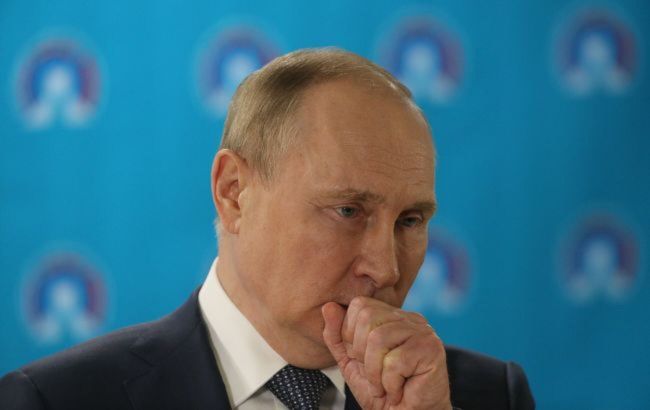 Photo: Vladimir Putin, Russian president (Getty Images)
In Russia, the command structure of the security bloc has been changed: a decree was signed transferring the National Guard under the authority of the General Staff. Experts say this strengthens the vertical of control and bolsters the positions of the military leadership within the power structure, according to the Institute for the Study of War (ISW).
Read also: Trump identified Putin's weak spot - And it could stop war in Ukraine
In Russia, the National Guard has been placed under the authority of the General Staff, following a decree signed on Wednesday, February 11. According to the document, the General Staff will now oversee the command and deployment of units both in peacetime and wartime, participate in planning their development, and ensure combat and mobilization readiness. It will also manage training, intelligence, combat support, and command system creation for the National Guard.
Earlier, reports indicated that the Russian Security Council is considering dissolving the Ministry of Emergency Situations (MChS) and integrating part of its personnel into the National Guard, potentially including up to 50,000 rescue workers, sappers, and other specialists.
Analysts say these moves aim to strengthen control over security forces following the events of June 2023. Bringing the National Guard under the General Staff continues Moscow’s trend of centralizing all armed formations under the Ministry of Defense.
"Placing the National Guard and parts of Russia’s military command under the General Staff will significantly enhance Gerasimov’s control over Russian security forces, highlighting that Putin rewards Gerasimov for loyalty and keeps him central in his inner circle," ISW analysts note.
This comes as Russian military losses in Ukraine rise sharply, undermining Kremlin plans for large-scale offensives. Michael Kofman, senior fellow at the Carnegie Endowment for International Peace, assesses that Russia’s strategy of continuous pressure along the front line has failed to achieve the intended breakthroughs.
Despite the ongoing war, Putin continues to promote the narrative of an approaching victory, claiming Russia can adapt to sanctions and maintain strategic initiative.
These statements are widely broadcast domestically and internationally, while the US and Europe monitor the rhetoric and evaluate Moscow’s real capabilities amid a protracted conflict.