Financial Times: Putin is trying to deceive world and himself

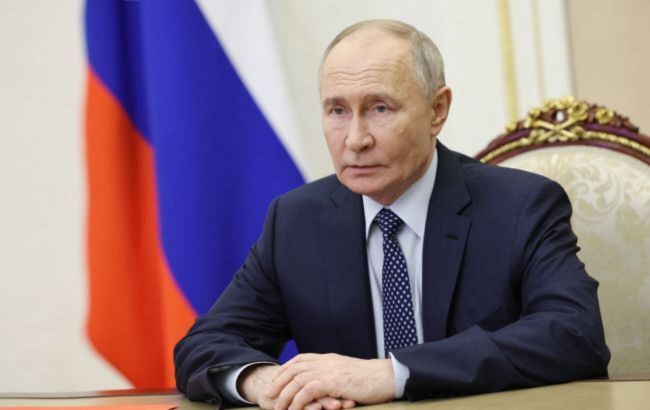 Photo: Vladimir Putin, Russian president (Getty Images)
Vladimir Putin claims an alleged imminent victory in Ukraine, asserting that sanctions have been overcome and that Russia holds the strategic initiative on the battlefield, while American and European politicians are watching this narrative unfold, according to a publication by the Financial Times.
In the article, Peter Pomerantsev notes that in the Russian narrative, the war long ago extended beyond Ukraine and is presented as a global confrontation in which Russia allegedly challenges the West and historically "doomed" democracies.
Inside the country, this version is reinforced by claims of having overcome sanctions, economic resilience, and what is described as holding the "strategic initiative" on the front lines.
According to the Russian leader, the development of events boils down to a scenario in which either Russia takes these territories by force or Ukrainian forces withdraw from them.
Information space as battlefield
This narrative is actively transmitted beyond Russia’s borders and is picked up by certain Western politicians. Analysts note that the emphasis is not so much on facts as on creating a sense of inevitability.
Experts point out that in modern conflicts, the ability to impose one’s own story of events becomes decisive, not just achieving military successes.
System vulnerabilities
Despite the image of strength, internal problems are accumulating in Russia. The economic model, based on military spending and oil revenues, is facing increasing deficits and inflation.
Pressure on the military recruitment system is growing, along with dissatisfaction with hidden mobilization and financial extortion.
According to expert assessments, soldiers reportedly complain that roughly 50–70% of their income goes toward bribes to their commanders.
External failures and limits of influence
On the international stage, Russia’s "grand narrative" is also failing. The loss of allies, failures in hybrid campaigns, and resistance from societies in Europe demonstrate that the narrative imposed by Moscow is not universally convincing. Even where significant resources are invested, results remain limited.
Experts agree that the weakness of the Kremlin’s narrative becomes evident when events are considered holistically. They view the key task for Ukraine and its partners as consistently exposing these contradictions while simultaneously building their own narrative of resilience and determination.
US President Donald Trump clearly made it known to Vladimir Putin that the invasion of Ukraine was unacceptable and violated international norms.
During the Abu Dhabi negotiations, Russia presented a new condition for ending the war, insisting on international recognition of Donbas as part of its territory.