Putin's plans at risk as true scale of Russian losses keeps mounting - FT

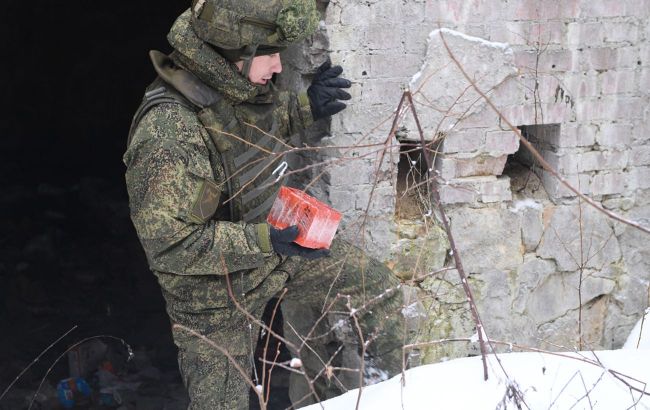 Photo: Russian recruits are only enough to cover losses in the war (Russian media)
A sharp increase in Russian army losses in the war against Ukraine is increasingly complicating the implementation of the Kremlin’s offensive plans, reports the Financial Times.
Read also: Russian losses rising: Ukrainian military chief links spike to army corps reform
Citing Michael Kofman, a senior research fellow at the Carnegie Endowment for International Peace, the article says that Russia’s current tactics do not allow it to achieve substantial results on the battlefield.
Putin has bet that constant pressure along a broad front will eventually lead to collapse on the Ukrainian side, the expert says. But the way Russian forces are fighting simply will not lead to major operational breakthroughs.
According to analysts, the rate of Russia's advance on key sections of the front is only between 15 and 70 meters per day.
A report by the Center for Strategic and International Studies (CSIS) notes that Russia’s offensive pace is slower than in most wars over the past 100 years. Meanwhile, its total losses are estimated at least 325,000 killed.
Loss dynamics and desertion
According to President Volodymyr Zelenskyy, Russia loses between 30,000 and 35,000 troops killed or severely wounded each month.
The analytical group Frontelligence Insight is recording the highest level of desertion in the Russian army since the start of the full-scale invasion. Analysts link this to the tactics of the Russian command, which sends troops into offensives without taking loss levels into account.
The chief of the analytical group told the media that they are expending their resources beyond reason, leading to losses that are often avoidable
The role of technology and evacuation
According to Latvian intelligence, 70–80% of losses on both sides are caused by drones.
A wounded soldier can quickly become a liability when dozens of drones are constantly observing or attacking, and evacuation remains extremely risky, a former Ukrainian officer said.
Recruitment problems
Despite replenishing the Russian army by about 35,000 people each month, most recruits merely cover current losses. According to analyst Michael Kofman, this trend makes it more difficult to sustain prolonged offensive pressure.
Experts note that the financial motivations for mercenaries are limited, as the number of people willing to go to the front for money is gradually being exhausted.
Western media reported on Russia’s possible preparations for offensive actions in southern Ukraine. Ukraine stresses that Russia's plans have long been known, and the Defense Forces are taking measures to thwart them.