Putin forced to 'hide' missile production in Siberia: The Telegraph names reason

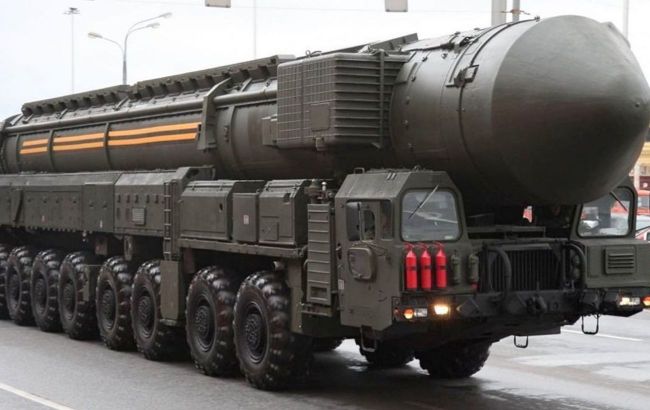 Photo: RS-28 Sarmat (Russian media)
Roscosmos (the Russian government's state corporation responsible for space flights, cosmonautics programs, and aerospace research) has announced the relocation of its production facilities from Khimki in the Moscow region to Omsk in Siberia and Perm near the Ural Mountains, according to The Telegraph.
What is being relocated and where
According to the head of Roscosmos, Dmitry Bakanov, the State Space Research and Production Center named after Khrunichev is moving from Khimki to Omsk. Rocket engine production currently located in Khimki will be relocated to Perm.
Although Roscosmos positions itself as a civilian agency, it is closely linked to the production of missiles used in Russia’s war against Ukraine. In particular, this includes intercontinental ballistic missiles with nuclear capability, such as the RS-28 Sarmat, which Russian media have described as "world’s deadliest weapon" (although the missile has reportedly failed at least five tests).
Why this is happening
Bakanov explained the decision by pointing to high overhead costs.
"The cost of industrial serial production in Khimki is becoming prohibitive due to high overhead costs," he stated.
However, observers link the relocation to the increasing range of Ukrainian long-range strikes.
In March, former defense minister and current secretary of Russia’s Security Council, Sergey Shoigu, stated that "no region of Russia can feel safe" from Ukrainian attacks, warning that they could reach the Ural Mountains and beyond.
Meanwhile, Kremlin spokesperson Dmitry Peskov acknowledged that it is "impossible" to protect all of Russia’s critical infrastructure from drone strikes.
Escalation of Ukrainian strikes
In January, Roscosmos had already been forced to relocate the development of Angara launch vehicles from the Khrunichev Center in Moscow to its branch in Omsk.
Over the past two weeks, Ukraine has carried out several strikes on Russian export terminals in the Baltic Sea region (Primorsk and Ust-Luga), knocking them out of operation, as well as hitting one of the largest explosives production plants in Chapayevsk.
On the night of Thursday, drones of the Armed Forces of Ukraine set fire to the Bashneft-Novoil oil refinery in Ufa, which processes 7.3 million tons of oil per year and is located about 1,400 km from the Ukrainian border.
Volodymyr Zelenskyy said that allies had asked him to limit strikes on Russian energy facilities due to a global fuel crisis caused by the blockade of the Strait of Hormuz.
However, the president stressed that Ukraine would not stop its strikes as long as Russia continues to target Ukraine’s energy infrastructure:
"If Russia is ready not to strike Ukraine’s energy, then we’ll respond by not attacking theirs," he said.
The March campaign by Ukraine’s Defense Forces marked another stage in the systematic destruction of Russia’s military and oil infrastructure. On March 31, drones attacked the port of Ust-Luga for the fifth time in a week and a half, hitting an oil terminal.
According to Reuters, due to drone strikes, pipeline damage, and tanker seizures, Russia temporarily lost at least 40% of its export capacity.
In addition, on the night of March 28, Ukraine’s Defense Forces struck the Yaroslavl Oil Refinery. The facility produces diesel and aviation fuel, which are critical for the Russian military’s logistics.
Earlier, on March 26, the Kirishinefteorgsintez Oil Refinery — the second-largest refinery in Russia — was also attacked. A large fire broke out at the plant following the strike.