Poland warns Russia may stage false flag attack to escalate war against Ukraine

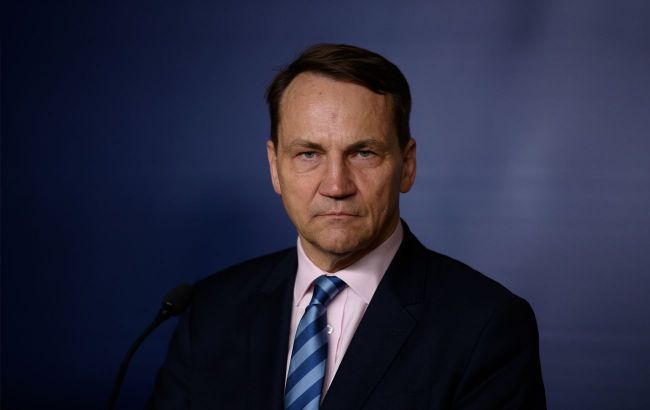 Polish Foreign Minister Radosław Sikorski (photo: Getty Images)
Moscow may be preparing a staged false flag provocation to justify further escalation, according to Polish Foreign Minister Radosław Sikorski. Warsaw swiftly responded to the latest threats from the Russian leadership, comparing the Kremlin's actions to Nazi Germany's preparations for the invasion of Poland in 1939.
"Announcement of a provocation"
The Kremlin's latest accusations serve as informational groundwork for an operation by Russian intelligence services on Russian territory aimed at creating a pretext for new strikes. Polish Foreign Minister Radosław Sikorski emphasized this.
"This sounds like an announcement of a provocation. I expect a false flag attack on Russian territory to which Putin will 'respond.' I would remind you that in August 1939, the Abwehr staged a 'Polish' attack on the radio station in Gleiwitz to create a pretext for war," the Polish foreign minister said.
Putin's threats and accusations against Latvia
The remarks that alarmed European diplomats came during Vladimir Putin's address to graduates of Russian military academies. He stated that Russia would carry out retaliatory strikes against European countries if drone launches targeting Russian facilities were detected from their territory.
The Kremlin leader claimed that EU leaders were allegedly "trying to distance themselves" from such attacks by attributing them to technical failures or Ukrainian electronic warfare systems. He described drone attacks on Russia as an attempt to destabilize society.
These statements were preceded by accusations made in May by Russia's Foreign Intelligence Service, which accused the Ukrainian Armed Forces of preparing drone launches directly from five military bases in Latvia (Ādaži, Selonia, Lielvārde, Daugavpils, and Jēkabpils), adding that NATO membership "would not serve as protection" in the event of such actions.
The Kremlin's aggressive rhetoric toward the Baltic states also fits into a long-term strategy of preparing for a broader conflict. In particular, according to Lithuanian intelligence assessments, Russia could reach full readiness for a confrontation with NATO within six years.
The geopolitical ambitions of the Russian leadership drive this threat. As NATO Military Committee Chair Giuseppe Cavo Dragone stated in an interview with RBC-Ukraine, the Kremlin's strategic goal remains the restoration of control over all territories that were part of the Soviet Union before its collapse.