Online elections in Ukraine during wartime: Risks and conditions

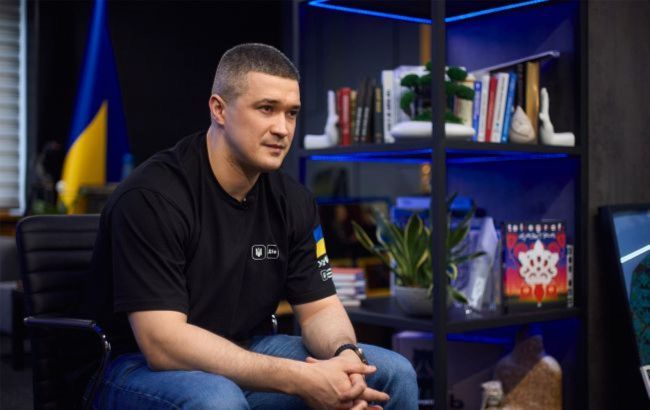 Digital Transformation Minister Mykhailo Fedorov (facebook.com mykhailofedorov.com.ua)
Ukraine does not work on holding online elections. A fully digital voting system would require complex preparations, legislative changes, and a high level of public trust, according to Digital Transformation Minister Mykhailo Fedorov.
Fedorov says that the topic of online elections is extremely sensitive, especially amid Russia’s full-scale war against Ukraine and ongoing cyberattacks.
“Elections are always a point of trust. Even offline elections are about trust — trust in the results, in the Central Election Commission, and in the vote count,” Fedorov noted.
Why online elections are impossible now
Fedorov explained that there are currently no legal grounds to hold online elections. The Parliament needs to adopt the necessary legislative changes, and the Central Election Commission must pass a separate resolution to enable this.
No government agency has approached the Ministry of Digital Transformation to date with a request to develop an online voting mechanism.
“Nobody has communicated with us, and we have done nothing in this regard because of a lack of legal grounds,” he said.
War, cyber threats, public trust
Fedorov stressed that during wartime, the risks of influencing the electoral process, including information and cyber interference, increase significantly. For this reason, the issue of online elections cannot be viewed only from a technical perspective.
He noted that Ukrainians tend to trust not so much in technology as in those organizing the process and in the broader political situation in the country.
Online voting requirements
The Minister says that if the state decides to move toward online elections, large-scale research and the use of international experience will be essential.
“What would I do? I would bring together the world’s leading technology companies and definitely involve Estonia, as it is the only country with proven experience in online voting. Then I would conduct research,” he said.
Minister Fedorov listed the main challenges:
- Participation of Ukrainians abroad
- Voting by residents of occupied territories
- Protection of the voter registry
- Voter identity verification
- Ensuring the secrecy of voting.
“This issue is complex and multifaceted. It is a choice for the Ukrainian people. Ukrainians must decide and influence this process. Parliament represents the people. The government represents the people through the Parliament, which delegates authority. So Ukrainians must decide whether to trust this. Many stages are involved. I think it is too early to discuss this,” Fedorov said.
Presidential election in Ukraine
President Volodymyr Zelenskyy has previously expressed his readiness to hold an election if the US and European partners support it. His comments came amid US President Donald Trump's statements calling for presidential elections in Ukraine and provisions in a draft peace plan that envision holding elections after an agreement is signed.
In response, Zelenskyy urged the Parliament to develop legislative changes. On December 22, Parliament established a working group to explore the feasibility of holding elections under martial law. Speaker Ruslan Stefanchuk stressed that any such law would be a one-time measure, while the Central Election Commission has resumed the automated state register of voters system.
The Parliament has already begun drafting an election law. The working group included more than 60 members.
Minister Fedorov has previously said that holding elections via the Diia app is not currently considered.
Today, the Central Election Commission passed a resolution to establish the All-Ukraine Referendum automated information and communications system.