New leader, old problems: What Ukraine can expect from Britain’s next PM


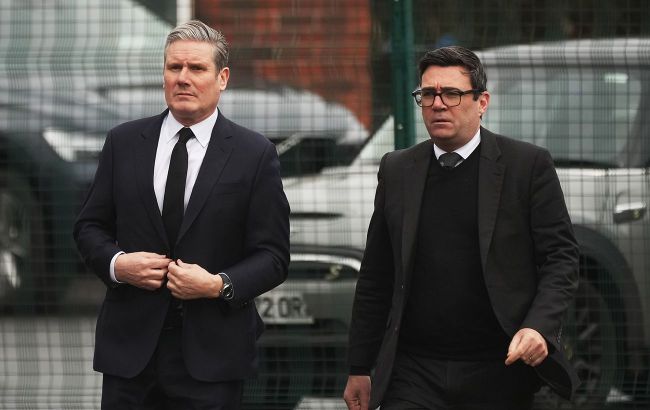 Photo: Andy Burnham and Keir Starmer (Getty Images)
British Prime Minister Keir Starmer has resigned. This is the sixth change of head of government in the country over the past 10 years.
Who will replace him and what this means for Ukraine — read in the material by RBC-Ukraine.
Key points:
- Reasons for resignation: Keir Starmer’s term ended due to an inability to push through reforms and a collapse in the party’s approval ratings.
- Internal pressure: Burnham’s supporters forced Starmer to step down voluntarily, issuing him an ultimatum.
- Ukraine context: The new prime minister is a consistent supporter of Ukraine, but there is a risk of shifting priorities toward domestic issues.
- Economic deadlock: Burnham’s radical plan to increase public spending could deepen the economic crisis.
The resignation of the Prime Minister in the United Kingdom does not necessarily mean that early parliamentary elections will be held soon.
The Labour Party, to which Keir Starmer belongs, currently holds a majority in Parliament. Therefore, it can simply elect its successor internally.
It is already known that the new Prime Minister will be former Health Secretary and ex–Mayor of Greater Manchester Andy Burnham.
Systemic crisis
Starmer announced his resignation on the eve of the Brexit anniversary, a symbolic moment. On 23 June, ten years ago, UK citizens voted in a referendum to leave the European Union.
Since then, the country has effectively been living in a state of political turbulence. From Brexit until 2024, the country was governed by the Conservative Party — in Ukraine, its most well-known representative is Boris Johnson.
On the one hand, the Conservatives were supposed to manage the orderly withdrawal of the UK from the EU, and on the other — carry out a series of domestic reforms to address long-standing issues ranging from crime and migration to defence and the economy.
While they managed to handle Brexit itself more or less, the reform agenda largely stalled. Public fatigue from a long period of single-party rule also played a significant role.
As a result, in the July 2024 general election, the Labour Party won a landslide victory, securing a strong majority — 412 out of 650 seats in the House of Commons.
Read also: Starmer’s possible successor named - The Guardian
Keir Starmer became head of government as Labour leader, but the new administration has failed to deliver systemic change.
Over two years in office, support for Labour under Starmer has sharply declined. By this summer, the party’s approval rating had nearly halved — to around 14% — pushing it down to second or third place in opinion polls.
Public disillusionment culminated in a major defeat for Labour in this May’s local elections, where the party suffered heavy losses in city councils, including in traditionally strong areas. It was then, in the corridors of the British Parliament, that talk of Starmer’s possible resignation first began.
New-old face
Against this backdrop, Andy Burnham emerged as a logical "rescue option" for the party. A former Health Secretary, he had deliberately stepped away from national politics and relaunched his career as Mayor of Greater Manchester.
Many in the party see him as a way to revitalise Labour by bringing in a new face free from recent political baggage. Burnham is also expected to help win back voters who have drifted away, including towards the Greens.
"Labour is choosing the easiest way to solve internal party problems, repeating the mistake the Conservatives made before. The Tories also resolved recent crises by simply changing leadership," said Volodymyr Kurennoi, former co-chair of the UK–Ukraine Parliamentary Friendship Group, in a comment for RBC-Ukraine.
However, the idea is supported by a majority within the party. The main obstacle was that the prime minister must be a Member of Parliament. Burnham, until recently, did not hold a seat, but his supporters found a workaround.
Josh Simons, the current MP for Makerfield in north-west England, voluntarily resigned. He stated that he was stepping down specifically to open the seat for Burnham, allowing him to return to Parliament and contest the Labour leadership.
This development happened in recent days. Almost immediately after Burnham’s selection, his supporters began pressuring Starmer. He was reportedly given two options: resign voluntarily or be forced out.
Starmer chose the first option and asked the Labour Party’s executive committee to organise a leadership election. The process is expected to conclude by 16 July, when MPs leave for summer recess.
Burnham is officially expected to take over the party in the autumn, although it could happen sooner as his supporters are trying to accelerate the process.
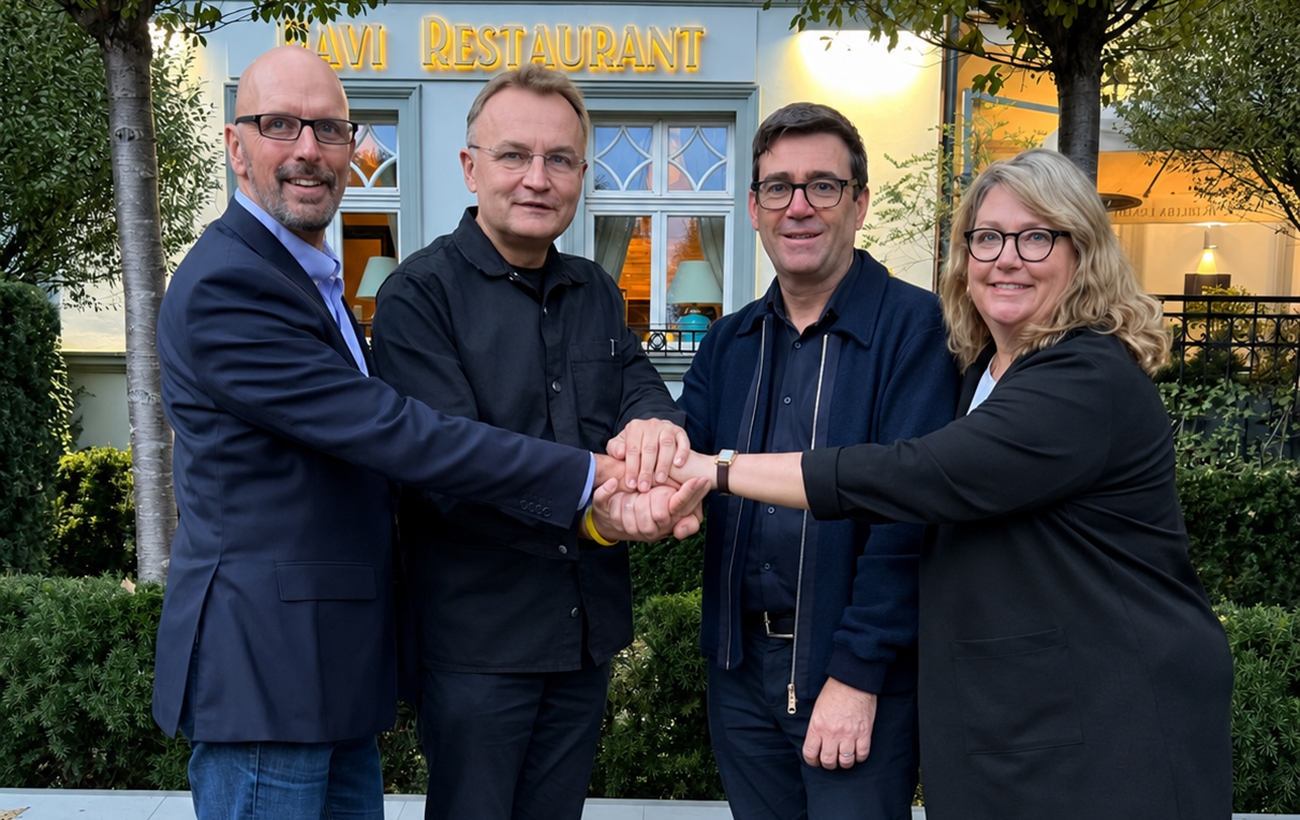
Photo: Andy Burnham and the mayors of Lviv, Kraków and Liverpool (city-adm.lviv.ua)
Ukrainian interest
There remains a consensus in the United Kingdom on supporting Ukraine, and Burnham adheres to it.
"I opposed Russia’s invasion of Crimea in 2014… I have resolutely supported Ukraine and Ukrainian Mayors since 2022," he wrote on Twitter (X) in May.
As Mayor of Greater Manchester, Burnham provided support to Ukrainian cities. In 2023, he became one of the founders of the Unbroken Cities Network. This initiative supports Ukrainian cities affected by Russian attacks and also develops rehabilitation efforts for people injured by the war.
Burnham has limited experience in international politics. However, relations between Kyiv and London are built on a solid foundation.
"There is a risk that attention to the Ukrainian issue will decrease. Of course, a single prime minister cannot reshape the state machine in a short period, but he will still set priorities," said Volodymyr Kurennoi.
At least in the coming months, Burnham’s key focus will be domestic politics.
Problems are far from gone
Ideologically, Burnham represents the left wing of the Labour Party. It is therefore unsurprising that he enters Downing Street with slogans about ending the "era of austerity."
Among other things, he has promised to increase borrowing and inject substantial funds into public programmes — primarily housing construction and reform of the chronically underfunded social sector.
At a time when the UK’s public debt has already reached 95.1% of GDP, and the budget deficit surged to £46.3 billion in just two months this year, such policies could trigger panic in financial markets and push the country into an even deeper debt crisis.
Burnham is reportedly betting that public spending will stimulate economic growth within 2–3 years. However, he may not have that time, as society demands immediate results. Other issues also remain unresolved.
"Burnham cannot afford to take strong anti-immigration measures, while a large part of society demands exactly that. So he will not have an answer to this issue. The same applies to crime. This leads to the conclusion that within a year, a new crisis in the Labour Party could begin," Kurennoi emphasised.
In addition, pressure on the government will intensify due to the growing popularity of opposition forces amid the ruling party’s failures — the right-wing populist Reform UK and the left-leaning Greens. This, in turn, could lead to early elections with even more unpredictable consequences.
Quick Q&A
– Why did UK Prime Minister Keir Starmer resign?
Keir Starmer announced his resignation amid a deep internal party crisis triggered by the failure to deliver systemic reforms and a sharp drop in Labour’s approval ratings to around 14%.
Following a heavy defeat in the May 2026 local elections, party members reportedly issued him an ultimatum, forcing him to step down voluntarily to avoid a potential forced removal through a no-confidence process.
– Will there be early parliamentary elections in the UK due to the Prime Minister’s resignation?
No, early general elections are not currently expected. The Labour Party still holds a solid majority in the House of Commons (412 out of 650 seats), meaning the government will be formed through an internal party leadership election, and the new leader will automatically become Prime Minister.
– Who will become the new UK Prime Minister and when will the leadership election take place?
The main candidate for the position is Andy Burnham, former Health Secretary and ex-Mayor of Greater Manchester. The Labour leadership election is expected to begin on 9 July and conclude by 16 July 2026, after which the new Prime Minister will formally take office.
– What will Andy Burnham’s policy be regarding support for Ukraine?
Burnham has publicly condemned Russian aggression, supported Ukrainian cities through the Unbroken Cities Network, and is expected to continue adhering to the UK’s broad national consensus on supporting Ukraine.
However, analysts warn that due to the acute domestic crisis in the UK, his early priorities are likely to focus mainly on internal issues.