NATO urgently rethinks weapons strategy because of war in Ukraine

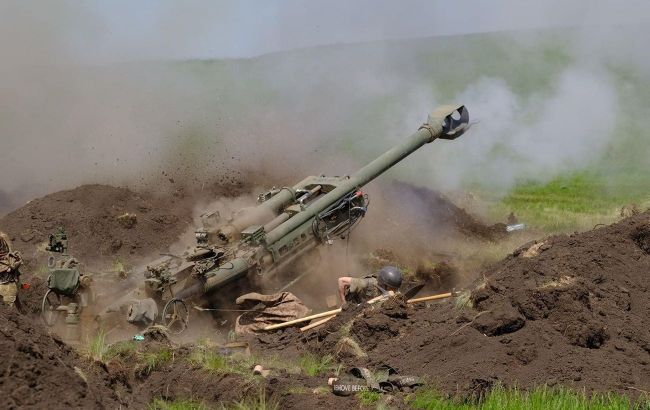 Photo: Ukrainian Armed Forces (Facebook.com/MinistryofDefence.UA)
NATO Secretary General Mark Rutte said the war in Ukraine has demonstrated the need to accelerate defense development and shift away from pursuing perfect solutions toward systems that can be quickly produced and deployed in combat, according to Business Insider.
Russia’s invasion of Ukraine has pushed the defense sector to reconsider its priorities.
The main lesson from the battlefield is that the effectiveness of weapons matters more than technological perfection. Availability, scalability, and the ability to deploy systems immediately have become critical factors in modern warfare.
Experts say that an excessive focus on creating "perfect" technology often leads to weapons shortages and supply delays — a major problem during active combat operations.
Defense companies and a new approach to development
Kristian Brost, general manager of Robin Radar USA, said that under current conditions, an imperfect solution "right now, sometimes, is better than a perfect solution later."
The company develops radar systems designed to detect drones, which are already being used by Ukraine and US allies.
Brost stressed that Ukraine’s experience highlights the importance of simple and affordable solutions that can be quickly introduced and adapted to changing battlefield conditions.
A similar approach is now spreading to other sectors, including counter-drone systems.
NATO shifts strategy
NATO countries are increasingly interested in cheaper and more scalable technologies, including interceptor drones viewed as an alternative to expensive air defense missile systems.
Mark Rutte previously warned that the alliance is too slow to adopt innovations, and NATO’s obsession with ideal solutions is delaying the development of defense solutions.
According to him, speed and sufficient quality should now be the main priorities.
Ukraine’s approach gains attention
Representatives of Ukraine’s defense industry say practicality has become the defining factor during the war.
Systems that are available in large quantities and can be rapidly deployed often prove more valuable than expensive and highly complex technologies.
Ukraine’s defense model is built around rapid production and modernization cycles, allowing equipment upgrades to be implemented in very short timeframes based on battlefield feedback from troops.
Western defense strategy under review
European countries and NATO allies are increasingly emphasizing the need to expand production of lower-cost weapons.
In the event of a prolonged conflict, highly sophisticated systems may prove too inflexible and too expensive for large-scale use.
Experts say the key challenge for the Western defense industry is finding the right balance between cutting-edge technology and mass production.
Earlier reports said Russian forces failed to make advances in the Oleksandrivka direction in April while suffering significant personnel and equipment losses.
Meanwhile, President Volodymyr Zelenskyy stated that Russia violated the ceasefire that came into effect overnight on May 6. He said Ukraine’s next steps would be determined after receiving updated reports from military and intelligence officials.